


The key role of HEPES in the in vitro washing and sorting of target cells for cell therapy
Release time:
2026-03-06
In the cutting-edge medical field of cell therapy, whether it is CAR-T, TILs or stem cell therapy, the key to its success lies not only in gene editing or amplification technology, but also in the first few steps - efficient and gentle separation of target cells. Accurately capturing immune cells or progenitor cells with therapeutic potential from the patient's blood is the cornerstone of the entire preparation process. In this process, the buffer system used in the washing and sorting steps directly determines the activity, purity, and subsequent functional performance of the cells. Among them, HEPES buffer (4-hydroxyethylpiperazine ethanesulfonic acid) is becoming an indispensable core part of cell therapy technology.
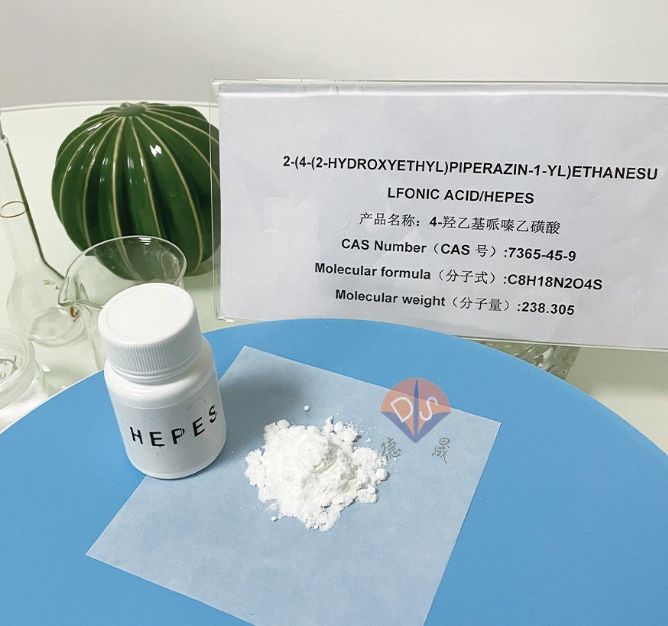
HEPES powder
Why is the buffering system of detergent so critical?
The first step in cell therapy is usually to enrich specific subpopulations from peripheral blood mononuclear cells (PBMCs), such as CD3 ⁺ T cells or CD34 ⁺ hematopoietic stem cells. This process requires multiple centrifugation washes of the whole blood or white blood cell layer to remove interfering substances such as plasma proteins, residual anticoagulants, and red blood cell lysate. If the pH of the washing solution fluctuates or the osmotic pressure is imbalanced, it can easily lead to cell membrane damage, metabolic disorders, and even apoptosis.
Although traditional buffer solutions such as PBS or HBSS are low-cost, their buffering capacity is highly dependent on the CO ₂ environment. In open operations (such as manual processing in biosafety cabinets), they are prone to pH rise above 7.8 due to CO ₂ escape, exceeding the cell tolerance range. HEPES, as a non carbonate dependent buffer, can effectively maintain a pH in the physiological range of 6.8-8.2 at 37 ℃. Even after prolonged operation or multiple rounds of centrifugation, it can provide a stable microenvironment for cells.
How can HEPES improve sorting efficiency and cell quality?
The conformational integrity of cell surface antigens is crucial in the sorting stage based on magnetic beads or flow cytometry. If the cells are in a stress state after washing, their membrane proteins may undergo internalization or conformational changes, reducing antibody recognition efficiency and causing loss of target cells. HEPES has a stable chemical structure and no tendency towards metal chelation, which does not interfere with the chelation of calcium and magnesium ions by EGTA or EDTA commonly added in the washing solution. The latter can effectively inhibit intercellular adhesion, promote the formation of single-cell suspensions, and thus improve sorting purity.
In addition, HEPES itself has no cytotoxicity and does not participate in cellular metabolic pathways, avoiding potential interference with mitochondrial function or ATP production. Multiple internal process validations have shown that T cells treated with HEPES containing wash solution generally have higher viability, and exhibit stronger proliferation ability and cytokine secretion levels during subsequent activation and expansion stages, significantly better than the control group using traditional buffer system.

Product packaging
Hubei Xindesheng Material Technology Co., Ltd. has been deeply involved in the field of biological buffering agents for many years, focusing on the research and production of HEPES and other biological buffering agents. HEPES can be widely used in CAR-T preparation, stem cell culture, immune cell sorting, and in vitro diagnostics. Whether it's small-scale R&D trials or large-scale supply, Xindesheng can provide customized solutions and professional technical support.
Contact details
Contact number
Address: C8, Guanggu United Science and Technology City, Ezhou City, Hubei Province
Fax:0711-3704 589
Follow us
