


TRIS buffer system: the "invisible cornerstone" supporting phospholipid detection of lipoprotein subcomponents
Release time:
2026-03-07
In today's increasingly refined cardiovascular disease risk assessment, traditional total cholesterol or low-density lipoprotein (LDL) testing is no longer sufficient to meet the clinical demand for personalized diagnosis and treatment. Therefore, the determination of phospholipid content in lipoprotein subfractions has become an important new dimension for evaluating metabolic health and predicting the risk of cardiovascular and cerebrovascular events. Recently, a VAP based lipoprotein subcomponent phospholipid detection kit has successfully achieved multi index synchronous analysis. Behind its high precision and accuracy, a key but often overlooked component is TRIS buffer.
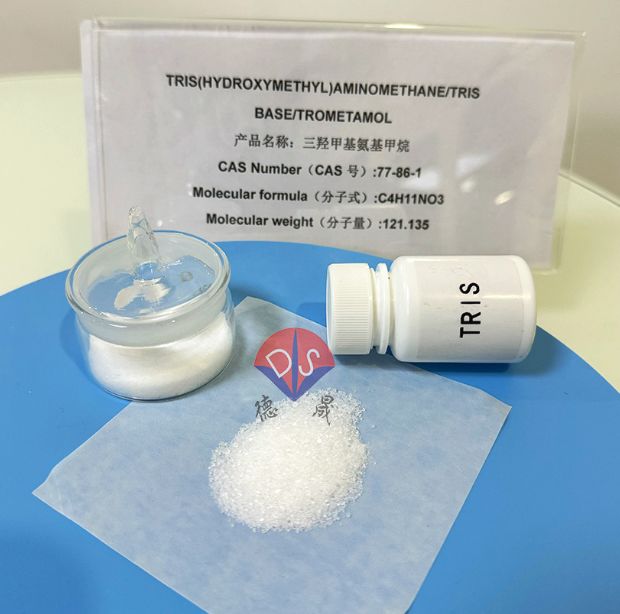
TRIS powder
Why does the detection of lipoprotein subcomponents require higher requirements for buffer systems?
Lipoproteins are complex complexes composed of lipids (including phospholipids, cholesterol esters, triglycerides) and lipoproteins. The separation of their sub components relies on ultracentrifugation or electrophoresis techniques, while subsequent quantification of phospholipids is usually achieved through enzymatic reactions. This process involves multi-step enzymatic cascade reactions such as phospholipase, cholesterol oxidase, and peroxidase, each of which is highly sensitive to the reaction environment. The density and surface charge differences of different lipoprotein subfractions (such as VLDL, IDL, LDL, HDL) are minimal, and separation and color development need to be completed in a highly stable ionic environment. At this point, the buffer solution not only needs to maintain a constant pH, but also needs to have low metal chelation, low UV absorption, and good biocompatibility.
TRIS: Provides a stable response platform for multi index synchronous detection
In the design of this reagent kit, TRIS (trihydroxymethylaminomethane) was selected as the core buffering component, with a pKa of approximately 8.06 (25 ℃) and an effective buffering range of pH 7.0-9.0, which precisely covers the optimal reaction range of most phospholipases and oxidoreductases. More importantly, the TRIS molecular structure contains three hydroxymethyl groups and one primary amino group. While providing good water solubility, its weak alkalinity can effectively neutralize trace acidic by-products generated during the reaction process, preventing pH drift in the system.
Compared to phosphate or carbonate buffer systems, TRIS does not rely on CO ₂ equilibrium and can maintain high pH stability even in open reagent preparation or long-term instrument operation. Meanwhile, TRIS has extremely weak chelating ability for common divalent metal ions such as Ca ² ⁺ and Mg ² ⁺, avoiding interference with enzyme activity dependent on metal cofactors. This feature is particularly important for VAP systems - the platform detects directly online after density gradient separation, and any ion strength fluctuations caused by the buffer system may affect the migration behavior of lipoprotein particles.
High purity TRIS: Ensuring compliance and reliability of in vitro diagnostic reagents
TRIS used for such in vitro diagnostic reagents must achieve high purity (≥ 99.5%) and strictly control the content of heavy metals, ammonium salts, and organic impurities. Any trace pollutant may inhibit enzyme activity or generate background signals, affecting the detection limit and specificity.

Product packaging
Hubei Xindesheng Material Technology Co., Ltd., as a professional manufacturer of biological buffering agents, has long been dedicated to the research and production of key raw materials such as TRIS. It is worth noting that the company's Huanggang production base will be officially put into operation in March April 2026, and TRIS production capacity will be significantly increased, which can fully meet the full chain needs of diagnostic enterprises from research and development verification to mass production.
Contact details
Contact number
Address: C8, Guanggu United Science and Technology City, Ezhou City, Hubei Province
Fax:0711-3704 589
Follow us
