


Heparin salts: anticoagulant guardians in modern clinical testing
Release time:
2026-01-31
In the field of clinical laboratory medicine, the selection of anticoagulants directly affects the accuracy of test results. Heparin salts, sodium heparin, and lithium heparin, as important blood collection vessel additives, have become indispensable key reagents in various in vitro diagnostic tests due to their unique anticoagulant mechanism. From molecular structure to clinical application, the scientific application of heparin salts reflects the relentless pursuit of precision in modern laboratory medicine.

heparin sodium
Unique molecular structure and anticoagulant mechanism
Heparin is a natural acidic mucopolysaccharide containing abundant sulfate groups in its molecules, which endow heparin with strong negative charge properties. It is precisely this special molecular structure that enables heparin to specifically bind to antithrombin III in the blood, forming a stable complex. This combination can significantly enhance the biological activity of antithrombin III, significantly improving its efficiency in inhibiting thrombin and factor Xa. Heparin, through its unique catalytic mechanism, can exert rapid anticoagulant effects both in vivo and in vitro, making it an important anticoagulant choice in clinical trials.
Rigorous production process and quality control
Modern heparin is mainly extracted from pig intestinal mucosa and purified through complex processes to obtain heparin products with different molecular weights. The production process includes multiple steps such as enzymatic hydrolysis, separation, purification, and grading, each of which requires precise control to ensure product quality. Quality control covers multiple dimensions such as potency determination, molecular weight distribution, and impurity content. It is particularly important to strictly control the risks of allergen and viral contamination to ensure the safety of clinical applications. Strict quality standards enable heparin products to meet the precise requirements of clinical testing.
The unique application value of heparin lithium
Heparin lithium is mainly used for electrolyte detection and blood gas analysis, with the advantage of minimal interference to the detection system. In electrolyte detection, heparin lithium does not introduce additional sodium or potassium ions, ensuring the accuracy of the detection results. In blood gas analysis, heparin lithium can effectively anticoagulate without affecting the determination of blood pH and gas partial pressure. This characteristic makes it an important choice for emergency testing and monitoring of critically ill patients, providing reliable basis for clinical decision-making.
Clinical application standards of heparin sodium
Heparin sodium is a commonly used anticoagulant in routine biochemical testing, suitable for the detection of most biochemical indicators. However, its application has clear limitations: it cannot be used for sodium ion detection because heparin sodium itself contains sodium ions, which can interfere with the detection results. In clinical applications, it is necessary to select appropriate heparin salts based on the characteristics of the testing items. This refined selection reflects the high importance that modern laboratory medicine places on the quality of testing, ensuring that each test result can truly reflect the patient's physiological state.
Clear usage taboos and precautions
Heparin salts have clear contraindications for use: they cannot be used for white blood cell counting and classification testing. Heparin may cause white blood cell aggregation, leading to low count results and affecting the accuracy of clinical judgment. In addition, blood samples anticoagulated with heparin are not suitable for blood smear preparation as they may affect the observation of cell morphology. Inspectors must fully understand these taboos, ensure the selection of appropriate anticoagulants in the correct testing items, and avoid testing errors caused by misuse.
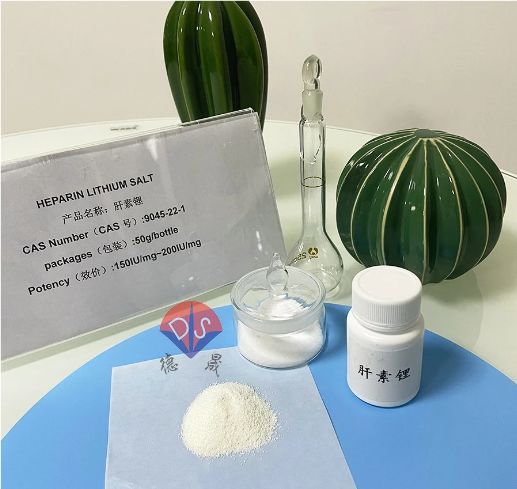
heparin lithium
Professional quality helps with precise testing
On the path of pursuing precise inspection, high-quality raw materials are a hurdle to ensure the quality of testing. Hubei Xindesheng Material Technology Co., Ltd. focuses on the research and production of in vitro diagnostic raw materials, providing high-quality heparin salt series products for clinical testing. The company strictly adheres to quality management standards and has established a comprehensive quality control system. From raw material screening to finished product delivery, every step is strictly monitored to ensure the stability, safety, and effectiveness of the product. The heparin lithium, heparin sodium and other products produced by the company have undergone strict quality verification and can meet the specific needs of different testing platforms.
Previous page
Previous page
News

Contact details
Contact number
Address: C8, Guanggu United Science and Technology City, Ezhou City, Hubei Province
Fax:0711-3704 589
Follow us