


PIPES buffer: the core "protector" of microtubule protein purification experiments
Release time:
2026-03-31
As the core component of the cytoskeleton, microtubule proteins control key life activities such as cell division, cell morphology maintenance, and intracellular material transport. To delve deeper into these life mechanisms, high-purity and highly active microtubule protein samples are the fundamental prerequisite. Phosphocellulose chromatography is a commonly used classic method for purifying microtubule proteins, and the success or failure of experiments often relies on the support of buffer systems. Among them, PIPES buffer (piperazine-N, N '- di (2-ethylsulfonic acid)) is an indispensable key reagent. The following will provide a detailed analysis of the principle and practical points of PIPES in this experiment.
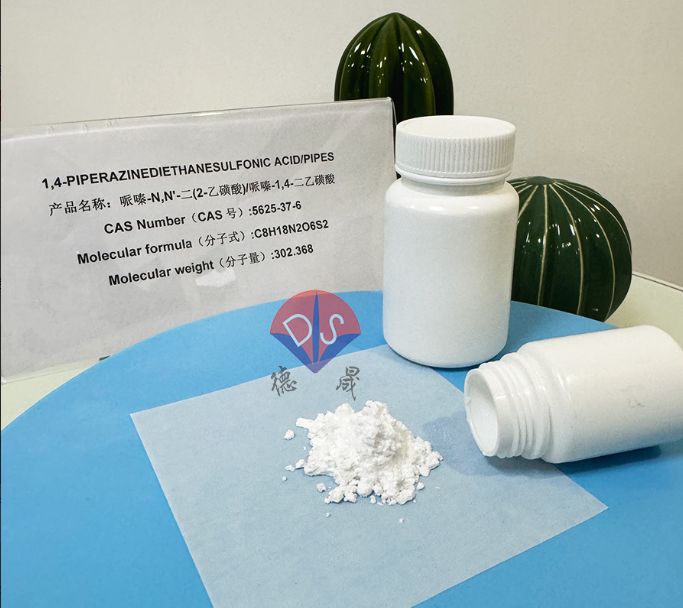
PIPES buffer
1、 Stabilize the pH environment and maintain the bottom line of microtubule protein activity
During the process of protein purification, even slight fluctuations in pH can lead to changes in protein spatial conformation, resulting in denaturation, degradation, or even complete inactivation. Microtubulin is particularly sensitive to pH changes, and once the environment is acid-base imbalanced, subsequent experimental data is of no reference value. PIPES, as a classic Good's buffer, has a stable pKa value that is suitable for biological experiments. The buffer range is in line with the physiological pH range where microtubules exist stably, and it has strong hydrogen ion regulation ability to maintain a constant pH of the eluent, prevent microtubule denaturation and inactivation caused by sudden pH changes, and preserve the original activity of the protein to a greater extent, laying a solid foundation for subsequent experiments.
2、 Chelate interfering ions to clear purification and separation barriers
The components of cell extracts are complex. In addition to the target microtubule protein, they also contain a large amount of impurities such as metal ions and miscellaneous proteins. These impurities can directly interfere with the specific binding of microtubule protein to phosphocellulose resin, resulting in low purification purity and excessive impurities. The molecular structure of PIPES has special ion coordination ability, which can form stable soluble complexes with interfering metal ions in cell extracts, keeping these impurity ions in a free state and unable to non-specific bind with microtubules or resins, effectively blocking impurity interference.
3、 Clarify usage taboos and avoid experimental misconceptions
Although PIPES has outstanding advantages in microtubule protein purification, it is not suitable for all experimental scenarios, and blind use can actually affect experimental results. On the one hand, PIPES is prone to form free radicals under specific conditions, which can interfere with the redox reaction process. Therefore, when it comes to microtubule protein experiments related to redox, it is necessary to resolutely avoid using PIPES to prevent non targeted redox reactions and data distortion; On the other hand, in cation exchange chromatography experiments, high concentrations of PIPES can interfere with chromatographic separation due to their high ion strength and concentration dependent pKa values. In practice, it is recommended to use low concentration PIPES buffer to balance buffering and separation efficiency.
4、 High quality PIPES raw materials build a solid foundation for experimental stability
In summary, PIPES is the core buffer reagent for purifying microtubule proteins using cellulose phosphate chromatography. From stabilizing pH, eliminating interference to optimizing separation, it ensures a smooth purification process in all aspects and is the key to obtaining highly active and high-purity microtubule proteins. The quality of the experimental results directly depends on the purity, stability, and inter batch consistency of PIPES products. Poor quality PIPES are prone to introducing impurities, leading to experimental failure and difficulty in replicating data.

product packaging
Hubei Xindesheng has been deeply involved in the research and production of biological buffering agents for nearly 20 years, focusing on providing high-quality reagents for in vitro diagnostics and scientific research experiments. Its PIPES buffering agents meet the purity standards, have extremely low impurity content, stable buffering performance, small inter batch differences, and can effectively reduce experimental errors. If you are looking for high-purity and highly stable biological buffer raw materials to get rid of the problem of unstable experimental reagents, please feel free to consult and connect at any time to obtain exclusive product solutions and quotations!
Contact details
Contact number
Address: C8, Guanggu United Science and Technology City, Ezhou City, Hubei Province
Fax:0711-3704 589
Follow us
