


Tris base, a key bridge for feather keratin modification
Release time:
2026-01-07
The core challenge in the resource utilization of feather keratin lies in the stability of its molecular structure: unmodified keratin has poor solubility and insufficient compatibility with other materials, making it difficult to directly process into high-performance products. Tris base, as an organic compound with excellent solubility and chemical activity, has precisely solved this technological bottleneck.
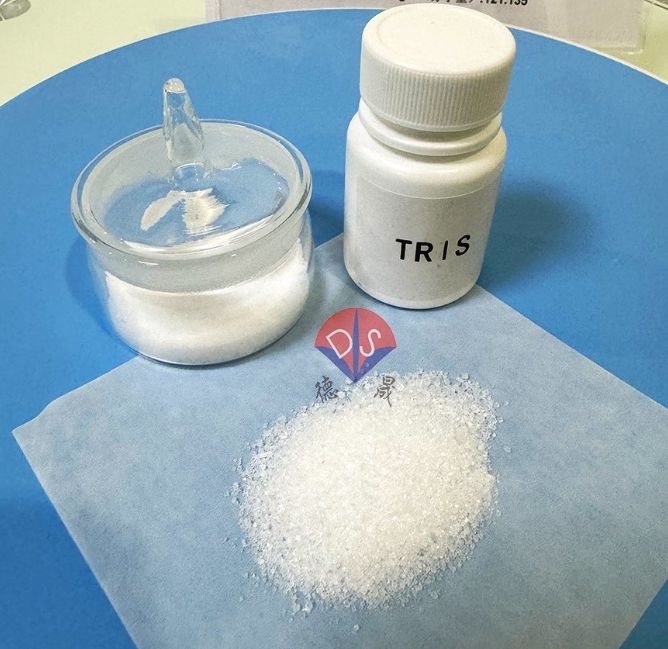
Tris base
Experimental studies have shown that the FK/PVA blend film with Tris addition has significantly improved mechanical properties compared to the system without Tris addition. Not only is the tensile strength significantly enhanced, but the flexibility and fracture resistance of the material are also greatly improved; In terms of thermal stability, the high temperature resistance of the blend film is significantly improved, effectively avoiding thermal degradation problems during processing and use. More noteworthy is that the addition of Tris also optimized the water resistance and barrier properties of the film, significantly reducing the water absorption rate of the material and reducing gas permeation, laying a solid foundation for its application in the packaging field.
Innovative Applications: A New Choice for Green Packaging from Laboratories to Industries
The FK/PVA/Tris blend film, after cross-linking modification and nanocomposite optimization, not only solves the performance shortcomings of traditional keratin materials, but also demonstrates a wide range of industrial application potential, with the packaging field becoming the core scenario for implementation. In the food packaging industry, the problem of traditional plastic packaging being difficult to degrade and prone to microplastic pollution is becoming increasingly prominent. FK/PVA/Tris blend film, with its biodegradability, biocompatibility, and excellent barrier properties, has become an ideal green alternative. This film can naturally degrade into harmless substances, with a degradation efficiency much higher than traditional plastics. At the same time, it can effectively block oxygen and moisture, extend the shelf life of food, and provide consumers with a safer and more environmentally friendly packaging solution.
Industry Outlook: Green Revolution and Corporate Responsibility Empowered by Tris
With the continuous maturity of technology and the gradual reduction of production costs, the industrialization process of feather keratin based materials is accelerating. Tris, as a core modifier, directly affects the performance and production capacity of downstream products in terms of its quality and supply stability. In this field, Hubei Xindesheng Material Technology Co., Ltd. has become an important supplier of Tris products with years of technological accumulation and research and development strength. The purity of Tris produced by the company is over 99%, with extremely low impurity content, which can accurately match the technical requirements of feather keratin modification and provide stable and reliable raw material support for downstream enterprises.

Product packaging
Industry Outlook: Green Revolution and Corporate Responsibility Empowered by Tris
From technological breakthroughs in the laboratory to large-scale applications in the industry, the green revolution of feather keratin cannot be achieved without the empowerment of core materials, and even more importantly, it cannot be achieved without the support of enterprises like Hubei Xindesheng that focus on the biochemical field. In the future, with the integration of more innovative technologies and the improvement of the industrial chain, feather keratin based materials will replace traditional high pollution materials in more fields and contribute greater strength to green development. Hubei New Desheng will continue to deepen the research and production of core products such as Tris, and work together with industry partners to explore new possibilities for the utilization of biological resources.
Previous page
Previous page
Contact details
Contact number
Address: C8, Guanggu United Science and Technology City, Ezhou City, Hubei Province
Fax:0711-3704 589
Follow us
