

The new role of CAPS in waterborne polyurethane resin
Release time:
2026-01-08
Environmental challenges of traditional isocyanate systems
In the fields of coatings, adhesives, synthetic leather, and functional coatings, polyisocyanates have long supported the development of high-performance polyurethane materials as key crosslinking components. However, traditional polyisocyanates often use organic solvents as carriers, which not only pose a problem of volatile organic compound (VOC) emissions, but also pose potential risks to the health and environmental safety of operators. With increasingly strict environmental regulations, "oil to water" has become the core direction of industry transformation. How to achieve the hydration of polyisocyanates while maintaining excellent performance has become a technical difficulty that urgently needs to be overcome in materials science.
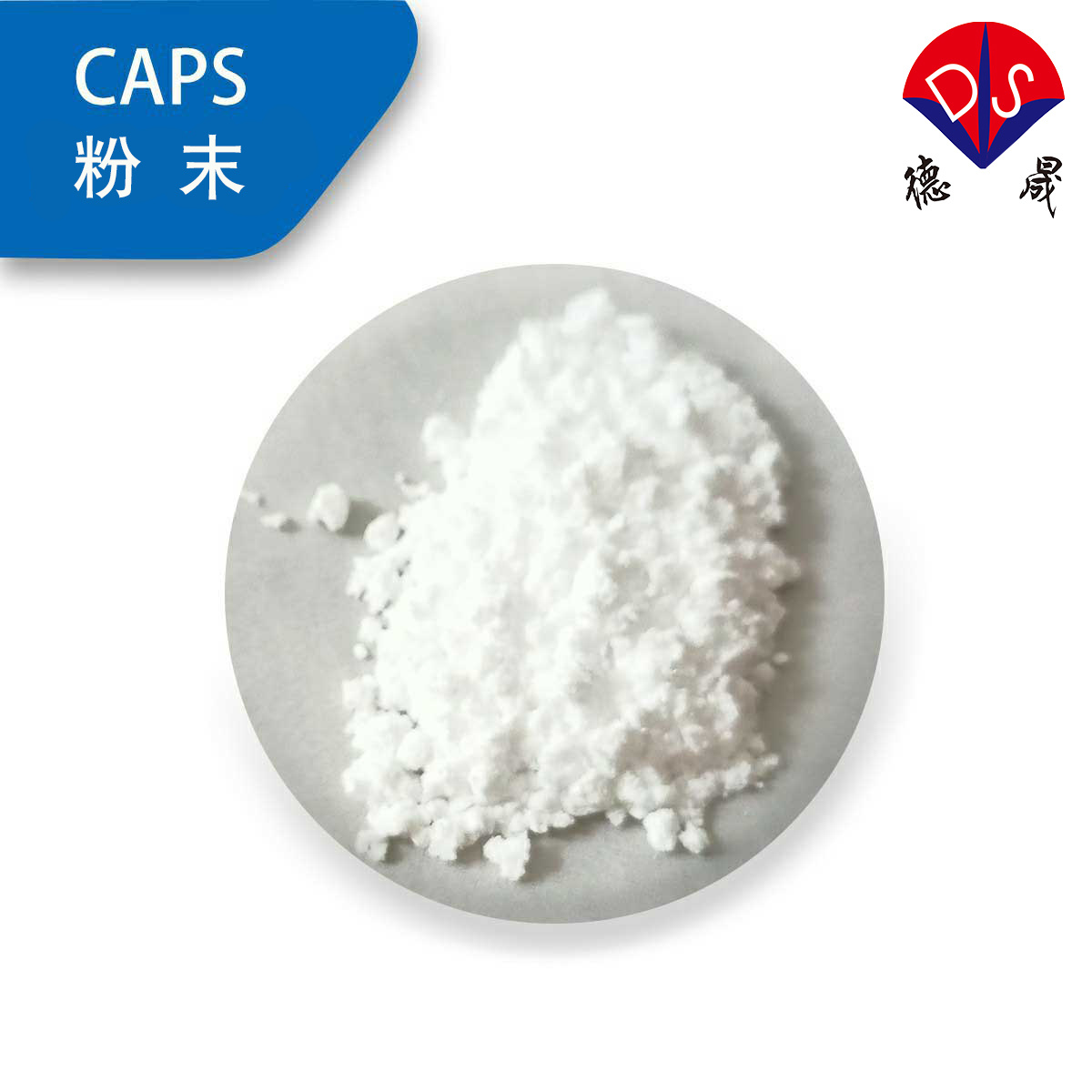
CAPS powder
The key to water dispersible polyisocyanates
To solve the above problems, researchers have developed a new type of water dispersible polyisocyanate system. The core idea is to chemically modify the originally hydrophobic polyisocyanates to make them hydrophilic, so that they can be stably dispersed in water. This technology path usually adopts a reaction strategy of "polyisocyanate+hydrophilic active hydrogen compound" to generate prepolymers with both reaction activity and water dispersibility.
Among the numerous hydrophilic modifiers available, active hydrogen compounds containing sulfonic acid groups have attracted much attention due to their strong hydrophilicity and ionic stability. Among them, 3-cyclohexylaminopropane sulfonic acid (CAPS) and 2- (cyclohexylamino) - ethanesulfonic acid (CHES) have been proven to have good application effects. CAPS buffer(CAS number: 1135-40-6) contains a cyclohexylamine group and a propanesulfonic acid group in its molecular structure, which not only provide basic nitrogen atoms to participate in the reaction, but also endow the product with excellent water solubility or dispersibility through the sulfonic acid group.
Advantages of CAPS
In the actual formula, CAPS, as a hydrophilic active hydrogen component, participates in the modification reaction of polyisocyanates (such as pentamethylene diisocyanate and long-chain isocyanate with carbon number ≥ 6), and the generated product can form a stable lotion in water. Thanks to the steric hindrance effect of cyclohexyl groups in CAPS molecules and the strong polarity of sulfonic acid groups, the resulting water dispersed polyisocyanates exhibit multiple advantages. This water-based polyurethane resin composition based on CAPS modification has been successfully applied in fields such as textile coatings, wood coatings, and automotive interior adhesives, significantly reducing environmental loads while maintaining mechanical properties and durability.
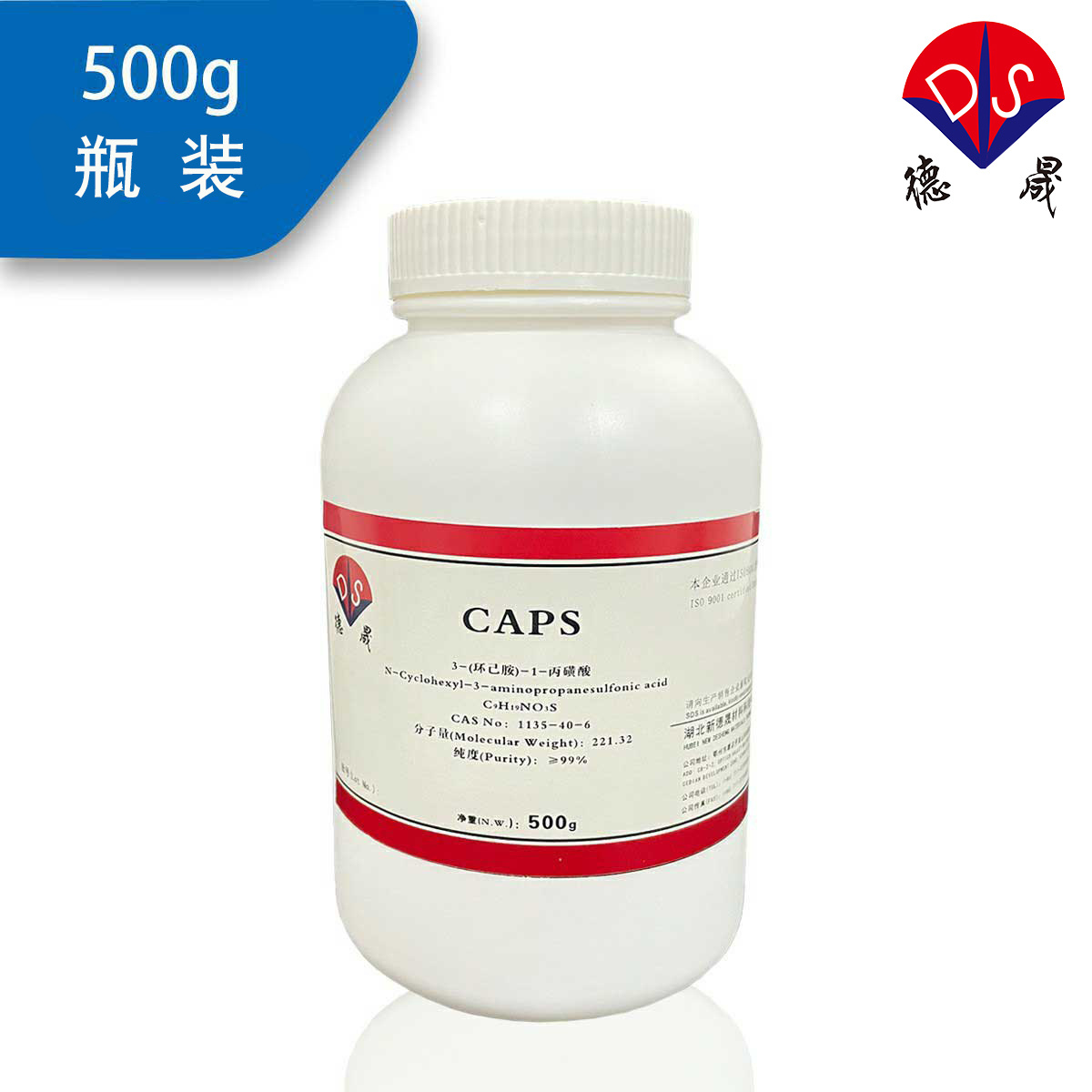
Product packaging
Reliable support from laboratory to industrialization
Although CAPS is widely known in the field of biochemistry, its application in polymer materials is still at the forefront. To ensure the consistency of resin performance, higher requirements have been put forward for various parameters of CAPS raw materials. Hubei Xindesheng has long been dedicated to the research and production of biological buffering agents and functional chemicals, providing CAPS products with high purity (≥ 99.0%) and low metal residue (CAS 1135-40-6), suitable for biochemical diagnosis, nucleic acid extraction, and meeting emerging industrial needs such as water-based resin modification. The company supports the provision of small-scale samples, customized packaging, and stable supply in bulk, and is equipped with a complete quality inspection report and technical support team.
Previous page
Previous page
Contact details
Contact number
Address: C8, Guanggu United Science and Technology City, Ezhou City, Hubei Province
Fax:0711-3704 589
Follow us
