


Differences in decoding enzymes: how genes, processes, and formulas reshape uricase activity
Release time:
2026-01-05
In the in vitro diagnostic system, enzyme preparations serve as the core reaction component, directly determining the accuracy, sensitivity, and repeatability of the detection results. Taking uricase (Uricase) as an example, although different companies can provide this product, there are often significant differences in its catalytic efficiency, stability, and batch consistency in practical applications. These differences are not accidental, but stem from the combined effects of multiple factors such as gene source, protein structure, purification process, and buffer system. A deep understanding of these technical details not only helps optimize reagent formulations, but also provides scientific basis for selecting high-performance enzyme raw materials.
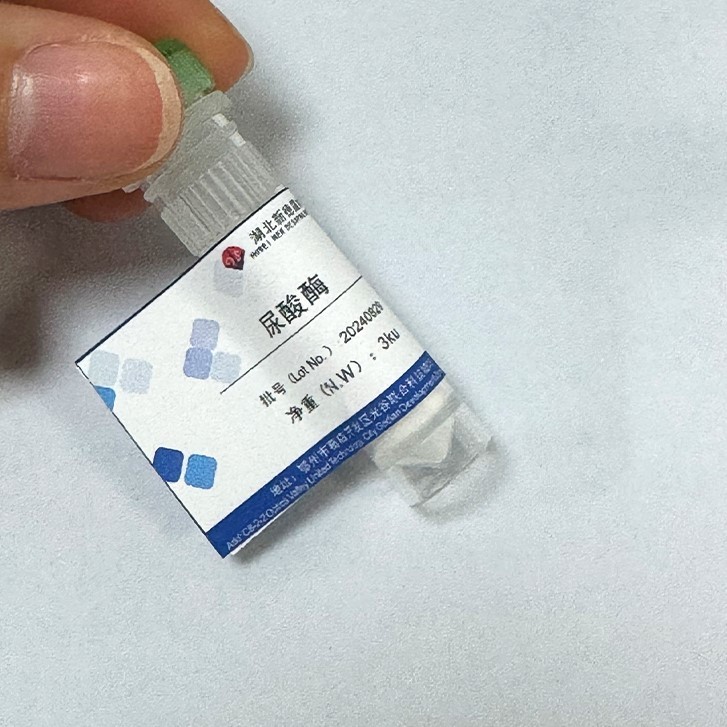
Urinase
Clinical application of uricase: from gout screening to metabolic assessment
Urinase is a key enzyme in uric acid detection kits, which catalyzes the oxidation of uric acid to produce allantoin, carbon dioxide, and hydrogen peroxide (H ₂ O ₂), achieving quantitative analysis of uric acid concentration in serum, plasma, or urine. This reaction has high specificity and almost no cross interference with other components in the sample, making it widely used as an auxiliary diagnosis for hyperuricemia, gout, renal dysfunction, and metabolic syndrome.
Genetic origin determines the 'innate endowment' of enzymes
There are differences in the amino acid sequence and spatial conformation of uricases from different sources, which directly affect their catalytic activity and stability. At present, industrial uricase mostly comes from microbial fermentation, such as Aspergillus niger, Aspergillus flavus, or recombinant E. coli expression systems. Urinases derived from natural fungi have good catalytic efficiency, but may have glycosylation modifications or impurity proteins; Although recombinant expression systems can achieve high-purity production, improper selection of expression vectors or host bacteria may lead to abnormal protein folding and affect enzyme activity.
Purification process affects the purity and consistency of enzymes
The purity of enzyme preparations is directly related to the specificity and anti-interference ability of detection. Low purity products may contain impurities such as proteases, nucleases, or other oxidoreductases, which not only consume cofactors but may also lead to elevated background signals or reaction drift. In addition, impurity proteins may also cause non-specific precipitation, affecting the stability of the reagent. Hubei Xindesheng adopts multi-step chromatography purification technology, including ion exchange, hydrophobic chromatography, and molecular sieve separation, effectively removing impurities and endotoxins. The strict batch quality inspection process ensures that the specific activity fluctuations between different batches are small, which can meet the strict requirements of enterprises for consistency.
Buffer formula protects the 'active lifespan' of enzymes
Even if the enzyme protein itself has excellent quality, without a scientific protection system, it may still become inactive or aggregate during storage and use. Stabilizers (such as glycerol, trehalose, BSA, etc.), antioxidants (such as ascorbic acid), and preservatives in buffer solutions are crucial for maintaining enzyme conformational stability.
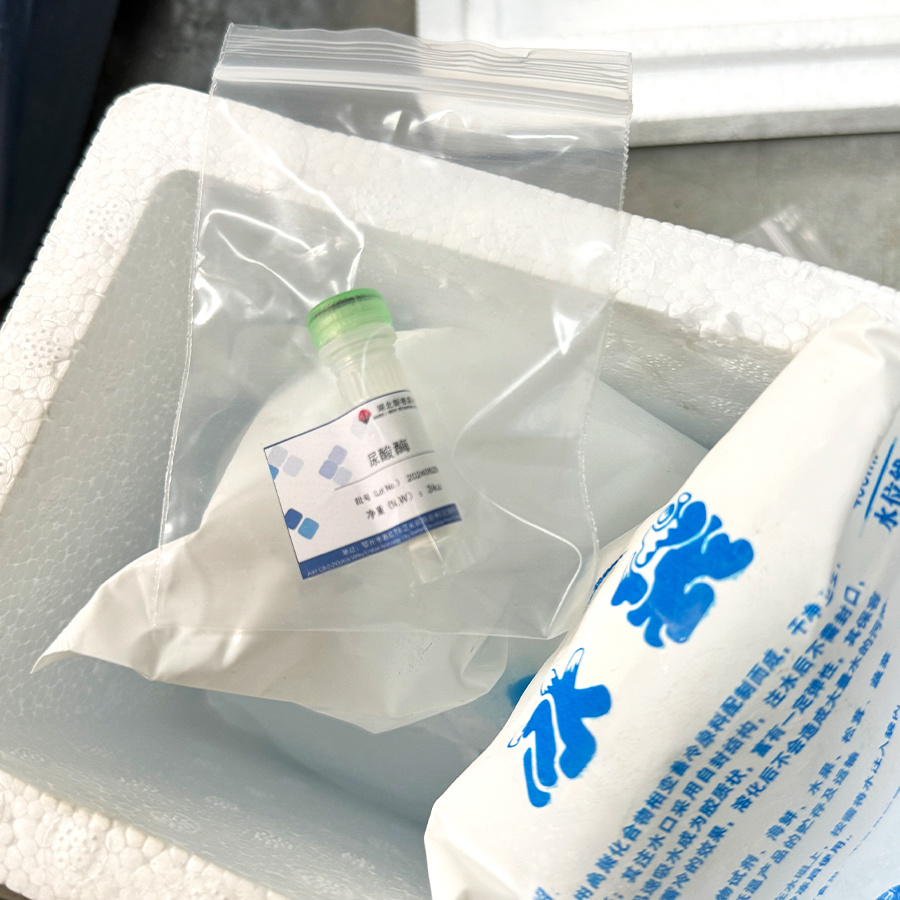
Product packaging
Conclusion: Choosing high-quality uricase, starting from Hubei Xindesheng
For in vitro diagnostic companies, choosing a highly active, high-purity, and stable uricase is a key step in improving reagent performance. Hubei Xindesheng focuses on the research and development of IVD raw materials, providing rigorously validated uricase products and supporting customized formulas and bulk supply. Contact us immediately to obtain product technical manuals and free samples. You are also welcome to visit our company for inspection.
Contact details
Contact number
Address: C8, Guanggu United Science and Technology City, Ezhou City, Hubei Province
Fax:0711-3704 589
Follow us
