


Why is the development of chemiluminescence products so difficult? ——The technological challenges behind high-sensitivity detection
Release time:
2026-01-03
In the in vitro diagnostic (IVD) technology system, chemiluminescence immunoassay (CLIA) has become the mainstream method for detecting tumor markers, infectious diseases, hormones, and other items due to its high sensitivity, wide linear range, and high degree of automation. However, despite the broad market prospects, the number of enterprises that can truly achieve independent development and stable mass production of chemiluminescence products is relatively limited. Many companies are still making slow progress after investing a lot of resources, what kind of technological barriers are hidden behind it? The fundamental reason for the difficulty in developing chemiluminescence products is far beyond the four words "technically complex".
Core difficulty: Accurate capture at extremely low concentrations
The important challenge faced by chemiluminescence technology is the extremely low concentration of the target substance being measured in the sample. Unlike substances such as glucose and total protein used in biochemical diagnostic tests (usually at concentrations ranging from g/L to μ g/L), the targets of immunodiagnosis, such as antigens, antibodies, tumor markers, etc., are often present in the human body at levels of μ g/L or even pg/L. The concentration difference between the two can reach 106 times. This means that the detection system must have high sensitivity and specificity to accurately identify and quantify trace targets in complex biological matrices.
Closed system: deep coupling between instruments and reagents
At present, mainstream chemiluminescence platforms mostly adopt a "instrument reagent" closed system, which means that reagents must be used in conjunction with specific models of instruments. In this mode, the instrument performance determines the "lower limit" of detection, such as the sensitivity of the optical detection system, temperature control accuracy, sample addition accuracy, etc; The reagents determine the "upper limit" of the detection, including the luminescence efficiency of the label, the affinity of the antibody, and the stability of the buffer system.
Multidisciplinary intersection: Talent scarcity, difficult collaboration
The development of chemiluminescence systems involves multiple cutting-edge technological fields: automated mechanical design is used to achieve high-precision sample addition and incubation, photoelectric detection systems are responsible for capturing weak luminescent signals, magnetic bead materials are used for efficient separation of bound and free states, and data algorithms are used for calibration and result analysis. These technologies belong to different professional directions, and the talent reserve is already limited, and cross disciplinary collaboration is difficult.
High investment, long cycle: high R&D threshold
From project initiation to product registration and launch, chemiluminescence projects typically take 3-5 years and require investment of tens of millions of yuan. During this period, multiple stages such as raw material screening, process optimization, performance validation, clinical trials, and registration application need to be completed, with a high risk of failure. Especially in key raw materials such as luminescent substrates, magnetic beads, labeled antibodies, etc., relying on imports not only incurs high costs but may also be affected by supply chain fluctuations.
Hubei Xindesheng: Focusing on chemiluminescence core materials, helping domestic reagents break through
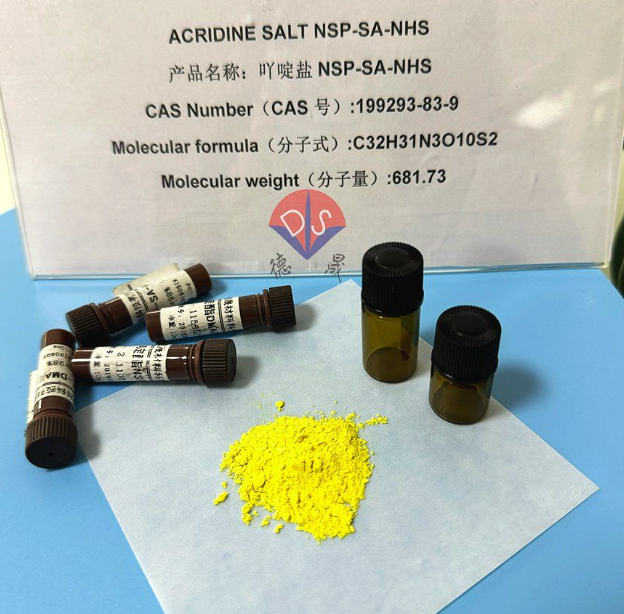
Faced with the high threshold for the development of chemiluminescence reagents, stable upstream raw material supply is crucial. Hubei Xindesheng Material Technology Co., Ltd. is not only a professional supplier of chemiluminescence reagents, but also independently produces mainstream luminescent substrates, including acridine ester, luminol, luminol monosodium salt, etc. The products have high purity, stable batch, and excellent luminescence efficiency, and are widely used in the development and production of various chemiluminescence reagent kits.
Relying on the construction of the new production base in Huanggang, Hubei Xindesheng will further enhance its production capacity and quality control capabilities, providing IVD enterprises with one-stop raw material support from buffering agents to luminescent substrates. We are committed to lowering the R&D threshold for enterprises, shortening the development cycle, and helping more domestic chemiluminescence products enter the market.
Contact details
Contact number
Address: C8, Guanggu United Science and Technology City, Ezhou City, Hubei Province
Fax:0711-3704 589
Follow us
