


What are the principles for configuring heparin lithium anticoagulant
Release time:
2024-08-09
Heparin lithium, as an important anticoagulant, is widely used in biomedical research and clinical trials. Its superior anticoagulant performance and biocompatibility make it an indispensable reagent in blood sample processing. In order to ensure the stability of the performance of heparin lithium anticoagulant, specific principles need to be followed during its preparation process.
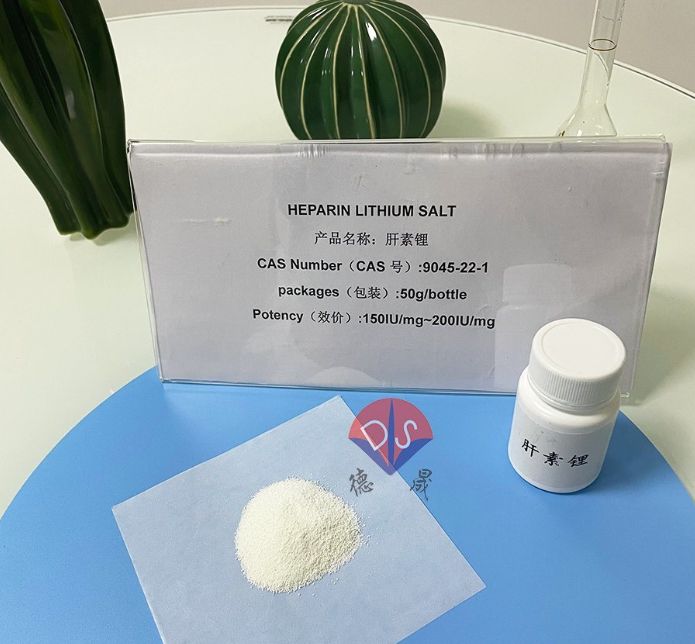
heparin lithium
Preparation principles of heparin lithium anticoagulant
1. Quality of reagents
The quality of heparin lithium directly affects its anticoagulant effect and the reliability of experimental results. Choosing reliable quality heparin lithium reagents can reduce the interference of impurities on experiments and ensure the performance of anticoagulants. When purchasing and using heparin lithium, priority can be given to products that have passed quality certification, or to check relevant testing instructions.
2. Configure the concentration of the solution
The anticoagulant concentration of heparin lithium varies depending on the type of experiment. The commonly used concentration of lithium heparin in clinical blood sample processing is 10g/L. For different experiments, the concentration of heparin lithium needs to be adjusted according to specific requirements to ensure anticoagulant effect. Generally, it can be calculated by the formula: concentration=corresponding weight of heparin lithium/volume of additive.
3. Solvent for preparing solution
The solution of heparin lithium anticoagulant is generally prepared using deionized water or ultrapure water. The purity of the solvent directly affects the stability and anticoagulant effect of anticoagulants. Using high-purity solvents can avoid the influence of impurities on the solution and ensure its anticoagulant performance. During the preparation process, the quality of the solvent should be strictly controlled to avoid contamination.
4. Control of configuration environment
Heparin lithium anticoagulant is commonly used in clinical and scientific research, therefore its preparation environment needs to be strictly sterile. A sterile environment can prevent contamination from external microorganisms. During the preparation process, sterile workstations and tools should be used, and appropriate protective equipment should be worn to prevent contamination.
5. PH value of the prepared solution
The pH value of heparin lithium anticoagulant has a significant impact on its stability and anticoagulant effect. Usually, the pH value of heparin lithium solution should be controlled between 6-8 to ensure ideal anticoagulant performance. During the preparation process, a pH meter should be used to accurately measure the pH value of the solution and adjust it as needed.
6. Temperature control during the preparation process
Temperature has a significant impact on the stability of heparin lithium solution. When preparing heparin lithium anticoagulant, it should be carried out at room temperature (about 20-25 ° C) to avoid the influence of high or low temperature environment on the stability of the solution. The prepared solution should be stored at 4 ° C to extend its service life.
7. Storage after preparation
The storage conditions of heparin lithium solution directly affect its stability. The prepared heparin lithium anticoagulant should be stored in a dark, sealed container and placed in a refrigerator at 4 ° C. Avoid frequent temperature changes and prolonged exposure to air to prevent solution degradation or failure.
Principles and precautions for the use of heparin lithium anticoagulant
1. Pre use inspection
Before using heparin lithium anticoagulant, the appearance of the solution should be checked to ensure that there is no obvious turbidity, precipitation, or discoloration. If there is any abnormality in the solution, it should be stopped immediately and a new solution should be prepared.
2. Control of preparation quantity
Heparin lithium solution should be prepared according to actual needs to avoid waste caused by excessive preparation at once. The prepared solution should be used as quickly as possible to ensure anticoagulant effect.
3. Preservation of configuration records
When preparing heparin lithium anticoagulant, the preparation process should be recorded in detail, including the source of reagents, preparation date, concentration, pH value, solvent type, operator and other information. Keeping complete configuration records helps trace and analyze experimental results.

Product packaging
Heparin lithium anticoagulant, as an important experimental and clinical reagent, requires strict adherence to principles in its preparation process. From the purity of the reagent, the concentration of the solution, the selection of the solvent, to the control of the preparation environment, every step needs to be carefully controlled.
As a manufacturer of heparin lithium anticoagulant, Desheng provides high-quality heparin lithium products for blood collection tube manufacturers with its superior process technology and strict quality control. The company adheres to innovation and upgrading, continuously optimizes production processes, and ensures that every batch of products can meet customer needs. At the same time, Desheng also focuses on communication and cooperation with customers, continuously optimizing product performance based on market feedback, and striving to provide customers with better performing heparin lithium anticoagulants. If you have any relevant intentions, please feel free to click on the website to inquire about details and purchase at any time!
Contact details
Contact number
Address: C8, Guanggu United Science and Technology City, Ezhou City, Hubei Province
Fax:0711-3704 589
Follow us
