


TOOS: Key Chromogenic Components for Blood Ammonia Detection and Determination
Release time:
2026-03-09
In clinical biochemical tests, blood ammonia levels are important indicators for evaluating liver function, diagnosing hepatic encephalopathy, and metabolic disorders. However, due to low blood ammonia concentration, susceptibility to sample contamination, and sensitivity of the detection process to reaction systems, the development of highly stable and sensitive detection reagents has long faced technical challenges. In recent years, a novel blood ammonia detection kit based on the Trinder reaction principle has significantly improved detection performance by optimizing the colorimetric system. Among them, the introduction of the key chromogenic substrate TOOS (N-ethyl-N - (2-hydroxy-3-sulfopropyl) -3-methylaniline) has become the core to break through the limitations of traditional color development and achieve high-precision quantification.
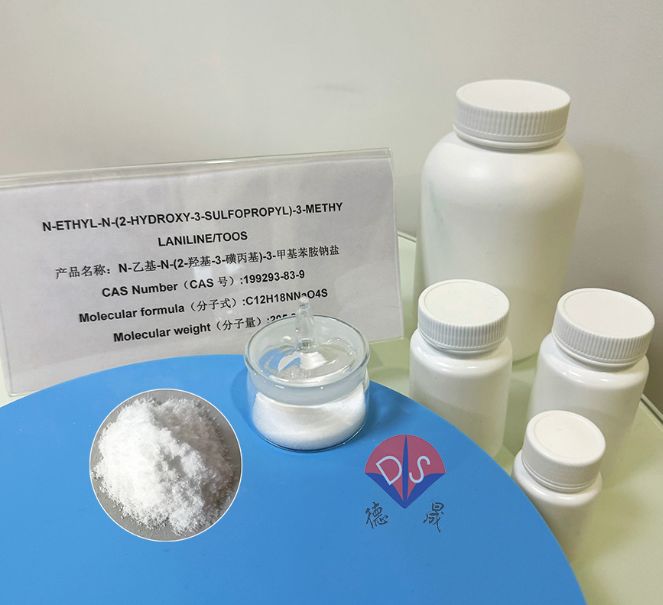
TOOS powder
1、 The 'chemical code' for blood ammonia testing: Trinder reaction
Blood ammonia measurement usually uses enzyme coupling method: glutamine synthetase catalyzes the production of glutamine from ammonia and glutamate, while consuming ATP; The reaction signal is converted into H ₂ O ₂ by auxiliary enzyme systems such as pyruvate oxidase, and then catalyzed by peroxidase (POD) to undergo oxidative condensation between H ₂ O ₂ and chromogens, generating colored quinone imine compounds whose absorbance is proportional to blood ammonia concentration. Therefore, as long as the content of hydrogen peroxide is accurately measured, the blood ammonia concentration in the sample can be calculated.
However, early use of colorants such as 4-AAP (4-aminoantipyrine), although low-cost, had problems such as low molar absorptivity, susceptibility to oxidation, and poor water solubility. The subsequent development of MBTH (3-methyl-2-benzothiazolinone hydrazone), although highly sensitive, is easily oxidized by air, leading to rapid failure of the reagent during the instrument carrier process and poor onboard stability. How to improve the chemical stability of the color development system while maintaining high sensitivity has become an urgent problem to be solved in the industry.
2、 TOOS's "Color Magic": MBTH+TOOS Color System
In this context, TOOS stands out as a novel Trinder's reagent. Its molecular structure contains sulfopropyl and hydroxyl groups, endowing it with excellent water solubility and steric hindrance effect, effectively inhibiting non-specific oxidation. More importantly, when TOOS is combined with MBTH, a more stable quinone imine chromophore can be formed, with a maximum absorption wavelength of 550-570 nm and a molar absorptivity of 3.92 × 10 ⁴ L · mol ⁻¹ · cm ⁻¹, significantly higher than traditional systems.
In this blood ammonia test kit, TOOS and MBTH form a dual chromogen system, which efficiently generates strong signal products under peroxidase catalysis. At the same time, oxygen scavengers (such as ascorbic acid derivatives) and specific non-ionic surfactants are specially added to the formula to further encapsulate and stabilize MBTH molecules, preventing them from being oxidized during storage or onboard processes, fully meeting the onboard requirements of fully automated biochemical analyzers.
In addition, TOOS itself is non-toxic and non-volatile, and its chemical properties are stable within the physiological pH range, without side reactions with buffer solutions (such as Tris), inorganic salts, or enzyme components, ensuring the overall inter batch consistency and clinical applicability of the reagent.
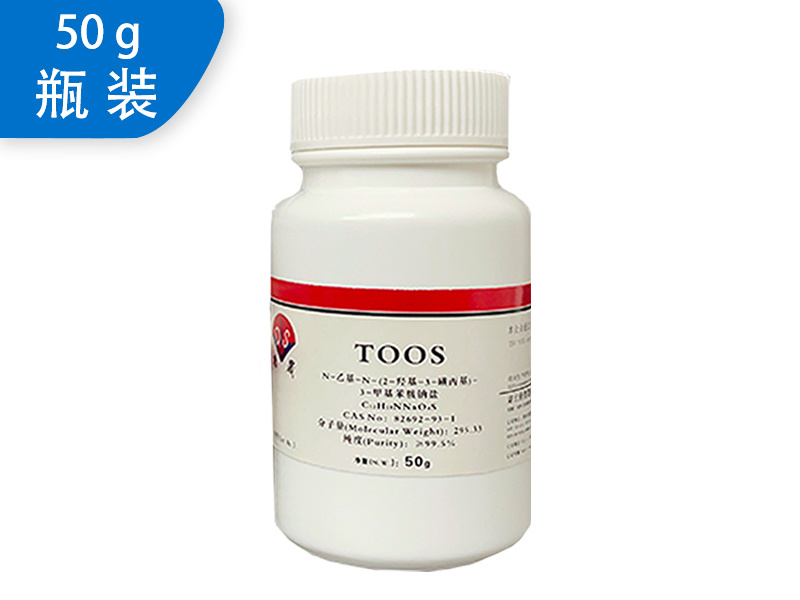
Product packaging
3、 Hubei Xindesheng - Guardian of TOOS Quality
Hubei Xindesheng Material Technology Co., Ltd., as a professional manufacturer of biochemical reagents, has long focused on the research and production of high-performance chromogenic substrates such as TOOS. We will continue to provide high-quality TOOS products and professional technical support for the in vitro diagnostic industry. If you are developing liver function, metabolic diseases, or multi indicator biochemical testing reagents, please feel free to contact Xindesheng - with professional products and services, we will help your innovative diagnostic products to be implemented steadily.
Previous page
Previous page
Contact details
Contact number
Address: C8, Guanggu United Science and Technology City, Ezhou City, Hubei Province
Fax:0711-3704 589
Follow us
