


What experimental equipment and materials are needed for the luminescence experiment of luminol
Release time:
2026-02-17
Luminol luminescence experiment is an experiment that has important applications in various fields such as chemiluminescence analysis and criminal investigation detection. During the experimental process, it is necessary to prepare various materials and equipment, and pay attention to accurate operation and reasonable control of reaction conditions in order to obtain ideal experimental results. What experimental equipment and materials should be prepared?
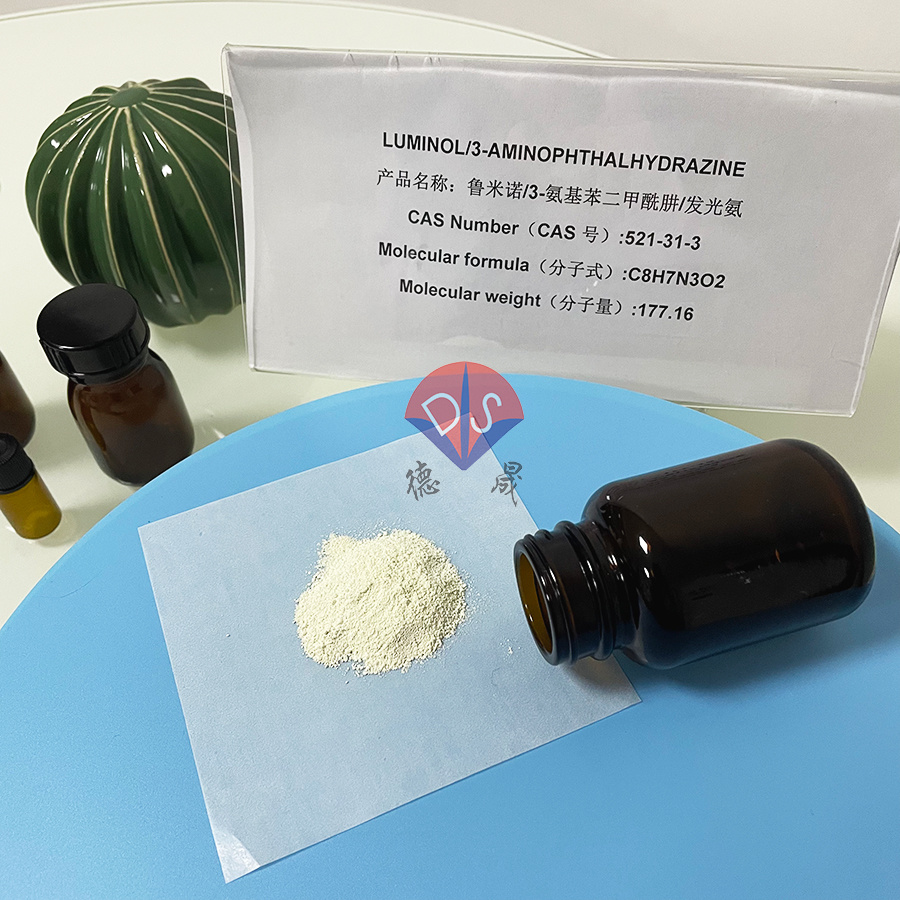
Material part
1. Luminol reagent: Luminol (3-amino-benzoylhydrazine) is the core material of the entire experiment. It is a chemiluminescent material that can only produce blue fluorescence under suitable conditions. Luminol itself is a powder that is easily soluble in alkaline solutions. High purity luminol reagent should be used in the experiment. Low purity may contain impurities that may interfere with the luminescence reaction, resulting in inaccurate luminescence intensity or other unpredictable reactions. It is recommended to use luminol reagents with a purity of over 98% to fully ensure the experimental results. The dosage may vary depending on the experimental purpose and the size of the reaction system. In quantitative analysis experiments, it is necessary to accurately weigh the amount of luminol to ensure a good linear relationship between the luminescence intensity and the concentration of the target substance.
2. Oxidants: Commonly used oxidants include hydrogen peroxide (H ₂ O ₂). Hydrogen peroxide is a strong oxidant that can undergo an oxidation reaction with luminol, thereby triggering luminol luminescence. Choosing the appropriate concentration of hydrogen peroxide is very important. Low concentrations may result in weaker luminescence intensity, while high concentrations may make the reaction too intense and difficult to control.
Alkali solution: Sodium hydroxide (NaOH) or potassium hydroxide (KOH) solution is a commonly used alkali solution. Luminol is more easily oxidized in alkaline environments, resulting in luminescence.
Catalyst: Enzyme catalysts may be used in biochemical luminol luminescence experiments, such as detecting certain enzymes or active substances in biological samples. For example, horseradish peroxidase (HRP) can catalyze the reaction between hydrogen peroxide and luminol, and in specific biological sample detection, it can achieve specific detection of target substances by coupling with target enzymes or antigen antibody complexes.
Experimental equipment section
1. Reaction vessel
For small-scale luminol luminescence experiments, test tubes are commonly used reaction vessels. It is easy to operate and observe, and can conduct simple qualitative experiments. The conical flask is suitable for larger scale reactions or situations that require stirring. For example, when studying the kinetics of luminescent reactions of luminol, a conical flask can be used for better stirring and sampling.
2. Measuring tools
The pipette in the measuring tool can accurately measure specific volumes of liquid reagents, such as luminol solution, alkaline solution, hydrogen peroxide solution, etc. Pipettes are more flexible and can adjust the volume of liquid to be aspirated as needed, making it more convenient and efficient to continuously aspirate the same volume of liquid. In accurate quantitative experiments, high precision is required for these measuring tools.
In addition, when the reaction system needs to be uniformly mixed, a magnetic stirrer is also a very practical tool. Place the stirrer into the reaction vessel, turn on the magnetic stirrer, and the stirrer will rapidly rotate under the action of the magnetic field, thereby fully mixing the liquid in the reaction system. This method ensures uniform contact between reagents such as luminol, oxidants, and alkaline solutions, which is beneficial for the smooth progress of the reaction.
3. Testing equipment
If quantitative measurement of the luminescence intensity of luminol is required, a photometer or fluorometer is an indispensable device. These instruments can detect the light signals generated by luminescent reactions and convert them into electrical signals for quantification. Due to the relatively weak luminescence of luminol and its susceptibility to external light interference, it is necessary to use a dark box or light shield to create a dark environment when observing and detecting luminescence phenomena. This can improve the contrast of the luminous signal, making it easier to observe and record the luminous phenomenon, especially during qualitative experiments or simple demonstration experiments, where the luminous effect can be seen more clearly.
4. Other auxiliary equipment
Luminol reagents, oxidants and other chemical materials may cause harm to the human body, so protective gloves and goggles need to be worn during the experiment to prevent chemical reagents from coming into contact with the skin and eyes.
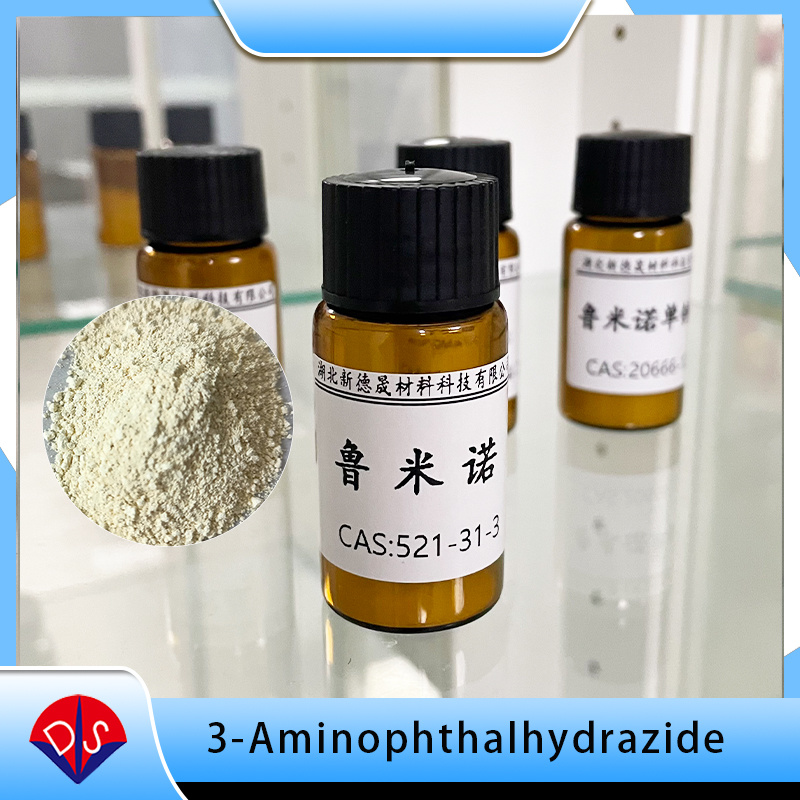
Product packaging
The details in the luminol experiment cannot be ignored, and the correct use and combination of these materials and equipment provide a solid foundation for the application of luminol luminescence experiments in different fields. Hubei Xindesheng Material Technology Co., Ltd., as a supplier of chemiluminescence reagent raw materials, not only has a cheap price, but also all of them are analytical grade, with high luminescence sensitivity and multiple types to choose from. Welcome interested parties to click on the website for consultation!
Contact details
Contact number
Address: C8, Guanggu United Science and Technology City, Ezhou City, Hubei Province
Fax:0711-3704 589
Follow us
