


Accurately measuring the pH of Tris buffer: key techniques for selecting the right pH meter and electrode
Release time:
2026-02-15
Tris base, The full name of trihydroxymethylaminomethane (THAM) is a widely used buffer reagent in life science research. Its pKa value at 25 ° C is about 8.1, which is suitable for maintaining stability in the pH range of 7-9. Therefore, it has played an important role in experiments such as molecular biology, cell culture, protein purification, and enzyme activity determination.
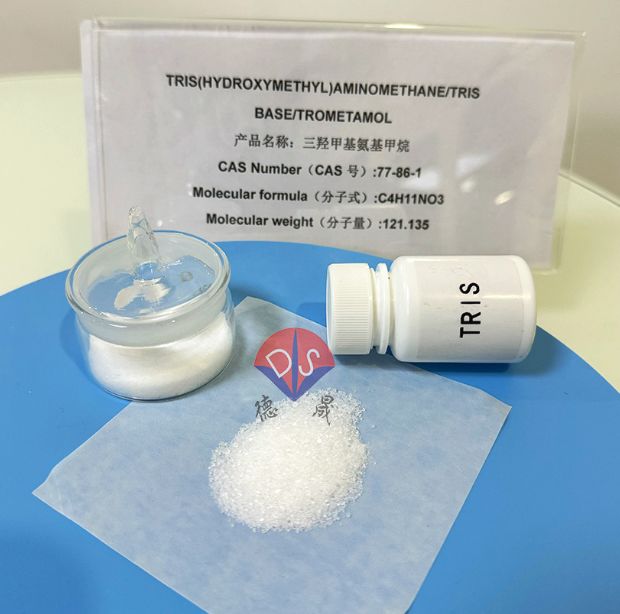
Tris buffer
Challenges in pH measurement of Tris buffer solution
1. Temperature sensitivity: The pH value of Tris buffer is extremely sensitive to temperature changes. For example, the pH values at 25 ° C and 37 ° C may differ by 0.3-0.5 units. Therefore, strict temperature control and temperature correction are required during measurement.
2. Electrode selection: The components in Tris solution may react with the silver chloride reference electrode of traditional pH electrodes, resulting in measurement bias. To reduce errors, it is recommended to choose a non chloride silver reference electrode or a double salt bridge electrode.
3. Selection of pH meter: The ideal pH meter should have temperature compensation function, adapt to high pH range, and maintain long-term stability to ensure accurate and reliable results under various experimental conditions.
How to choose a suitable pH meter
Choosing a suitable pH meter is crucial when measuring the pH value of Tris buffer. In practical work, the following key points can be referred to when selecting a suitable pH meter.
High precision calibration
To ensure accurate measurement of the pH value of Tris solution, the pH meter needs to be calibrated before measurement. Usually, at least two standard buffer solutions (such as pH 7 and pH 10) are used for calibration to ensure accurate readings can be obtained within the pH range of Tris solution.
Automatic temperature compensation (ATC) function
Due to the temperature sensitivity of Tris buffer, using a pH meter with automatic temperature compensation function can improve measurement accuracy. This function can automatically adjust the pH value based on the actual temperature, ensuring the reliability of the measurement results. This is particularly important in the measurement process, especially when Tris solution is applied in experiments that require constant temperature conditions.
Suitable electrode materials
The silver chloride reference electrode in ordinary glass electrodes may react chemically with Tris buffer solution, resulting in incorrect pH readings. Therefore, it is recommended to choose special electrodes suitable for biochemical solutions, such as non silver chloride reference electrodes or electrodes with double salt bridges, which can reduce interference and improve the accuracy of pH measurement.
Frequent maintenance and calibration
Due to the particularity of Tris solution, maintenance and cleaning of pH electrodes have become particularly important. After frequent use, the electrode may be contaminated by proteins or other biomolecules, resulting in inaccurate readings. Regular cleaning and recalibration of electrodes are key to ensuring accurate pH measurement of Tris solution.

Product packaging
Hubei Xindesheng Materials reminds you that the accuracy, calibration, and automatic temperature compensation function of the pH meter are decisive factors in accurately measuring the pH of Tris buffer solution. Choosing a suitable pH electrode (avoiding interference from silver chloride electrodes) and measuring under constant temperature conditions can ensure the accuracy of pH values. Meanwhile, using a pH meter with automatic temperature compensation can help overcome the issues caused by the temperature sensitivity of Tris buffer solution.
Contact details
Contact number
Address: C8, Guanggu United Science and Technology City, Ezhou City, Hubei Province
Fax:0711-3704 589
Follow us
