


From substrate to reagent kit: practical application of chromogenic substances in clinical biochemical testing
Release time:
2025-12-18
Chromogenic substrates are essential chemical substances in clinical biochemical testing, widely used in the determination of routine items such as liver function, kidney function, and blood glucose. These compounds react under the catalysis of specific enzymes to produce colored products, whose color intensity is proportional to the concentration of the target analyte within a certain range, thus achieving quantitative detection. Common chromogenic substrates include TOOS, MAOS, and TOPS, which are widely used due to their stable reaction and high sensitivity.
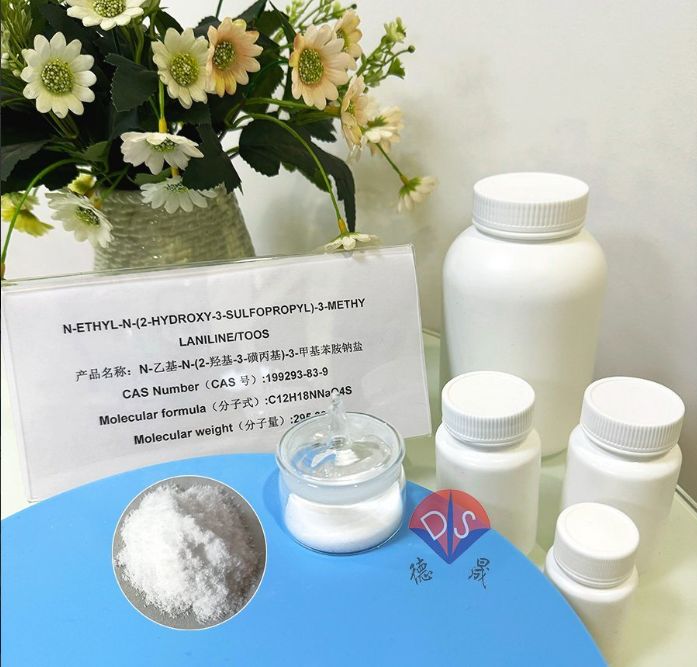
TOOS
The basic mechanism of action of chromogenic substrates
In enzymatic reactions, chromogenic substrates are usually a component of the reaction system, participating in the reaction together with enzymes, coenzymes, or other reagents. When the target analyte is present, the relevant enzymes are activated, catalyzing substrate conversion and ultimately promoting oxidation or coupling reactions of the chromogenic substrate to generate colored compounds. The product has measurable absorbance at a specific wavelength, which can be quantitatively read by a biochemical analyzer to convert the concentration of the analyte in the sample. This principle forms the basis of most colorimetric methods for detection.
Application in liver function testing
Liver function testing often involves the determination of indicators such as transaminase (ALT, AST) and bilirubin. Taking ALT detection as an example, the hydrogen peroxide generated during the reaction process can be catalyzed by peroxidase and react with chromogenic substrates such as TOOS to produce colored products. The depth of color can reflect the degree of damage to liver cells. TOOS exhibits good repeatability and accuracy in practical applications due to its good water solubility and low non-specific interference.
Application in renal function testing
Renal function assessment mainly relies on the detection of creatinine and urea nitrogen. MAOS and TOPS are often used as color reagents in enzymatic determination of creatinine. The hydrogen peroxide generated by the reaction reacts with the chromogenic substrate to form a colored substance under enzymatic action, and its concentration is proportional to the creatinine content. This method avoids the non-specific interference of traditional picric acid method, improves the specificity and precision of detection, and is suitable for automated analysis platforms.
Application in blood glucose testing
The glucose oxidase peroxidase method (GOD-POD method) is commonly used for blood glucose testing. Glucose generates hydrogen peroxide under the action of glucose oxidase, which reacts with chromogenic substrates (such as MAOS) and 4-AAP under the catalysis of peroxidase to produce red quinone imine compounds. By measuring the changes in absorbance, the blood glucose concentration can be calculated. This method is easy to operate and has a wide linear range, making it one of the widely used standard methods in clinical practice.
Integration and standardization of reagent kits
For ease of use, chromogenic substrates are usually integrated into commercial reagent kits and prepared in proportion with buffer solutions, enzyme preparations, stabilizers, and other components. This integrated design reduces laboratory preparation steps, lowers operational errors, improves detection consistency and efficiency, and is particularly suitable for large-scale sample processing.
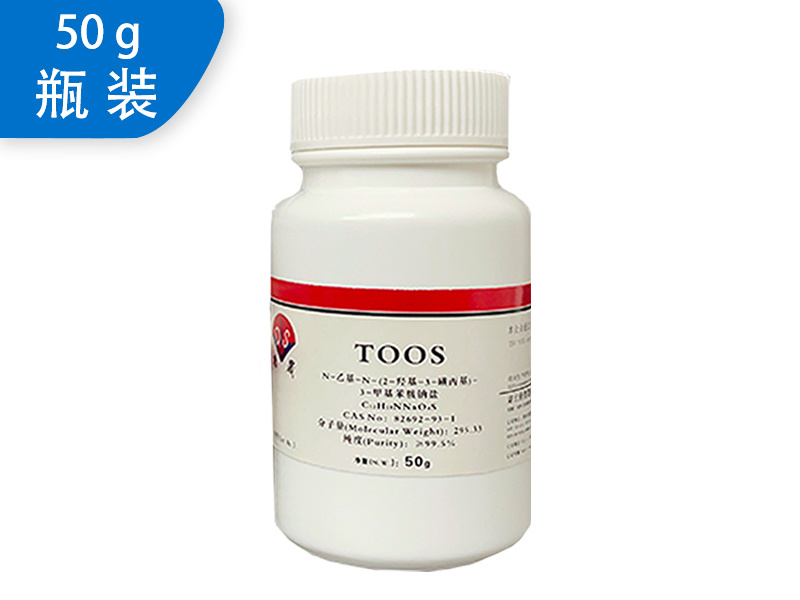
Product packaging
In summary, chromogenic substrates, as key reaction components in biochemical detection, support the accurate determination of multiple conventional items. Hubei Xindesheng focuses on the research and production of in vitro diagnostic raw materials, providing a variety of chromogenic substrates including TOOS, MAOS, TOPS, etc. The products have good inter batch stability and reaction performance. If you need to know technical parameters or request samples, please feel free to contact Xindesheng for support.
Contact details
Contact number
Address: C8, Guanggu United Science and Technology City, Ezhou City, Hubei Province
Fax:0711-3704 589
Follow us
