


In the era of IVD "brand recognition": Behind the land grabbing is the silent battle of the raw material supply chain
Release time:
2025-12-17
1、 Mingpai Era: From "Dark Warfare" to "Bright Sword"
In 2025, the in vitro diagnostics (IVD) industry will enter a new turning point. The "implicit competition" that used to rely on technological barriers, deep channel cultivation, and academic promotion is being replaced by a more direct way - showing off one's cards and seizing market share. It is worth mentioning that Mindray did not conceal its strategic intention - "everyone will fight to the end in technology, research and development, products, operations, sales, marketing, academia, after-sales, and supply chain." This seemingly plain statement actually declares the arrival of a new era: the leading companies in the IVD industry are no longer satisfied with "holding on", but are taking the initiative to launch a "harvesting" mode with a clear posture.

2、 Golden Window: The market is actively giving up
Those small and medium-sized enterprises that once relied on policy dividends for survival are now unable to maintain equipment deployment, reagent updates, and academic support, and hospital channels are gradually becoming vacant. And top enterprises, relying on strong capital chains, complete supply chains, and mature service systems, are rapidly filling the gap with a "bottom fishing" trend. This is what Wu Hao called the "golden age" - not through innovation breakthroughs, but through integration and annexation. When others struggle between 'surviving' and 'surviving', the strong are already laying out 'winning the future'.
3、 Flow thinking: Equipment is the entrance, reagents are the profit
In this round of land grabbing war, the most core tactic is "exchanging equipment for market".
Winning the bid for 1 cent? It sounds absurd, but it's actually shrewd. Once a biochemical analyzer and a chemiluminescence analyzer enter the hospital, they become the "flow inlet" for reagent consumption in the following years. Even if the equipment has no profit, as long as the channel can be opened, subsequent reagent sales, consumables replacement, and service binding will bring sustained and stable cash flow.
This is similar to the "razor+blade" mode. Equipment is like a 'knife handle', seemingly unprofitable, but it is the key to locking in customers. And reagents are the real "blades" and the core source of profits.
4、 Innovation dilemma: Why is the source of fresh water drying up?
As the saying goes, innovation is the lifeblood of industry development. But in the current IVD industry, this statement seems somewhat extravagant. Even more ironic is that some companies have to give up research and development in order to "survive" and instead produce highly homogenized conventional reagents, falling into a vicious cycle of "getting poorer as they roll up". The industry has shifted from "competing for technology" to "competing for cost", and from "competing for innovation" to "competing for who lives longer".
However, the real breakthrough point may not lie in the price war, but in the optimization of the supply chain and the deep promotion of domestic substitution. When the external environment forces companies to re-examine every cost link, only those companies that can achieve breakthroughs in raw materials, core materials, and key processes can truly build a moat.
5、 Force out a hole: Internal collaboration determines external victory or defeat
In such a big environment, it has become very important for companies to make a breakthrough internally. From research and development to production, from sales to after-sales, from supply chain to academic support, any shortcoming in any link may result in the failure of the initial investment. The equipment has been laid down, but the reagents are unstable? Customer churn. The price is low, but delivery is delayed? Trust collapses. Winning the bid, but the service cannot keep up? Channel loss. Therefore, future competition is not only a competition for market share, but also a competition for organizational efficiency, system capabilities, and resource integration capabilities.
6、 Conclusion: Seizing the entrance requires solidifying the foundation
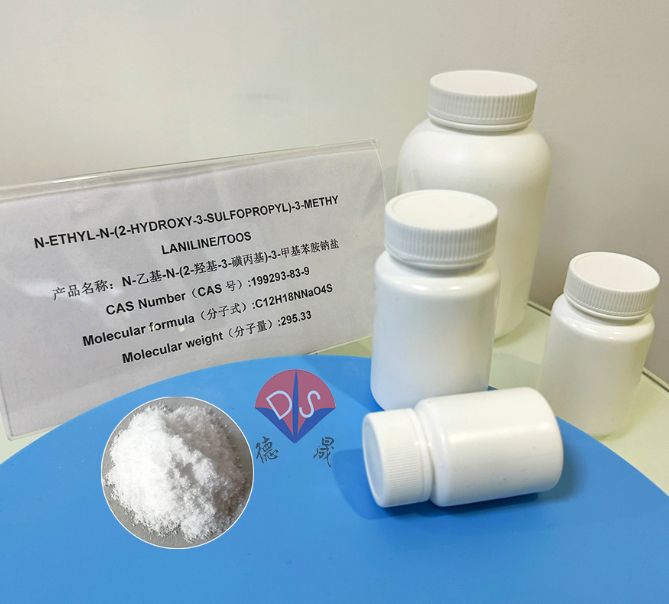
The battle for territory in the IVD industry has begun, but the real winners will not stop at the number of devices deployed. Who can provide more stable products, more efficient supply chains, and more timely services, who can laugh until the end after the reshuffle. In this transformation, the autonomy and controllability of core materials are becoming a crucial factor in determining the life and death of enterprises. Hubei Xindesheng is a pioneer in this field. Focusing on the research and production of IVD raw materials, its independently developed chemiluminescence reagents and chromogenic substrate reagents have been widely used in the reagent kits of multiple mainstream IVD enterprises, helping customers significantly reduce production costs while ensuring performance.
Contact details
Contact number
Address: C8, Guanggu United Science and Technology City, Ezhou City, Hubei Province
Fax:0711-3704 589
Follow us
