


Analysis of the role of 2-methylmorpholine ethanesulfonic acid (MES) in chromium free passivating agents for metallic manganese
Release time:
2025-11-27
Background: Corrosion Issues and Passivation Requirements of Manganese Metal
Manganese is an indispensable alloying element in the steel industry, which can effectively enhance the strength, hardness, and ductility of steel. However, metallic manganese itself is chemically active and easily reacts with oxygen and moisture in the air, leading to surface oxidation and even deep corrosion. This corrosion not only affects the mechanical properties of materials, but also shortens the service life of equipment and may interfere with electronic or optical functions. Therefore, surface treatment of metallic manganese, especially the use of passivation technology to improve its corrosion resistance, has important practical significance.
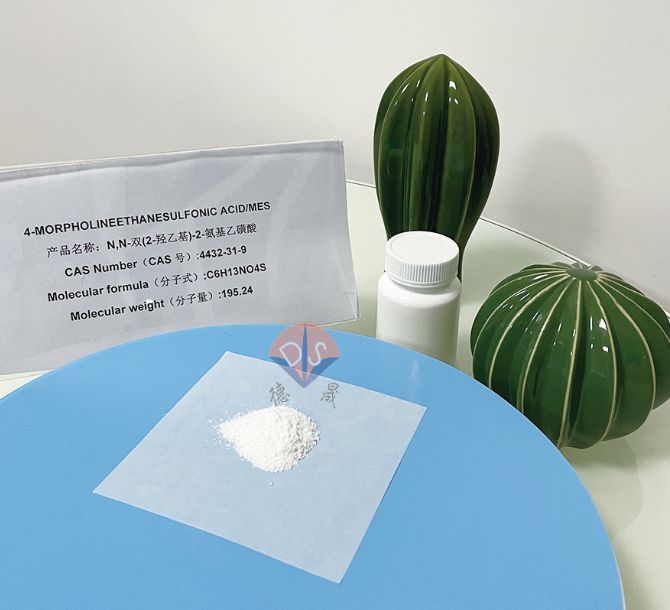
Composition and characteristics of chromium free passivation system
At present, a relatively mature chromium free passivation formula includes linear hydrophobic fatty acids, linear fatty acid methyl ester sulfates, soluble cerium salts, and compounds such as 2-morpholinoethanesulfonic acid (MES). This system does not contain heavy metals, is environmentally friendly, and has good passivation effect and storage stability.
Among them, soluble cerium salts (such as cerium nitrate) are key components in forming inorganic passivation films, which can form a protective film mainly composed of cerium oxide or cerium hydroxide on the metal surface; Linear fatty acids and their derivatives contribute to the formation of hydrophobic organic layers, enhancing overall protective performance. Although 2-methylmorpholine ethanesulfonic acid (MES buffer, CAS: 4432-31-9) does not directly form a film, it plays an important auxiliary role in the system.
The core function of MES is to maintain pH stability in the system
2-morpholine ethanesulfonic acid is a commonly used biological buffering agent, with an effective buffering range of pH 5.5-6.7. In the above-mentioned chromium free passivators, the main function of MES is to stabilize the pH value of the entire system in the weakly acidic range through buffering capacity. This control is crucial. Because soluble cerium salts are easily hydrolyzed under near neutral or alkaline conditions, generating insoluble cerium hydroxide precipitates, which not only reduce the concentration of active ingredients, but may also cause turbidity, stratification, and even failure of the passivation solution. Under the buffering effect of MES, the pH of the solution can be maintained within an appropriate range, effectively delaying the hydrolysis of cerium salts and ensuring that they remain dissolved during the reaction process, thereby continuously participating in the formation of the passivation film.
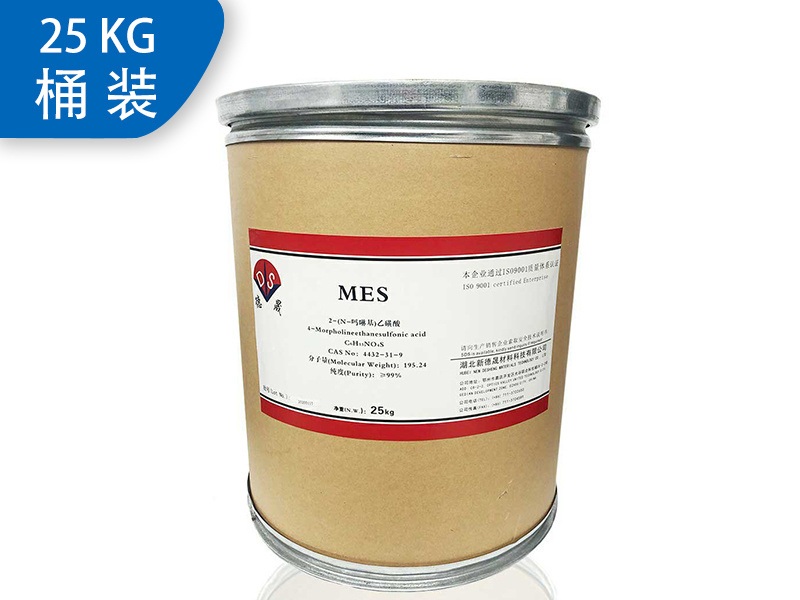
Product packaging
In addition, a stable weak acid environment is also conducive to the adsorption and arrangement of other components (such as fatty acid substances) on metal surfaces, promoting the construction of organic-inorganic composite film structures and further enhancing the density and corrosion resistance of passivation films. Hubei Xindesheng Material Technology Co., Ltd. focuses on the research and production of biological buffering agents such as MES (CAS: 4432-31-9). The products have high purity and good batch stability, and have been applied in multiple metal surface treatment projects. If you are looking for reliable MES raw materials, please feel free to contact Hubei Xindesheng. We will provide you with technical support and product services that meet your actual needs.
Contact details
Contact number
Address: C8, Guanggu United Science and Technology City, Ezhou City, Hubei Province
Fax:0711-3704 589
Follow us
