


New discovery of superoxide regulation - the role of MES buffer in plant root tip growth
Release time:
2025-11-26
During the growth process of plants, the root system is the key organ for absorbing water and nutrients, while the root tip is the core area for plant growth and development. In recent years, scientists have gradually realized that the growth and differentiation of root tips are not only genetically regulated, but also closely related to other factors. Among them, biological buffer solution plays an important role in plant root growth as a common experimental reagent. Especially some specific buffer solutions, such as MES buffer(2- (N-morpholino) ethanesulfonic acid), have been shown to affect root partitioning and growth by regulating superoxide generation in the root tip region.
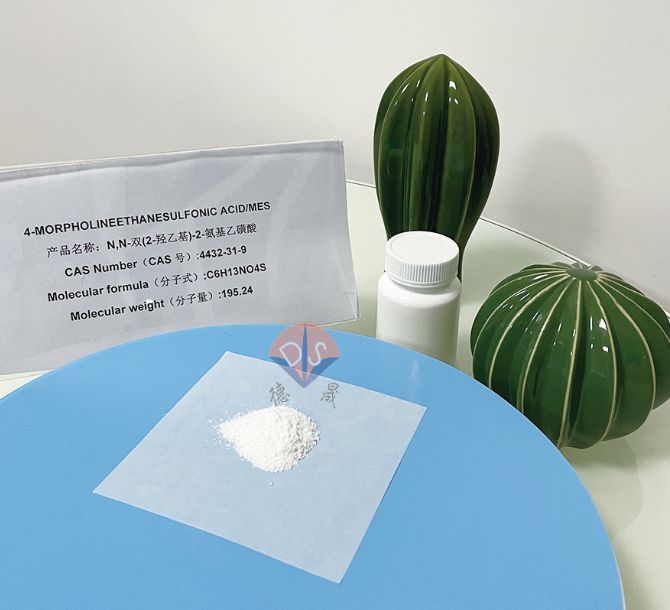
MES buffer
1、 How does MES buffer affect the growth of Arabidopsis root tips
In a study, scientists investigated the regulatory effect of MES buffer on the root tip region of Arabidopsis thaliana. Research has found that different concentrations of MES have vastly different effects on root growth. For example, 0.1% MES can promote root growth and root tip area expansion, while 1% MES significantly inhibits root growth, root hair quantity, and the length of the meristematic zone.
More noteworthy is that high concentrations of MES can inhibit the generation of superoxide in the root tip region. Superoxide is a common reactive oxygen species (ROS) that plays a dual role in plant cells: moderate ROS helps with cell signaling and growth regulation, but excessive ROS can lead to oxidative damage. Therefore, MES alters the ROS homeostasis in the root tip region by inhibiting the production of superoxide, thereby affecting the growth of root morphology.
2、 The Promoting Role of MES in Plant Growth
MES, as a Good's buffer, is widely used in plant physiology experiments. It has good pH buffering ability and is commonly used to adjust the pH value of plant culture media to ensure that plants can effectively absorb nutrients. Moreover, the concentration and usage of buffer solution may have a profound impact on plant growth. In addition, MES buffer can enhance potassium absorption in non rhizobial soybean seedlings and promote plant nitrogen fixation ability, especially in leguminous plants.
3、 Scientific applications and future research directions of buffer solutions
This study not only reveals the impact of MES on plant root growth, but also provides ideas for future plant research. By regulating the type and concentration of buffer solutions, scientists can more accurately control the growth environment of plants, thereby optimizing their growth conditions. In addition, the study also suggests that the role of buffer in plant cells is much more complex than we imagined. They not only affect pH values, but may also affect key processes such as cell signaling, cell division, and differentiation by regulating ROS levels.
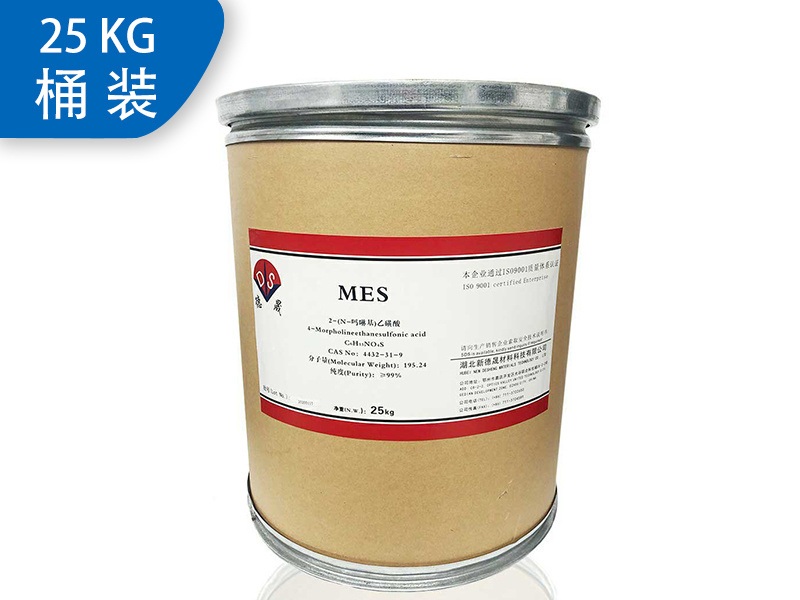
Product packaging
Conclusion: The importance of buffer solution in plant growth
Although not well-known to the public, biological buffers play an irreplaceable role in plant research and agricultural production. They are like invisible regulators silently influencing the growth and development of plants. With the deepening of scientific research, our understanding of buffer solutions will become more comprehensive. As a professional manufacturer of biological buffering agents, Desheng New Materials is committed to providing customers with high-quality and stable buffering solution products. Choose Desheng, choose the power of science, and provide solid support for plant research and agricultural production.
News

Contact details
Contact number
Address: C8, Guanggu United Science and Technology City, Ezhou City, Hubei Province
Fax:0711-3704 589
Follow us