


Lack of confidence in the IVD industry, these three are important reasons
Release time:
2025-09-30
In the medical and health industry landscape, the in vitro diagnostics (IVD) industry was once considered a highly promising field. However, there is a pervasive sentiment of lack of confidence in the IVD industry in the current market. This phenomenon is not groundless. Through in-depth analysis, it can be found that the three key factors of market demand changes, policy environment adjustments, and deteriorating competitive landscape are continuously impacting the development foundation of the IVD industry, causing concern among practitioners and investors.
1、 Market demand side: weak growth, difficult to fill gaps
As the epidemic subsides, the market demand structure undergoes drastic changes. The growth rate of the conventional testing market capacity has significantly slowed down, making it difficult to fill the performance gap left by the disappearance of the epidemic. In 2025, its business development will be under pressure due to the impact of economic cycles and industry macro policy environment, resulting in severe net profit losses. From the demand side, hospitals and patients are more cautious about spending on non essential testing items during non epidemic periods. Data shows that the growth rate of routine business revenue for some IVD companies has plummeted from double digits during the pandemic to single digits, and even experienced negative growth.
Meanwhile, although the aging population has increased the demand for testing to some extent, the growth rate is lower than expected. And with the improvement of people's health awareness and the development of medicine, some diseases can be controlled in the early stage, and the corresponding demand for mid to late stage testing has decreased. For example, in the field of cancer detection, due to the popularization of early screening technology, the market demand for mid to late stage cancer detection projects has grown slowly, which has put IVD companies that focus on detection products at this stage in a difficult situation.
2、 Policy environment: cost control and centralized procurement, heavy pressure
Industry cost control is a long-term trend, which has a profound impact on the IVD industry. After the implementation of DRG/DIP payment reform, hospital laboratory fees have become increasingly strict. Hospitals, in order to control costs, reduce non essential testing items on one hand, and split testing items on the other hand, which directly compresses the stock market of IVD enterprises. After implementing DRG payment reform in a certain region, the procurement volume of some routine biochemical testing projects by local hospitals decreased by 20% -30%.
The centralized procurement policy has brought tremendous pressure to IVD enterprises. In 2024, Anhui Province will lead the IVD centralized procurement in 27 provinces, involving large varieties such as cancer biomarkers and thyroid function testing reagents; In the second half of 2025, 28 provinces will gradually implement centralized procurement, and the coverage will be further expanded. After centralized procurement, product prices have significantly decreased, and the profit margins of enterprises have been severely squeezed. In order to maintain market share, enterprises have to accept low-priced bids and invest more in optimizing their supply chain to reduce costs, which puts high demands on their operational capabilities.
In addition, the promotion of the policy of mutual recognition of inspection results has also reduced the demand for repeated testing. The expansion of mutual recognition of inspection results between institutions has further reduced the market size of IVD enterprises and intensified competition among them. Some companies have to accept more relaxed payment terms in order to maintain cooperation with hospitals, resulting in extended accounts receivable turnover days and difficulties in fund recovery.
3、 Competitive landscape: overcapacity, severe homogenization
Many small and medium-sized enterprises are caught in a price war to compete for limited market share, leading to a deterioration of the market competition environment. In traditional niche fields such as biochemical diagnosis, with mature technology, high localization rate, numerous enterprises, and particularly fierce price competition. Some companies are willing to sacrifice product quality in order to reduce costs, which not only damages the overall reputation of the industry, but also exacerbates the disorderly competition in the market.
At the same time, there is a serious problem of product homogenization in the IVD industry. Most companies focus on common testing projects, with minimal differences in technology, performance, quality, and other aspects of their products. Taking blood glucose test strips as an example, many brands of products on the market have similar testing principles and accuracy, making it difficult for enterprises to establish advantages through differentiated competition. In fields such as molecular diagnostics and mass spectrometers, imported brands still dominate, while domestic enterprises have a lower market share.
Faced with the current situation of insufficient confidence in the IVD industry, after analyzing the three key factors of weak market demand growth, unfavorable policy environment, and deteriorating competitive landscape, we clearly see that the industry is in a period of deep adjustment. However, challenges and opportunities coexist. If enterprises can actively seek change in difficult situations, such as increasing research and development investment to achieve technological innovation, expanding emerging markets, optimizing product structure, etc., they are still expected to find new development paths in the wave of change and reshape industry confidence.
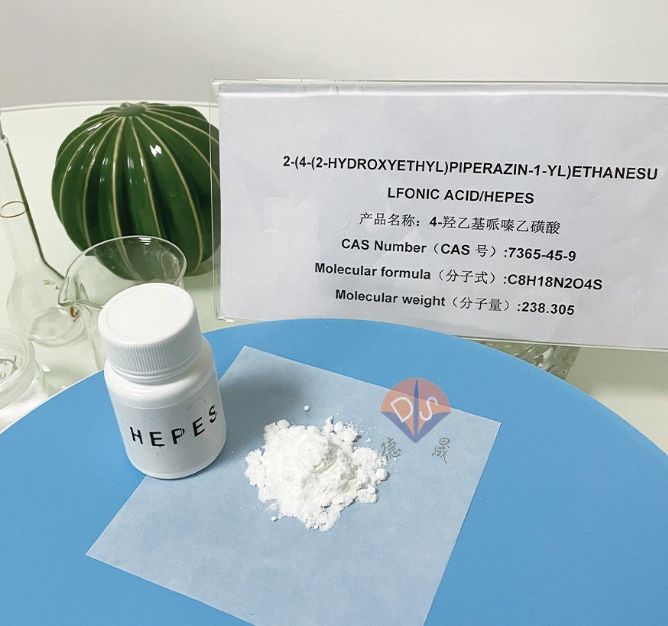
As an upstream IVD raw material manufacturer, Hubei Xindesheng was also deeply affected in this wave, but quickly rose up, adjusted its business sectors, innovated and optimized, actively expanded the enzyme preparation raw material market, and currently has a complete industrial chain, selling blood collection tube additives, biological buffering agents, chromogenic substrates, luminescent reagents, enzyme substrates, etc. If you have any purchasing needs, please feel free to contact us at any time!
Contact details
Contact number
Address: C8, Guanggu United Science and Technology City, Ezhou City, Hubei Province
Fax:0711-3704 589
Follow us
