


The Key Applications of TAPS in Capillary Zone Electrophoresis
Release time:
2024-06-06
Capillary zone electrophoresis is a technique used for protein microanalysis, in which the selection of background electrolytes is crucial for the effectiveness of electrophoresis. In this case, the biological buffer TAPS buffer (trimethylolmethylaminopropanesulfonic acid) can be used as a background electrolyte for capillary zone electrophoresis for protein microanalysis.
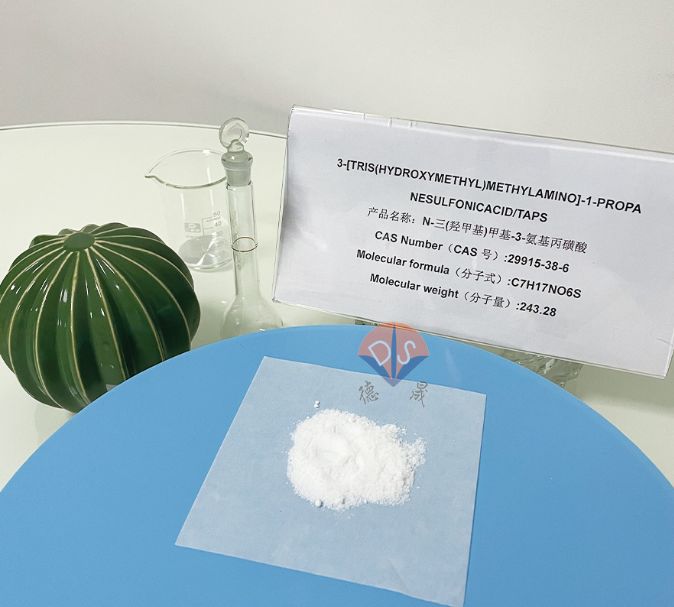
TAPS buffer
The application of TAPS (trimethylolmethylaminopropanesulfonic acid) in capillary zone electrophoresis is mainly reflected in its role as a buffer. The following is a detailed application explanation of TAPS:
Buffering effect: During electrophoresis, due to the effect of an electric field, ions in the solution will move, which may cause changes in the pH value of the solution. TAPS, as a buffer, can maintain the stability of the pH value of the solution, thereby ensuring the stability and reliability of the electrophoresis process.
Optimize electrophoresis conditions: In CZE, proteins and other biomolecules are separated under the action of an electric field based on their characteristics such as charge, size, and shape. The addition of TAPS can optimize electrophoresis conditions, making the migration speed of charged particles in the electric field more uniform, thereby improving separation efficiency and resolution.
Protecting biomolecules: As CZE is commonly used to analyze biomolecules such as proteins, nucleic acids, etc., these molecules may be affected by some unfavorable factors during electrophoresis, such as denaturation or degradation. As a biological buffer, TAPS can provide a stable pH environment, protect the structure and function of biomolecules, and prevent them from denaturation or degradation during the experimental process.
Specifically, in the CZE experiment, a slender capillary tube (inner diameter less than 100 μ m, commonly used 50-75 μ m, length generally 30-100cm) needs to be immersed in a buffer containing TAPS. Then, an electric field is applied at both ends of the capillary, and charged particles (such as proteins) in the solution begin to migrate under the action of the electric field. Due to the different migration speeds of charged particles in an electric field, they will gradually separate. By detecting and recording the migration time and position of these particles through a detector, qualitative and quantitative analysis of them can be achieved.
In summary, the application of TAPS in CZE is mainly achieved through its buffering effect, optimization of electrophoresis conditions, and protection of biomolecules. These functions make CZE an accurate and reliable biomolecular analysis technique. By using TAPS as the background electrolyte, electrophoresis conditions can be optimized and the accuracy of protein microanalysis can be improved.

Product packaging
TAPS, as a biological buffer, plays an important role in capillary zone electrophoresis for protein microanalysis. Through its excellent buffering performance and stability, it can ensure the smooth progress of the electrophoresis process and the separation of proteins. As a manufacturer of TAPS buffer, Desheng has received widespread praise from customers. Manufacturers in need can consult and order it!
Contact details
Contact number
Address: C8, Guanggu United Science and Technology City, Ezhou City, Hubei Province
Fax:0711-3704 589
Follow us
