


Sensitivity of chromogenic substrates: the "core key" for IVD diagnosis
Release time:
2026-03-30
With the rapid iteration of in vitro diagnostic (IVD) technology, the core demand for clinical diagnosis is no longer just "whether it can be detected", but "whether it can be detected earlier" and "whether it can be accurately quantified". Chromogenic substrate, as a key core material in IVD assay kits that directly reacts with target biomarkers and achieves signal conversion, its sensitivity directly determines the upper limit of the performance of the entire detection system. It is not only the "reagent" in the laboratory, but also the "core key" to help doctors capture the condition, achieve early detection and diagnosis.
1、 High sensitivity: achieving early detection and intervention of diseases
Early intervention of diseases is the key to improving cure rates and reducing mortality rates. However, in the initial stages of many diseases, such as viral infections and early tumors, target biomarkers in patients' bodies, such as viral nucleic acids, specific proteins, and tumor antigens, often have extremely low concentrations in the nanomolar or even picomolar range. At this point, conventional testing methods often turn a blind eye due to insufficient sensitivity, resulting in the missed optimal treatment timing.
Highly sensitive chromogenic substrates, with their excellent capture ability, can trigger significant chromogenic reactions even at extremely low concentrations of target substances. Taking viral nucleic acid testing as an example, in the early stages of infection, the viral load may be negligible, and ordinary substrates are difficult to capture. However, high-sensitivity substrates can quickly bind to trace amounts of viral nucleic acid, producing color signals that can be recognized by the naked eye or instruments, and buying valuable treatment time for patients.
2、 Sensitivity of chromogenic substrates: building the "data foundation" for quantitative detection
For biochemical testing items that require quantitative analysis such as blood glucose, blood lipids, and liver and kidney function, the sensitivity of the chromogenic substrate directly determines the reliability and accuracy of the test results. In an ideal IVD detection system, the color intensity produced by substrate reactions should exhibit a strict linear positive correlation with the concentration of the target substance.
A highly sensitive chromogenic substrate can ensure that even small fluctuations in the concentration of the target substance can result in clear, stable, and distinguishable color changes. This precise response capability enables the instrument to accurately calculate the actual concentration of the target substance in the sample during detection, reducing errors and providing reliable quantitative data for clinical use. On the contrary, substrates with insufficient sensitivity may exhibit subtle color differences when faced with samples of similar concentrations, leading to drift and increased errors in detection results, directly affecting the judgment of clinical diagnosis.
3、 Selecting the right chromogenic substrate to control the core competitiveness of IVD products from the source
The sensitivity of chromogenic substrates is a core hard indicator for measuring the quality of IVD reagents and a key factor in the competitiveness of enterprise products. Choosing a highly sensitive chromogenic substrate can not only improve the detection rate and accuracy of the product, but also simplify the production process, reduce inter batch differences, and ensure the stability and reliability of the product in clinical use.
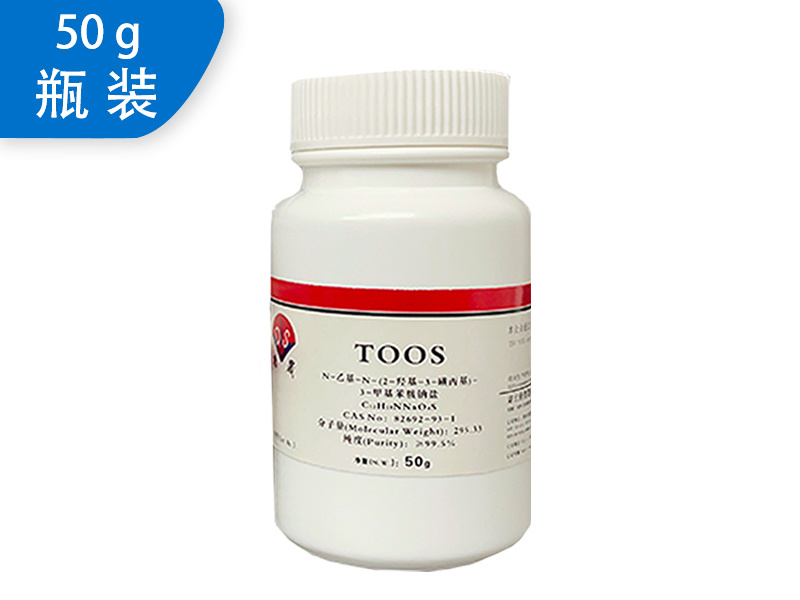
product packaging
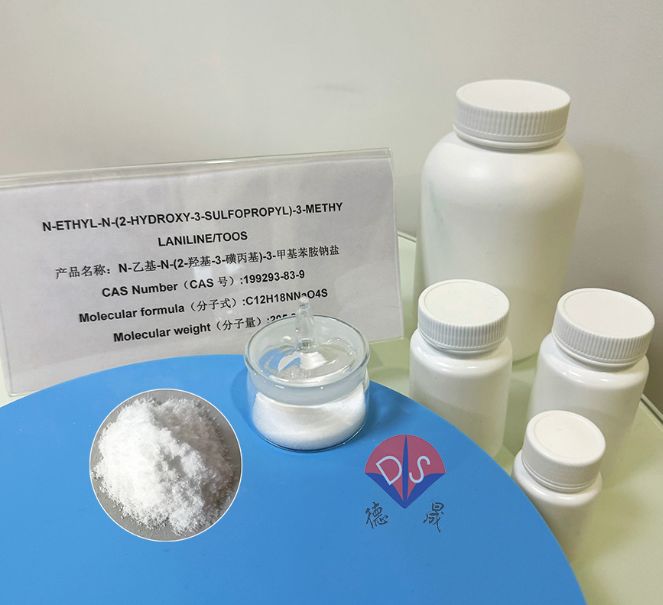
As a domestic enterprise specializing in the research and production of IVD core raw materials, Hubei Xindesheng is well aware of the importance of substrate sensitivity in clinical diagnosis. We have been deeply involved in the field of chromogenic substrates for many years, relying on advanced synthesis processes and strict quality control systems to develop and produce a series of chromogenic substrate products such as TOOS, MAOS, MADB, TOPS, etc., which have significant advantages of high sensitivity, high specificity, and wide linear range. They can accurately capture trace markers and help IVD kits achieve early diagnosis.
Contact details
Contact number
Address: C8, Guanggu United Science and Technology City, Ezhou City, Hubei Province
Fax:0711-3704 589
Follow us
