


Application of PIPES in Plant Genome Sequencing
Release time:
2026-02-02
High quality DNA is a prerequisite for plant sequencing
Plant genome sequencing plays an increasingly important role in crop breeding, functional gene research, and biodiversity analysis. However, compared to animal tissues, plant materials contain more polysaccharides, polyphenols, and secondary metabolites, which can easily interfere with DNA extraction and affect the accuracy of subsequent sequencing results. Therefore, obtaining high-purity and highly intact plant genomic DNA is the foundation for conducting high-quality sequencing work.
The commonly used methods for extracting plant DNA currently include CTAB method, SDS method, Trizol method, etc. Although these methods are mature, they generally have problems such as multiple operating steps, the use of toxic reagents such as phenol or chloroform, and lack of friendliness towards experimental personnel. Especially in large-scale sample processing, the efficiency and security shortcomings of traditional methods are more pronounced. Therefore, researchers have been exploring simpler and safer alternative solutions.
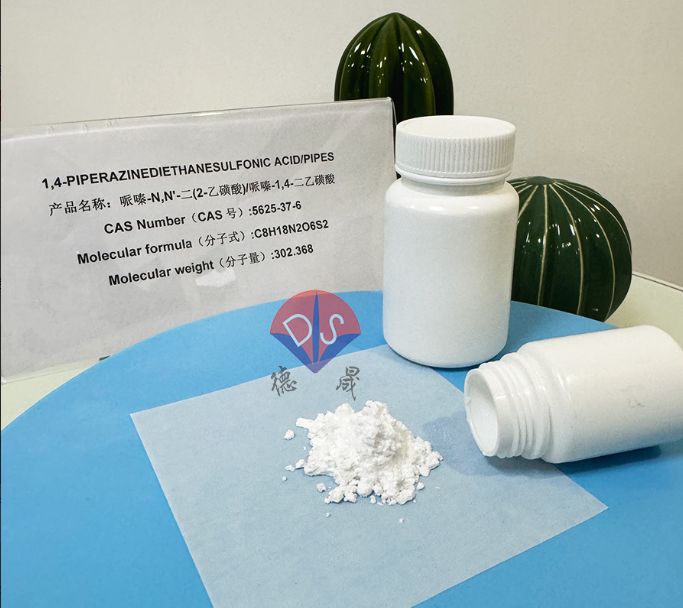 PIPES powder
The advantages of PIPES as a buffering agent
Piperazine-1,4-diethylsulfonic acid (PIPES buffer, CAS number: 5625-37-6, molecular formula: C ₈ H ₁ N ₂ O ₆ S ₂) is a commonly used biological buffer and belongs to the Good's buffer family. Its effective pH buffering range is 6.1-7.5, close to neutral, suitable for most biochemical reactions. Compared with some traditional buffer systems, PIPES has good water solubility, lower metal ion chelating ability, and stable chemical properties at room temperature.
In recent years, studies have attempted to use PIPES for the preparation of plant nucleic acid extraction reagents. In this new system, PIPES mainly plays a role in maintaining the pH stability of the reaction system, while also helping to reduce the impact of polyphenol oxidation and polysaccharide co precipitation on DNA purity. Due to the fact that this method does not rely on organic solvents such as phenol and chloroform, the overall process is milder, safer for experimental personnel, and reduces potential environmental burdens.
Performance in practical applications
The extraction method containing PIPES can usually complete the entire process from plant tissue to DNA in a short period of time. The extracted DNA is less contaminated; The electrophoresis results showed clear main bands and low degradation, making it suitable for downstream applications such as PCR amplification, library construction, and second-generation sequencing.
In addition, this method has a relatively simple reagent composition, controllable cost, and good repeatability, making it suitable for promotion in laboratories with limited resources or the need to process large amounts of samples. Especially for universities, agricultural research institutions, or seed companies, this solution that balances efficiency and safety has certain practical value.
Stable supply, supporting the implementation of scientific research
The key to truly implementing such improved extraction methods lies in the quality and supply stability of the core reagents. Although PIPES is a conventional buffer, there may be differences in purity, impurity content, and batch consistency among products from different sources, which can affect experimental results. Hubei Xindesheng Biotechnology Co., Ltd. has been supplying high-purity PIPES (purity ≥ 99.5%) for a long time, providing complete quality inspection reports, and supporting flexible requirements from small-scale testing to bulk procurement. If you are optimizing the plant DNA extraction process or looking for a reliable biological buffer supplier, you may contact Xindesheng to obtain samples or technical parameters to provide a stable foundation for your experiment.
News

Contact details
Contact number
Address: C8, Guanggu United Science and Technology City, Ezhou City, Hubei Province
Fax:0711-3704 589
Follow us