


Application of HEPES in cosmetics: an ingredient that combines buffering and auxiliary functions
Release time:
2025-12-01
Basic characteristics of HEPES
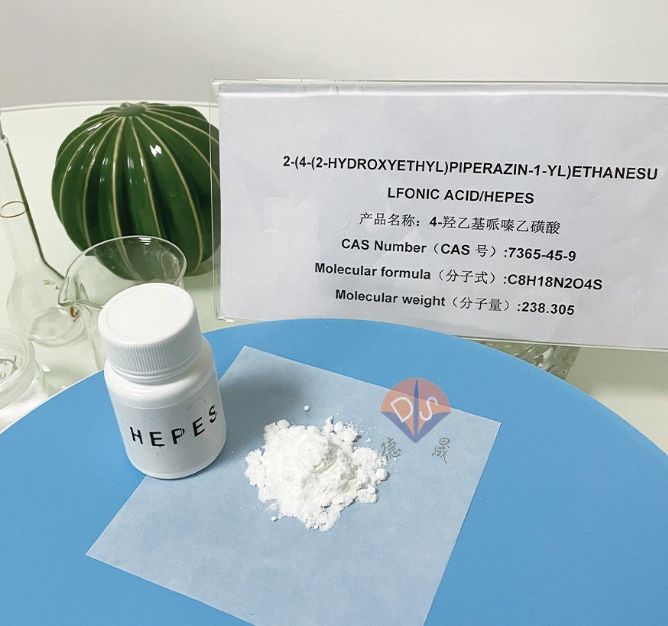
HEPES (4-hydroxyethylpiperazine ethanesulfonic acid), also known as N - (2-hydroxyethyl) piperazine-N '-2-ethylsulfonic acid, is a type of Good's buffer. Its pKa is about 7.45 (25 ℃), and the effective buffering range is pH 6.8-8.2, which is close to the natural pH value of human skin and body fluids. Due to this characteristic, HEPES is commonly used in cell culture and biochemical reaction systems in biological experiments to maintain a stable acid-base environment.
In recent years, HEPES has also been gradually introduced into cosmetic formulations. Unlike traditional inorganic buffering salts that are only used to adjust pH, HEPES exhibits certain functionality in daily chemical products, while also having good chemical stability and low skin irritation.
The main function in cosmetics
In practical applications, HEPES mainly play the following roles in cosmetics:
1. pH adjustment and system stability
Many active ingredients, such as ceramides, vitamin C derivatives, and certain peptides, are sensitive to pH. HEPES can help slow down pH fluctuations and improve overall formula stability during product storage and use, especially suitable for water-based or highly active ingredient systems.
2. Assist in keratin regulation
Studies have shown that HEPES can slightly promote the loosening of old cells in the stratum corneum at a certain concentration, achieving a mild exfoliating effect. Compared to fruit acid or salicylic acid, its effect is weaker but its irritation is also lower, making it suitable for daily care or sensitive muscle products.
3. Improve transdermal efficiency
Partial experimental data shows that HEPES may increase the transdermal absorption rate of certain functional ingredients by affecting the structure of the stratum corneum. Compared with traditional penetration enhancers such as azone, HEPES usually has a lower dosage (commonly 0.5% -2%) and no obvious odor, and can be used as an auxiliary penetration enhancer in some formulations. It should be noted that the HEPES effect is mostly auxiliary in nature and needs to be used in conjunction with other functional components to demonstrate its value.
Safety and regulatory situation
According to existing data, HEPES did not show significant skin irritation or sensitization at conventional usage concentrations. It has been included in the Catalogue of Used Cosmetic Ingredients and international cosmetic ingredient databases (such as INCI), and there are currently no clear restrictions on its use in cosmetics. However, the specific amount of addition still needs to be evaluated based on the product type and overall formula.

Product packaging
Conclusion: Emphasize the quality of raw materials and ensure the reliability of formulas
The application of HEPES in cosmetics reflects the refined role of auxiliary ingredients in modern formulations. Although its efficacy is relatively mild, it has practical significance in improving product stability, compatibility, and user experience.
If you are developing related products and need HEPES raw materials, Hubei Xindesheng Material Technology Co., Ltd. can provide HEPES products that meet the requirements of conventional cosmetic applications. The company focuses on the production of biological buffering agents, supports standard specification supply, and can provide basic technical information according to demand. Welcome to contact for more details.
Contact details
Contact number
Address: C8, Guanggu United Science and Technology City, Ezhou City, Hubei Province
Fax:0711-3704 589
Follow us
