


Research on the Application of MES Buffer in Adsorbents
Release time:
2025-10-03
Basic characteristics and application background of MES
MES (2- (N-morpholino) ethanesulfonic acid) is a commonly used biological buffer with an effective pH range of 5.5-7.0. In recent years, research has found that the sulfonic acid groups and morpholine ring structure in MES molecules make them potentially valuable in the field of adsorbent materials.
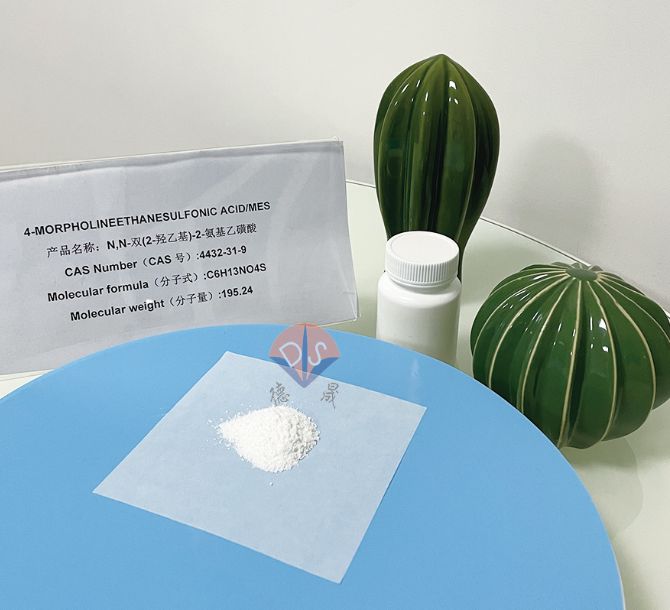
MES Powder
MES can not only stabilize the pH environment, but also endow adsorbents with high selectivity, strong adsorption capacity, and excellent biocompatibility through chemical modification. This has made it stand out in multiple fields such as heavy metal removal and organic pollutant adsorption.
The specific application of MES in adsorbent materials
1. Adsorption of heavy metal ions
The sulfonic acid groups of MES can be chemically bonded to modify adsorption materials such as silica gel and magnetic nanoparticles. Research has shown that adsorption materials modified with MES significantly increase their adsorption capacity for heavy metal ions such as lead and cadmium.
2. Protein separation and purification
MES modified agarose microspheres can be used for protein separation and purification. Experimental data shows that MES modified agarose microspheres achieve selective adsorption through electrostatic interactions between their sulfonic acid groups (- SO3H) and functional groups such as amino groups on the surface of protein molecules.
3. Development of medical adsorbent materials
The low cytotoxicity of MES makes it suitable for the preparation of blood purification adsorption materials. In vitro experiments have shown that MES modified adsorbent materials not only remove blood toxins, but also significantly reduce the release of inflammatory factors compared to traditional materials.
The technological challenges faced
Although MES has broad application prospects in adsorbents, it still faces some challenges:
High temperature stability: MES may decompose at high temperatures, and the curing process needs to be optimized, such as using crosslinking agents to enhance stability.
Cost control: Large scale production of MES modified adsorbents requires more economical synthesis methods, such as in-situ grafting technology.
In the future, with the development of nanotechnology and intelligent materials, MES adsorbents are expected to achieve wider applications in environmental remediation, biomedicine, and other fields.
MES raw material supply and technical support
In the development and production of MES adsorbents, the purity, stability, and batch consistency of raw materials are crucial. As a professional MES manufacturer in China, Hubei Xindesheng focuses on the research and manufacturing of high-purity biological buffering agents. We can provide MES raw materials with a purity of over 99% to help customers solve problems encountered during use. Based on different customer needs, we provide personalized solutions, including but not limited to products of different specifications and purity levels, as well as specific application guidance.
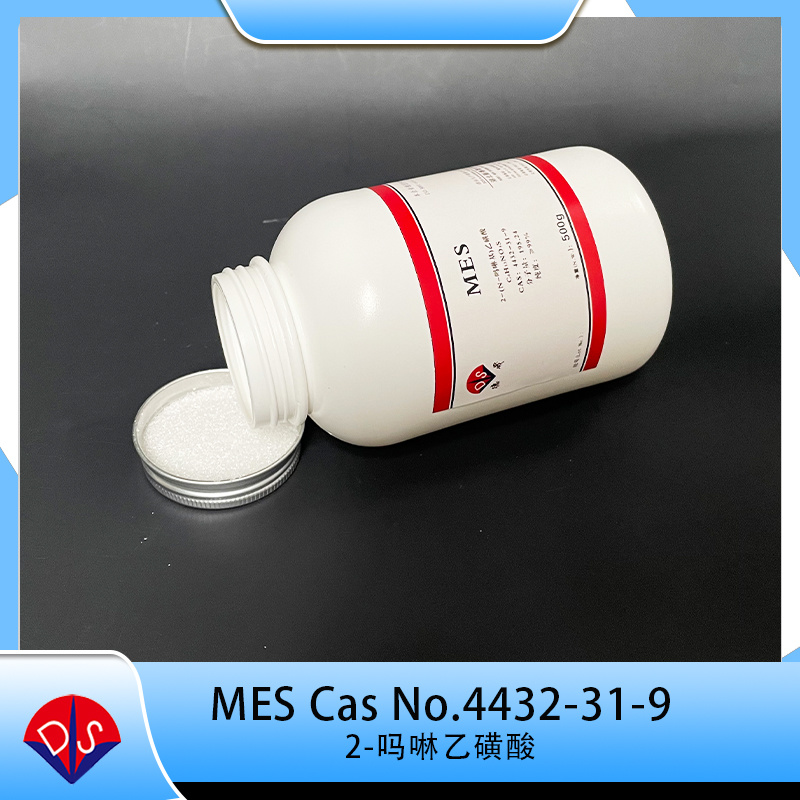
Product packaging
Hubei Xindesheng's MES buffer products have passed multiple quality tests, including HPLC purity analysis and heavy metal content testing. Enterprises can provide MES products of different specifications according to customer needs and assist in the research and development of adsorption materials. For more information on the application of MES in adsorbents or raw material procurement, please feel free to contact Desheng New Materials.
Contact details
Contact number
Address: C8, Guanggu United Science and Technology City, Ezhou City, Hubei Province
Fax:0711-3704 589
Follow us
