


A comprehensive guide to protein electrophoresis buffer: from type selection to experimental optimization, mastering key points in one article
Release time:
2025-07-27
In the field of life sciences, protein separation and analysis are key steps in exploring the mysteries of life, and protein electrophoresis, as the core technology to achieve this goal, largely depends on the selection and use of electrophoresis buffer. In the face of complex and diverse gel systems and research needs, in-depth understanding of the types and characteristics of buffer solutions has become a required course for researchers to accurately control experimental results.
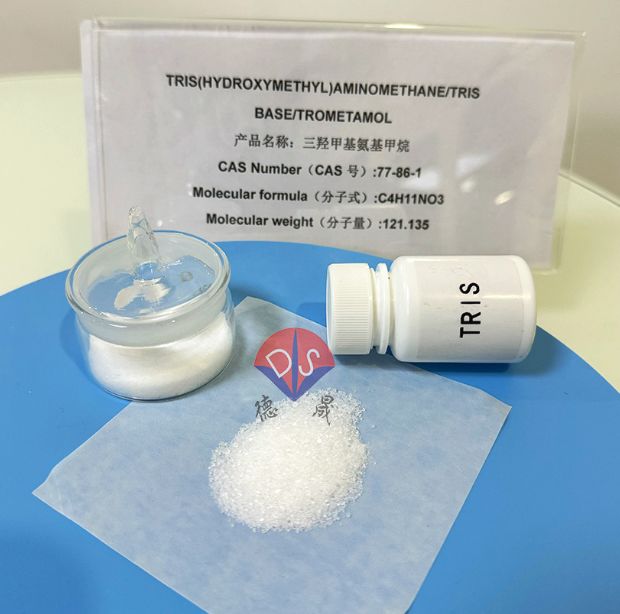
Buffer type suitable for different gel systems
Among numerous buffer systems, Tris glycine buffer stands out due to its excellent separation performance. In the Tris glycine gel system, Tris acts as a pH stabilizer, while glycine constructs an ion gradient driven by an electric field. When applied to SDS-PAGE technology, this buffer can free protein molecules from the interference of charge differences and achieve accurate separation based solely on molecular weight, playing an irreplaceable role in experiments such as protein molecular weight determination.
For Bis Tris gel system, MES and MOPS buffer solution are ideal partners. MES (2-morpholine ethanesulfonic acid) and MOPS (3-N-morpholinopropane sulfonic acid) serve as zwitterionic buffering agents. With their unique chemical structures, they can provide a stable separation environment for smaller molecular weight proteins and nucleic acid molecules, making them powerful assistants for the fine separation of biomolecules.
If it is necessary to separate small molecule proteins with a molecular weight below 10kDa, Tris tricine system generally chooses Tricine buffer. Tricine (N-tris (hydroxymethyl) methylglycine) exhibits strong advantages in the separation of low molecular weight proteins, and can clearly distinguish small protein differences that are difficult to distinguish with traditional buffer solutions.
Functional differences between denaturing and non denaturing buffer solutions
According to experimental requirements, protein electrophoresis buffer can be divided into two camps: denatured and non denatured. The introduction of denaturing buffer into SDS plays a crucial role, as this anionic surfactant not only imparts uniform negative charges to proteins, but also forces changes in their spatial conformation, allowing them to participate in electrophoresis in a linear molecular form. In this way, the migration rate of proteins is only related to molecular weight, which makes denaturing buffer a "standard" for molecular weight detection experiments such as Western Blot.
Non denaturing buffer does not contain any denaturing agents. In this environment, the charge properties, spatial structure, and molecular weight of proteins jointly determine their electrophoretic migration behavior. Therefore, non denaturing buffer has become a key factor in studying the three-dimensional structure, isoelectric point, and protein-protein interactions of proteins, especially in isoelectric focusing electrophoresis, which can help researchers capture the isoelectric point information of proteins.
Key points for selecting and using buffer solutions
The correct selection and standardized use of buffer solution are the key to the success of the experiment. Researchers need to make choices based on experimental objectives: when focusing on protein molecular weight determination, denaturing buffer is undoubtedly a better choice; If we are committed to exploring the natural properties and interactions of proteins, non denaturing buffer solutions can better meet our needs.
The pH value, as the core parameter of the buffer solution, plays a decisive role in the protein separation efficiency. Different proteins exhibit different charged characteristics under specific pH conditions. Therefore, selecting the appropriate buffer pH value based on the properties of the target protein is a necessary condition for obtaining accurate experimental results.

In the field of protein electrophoresis buffer research and production, Desheng New Materials has become a reliable partner for researchers with its profound technical accumulation and strict quality control. The buffer raw materials produced by it, such as Tris, MES, MOPS, Tricine, etc., are known for their ultra-high purity and excellent stability, providing guarantees for the accuracy and reliability of experimental data from the source.
Contact details
Contact number
Address: C8, Guanggu United Science and Technology City, Ezhou City, Hubei Province
Fax:0711-3704 589
Follow us
