


Details that are easily overlooked in the preparation of PIPES raw materials for biological buffering agents
Release time:
2025-03-29
In the fields of chemistry and biology, PIPES buffer (piperazine-1,4-diethylsulfonic acid) is a commonly used biological buffer, and every detail in its preparation process is crucial. Seemingly small details can have a profound impact on the performance and quality of PIPES. For example, in the selection of raw materials, if there is a slight negligence and low purity raw materials are used, impurities may be introduced, which may affect the buffering performance and stability of PIPES, leading to unpredictable results in subsequent experiments or production. Any overlooked detail may prevent PIPES from playing its due role and even cause serious obstacles to the entire research or production process.
Selection of raw materials
1. Purity requirement: When preparing PIPES, low purity raw materials may introduce impurities, affecting the buffering performance and stability of PIPES. Therefore, high-purity raw materials such as piperazine and ethanesulfonic acid should be selected to ensure their purity meets the preparation requirements.
2. Source reliability: The source of raw materials also needs to be carefully selected. Reliable suppliers should be selected to ensure stable quality and traceable sources of raw materials. Avoid using raw materials with unknown sources or unstable quality to avoid affecting the quality of PIPES preparation.
Control of reaction conditions
1. Temperature control: Temperature is one of the important factors affecting the PIPES preparation reaction. During the reaction process, the reaction temperature should be strictly controlled to ensure that the reaction proceeds within an appropriate temperature range. Excessively high or low temperatures can lead to incomplete reactions or the occurrence of side reactions, affecting the yield and quality of PIPES.
2. Reaction time: Reaction time is also one of the details that needs attention. A short reaction time may lead to insufficient reaction, while a long reaction time may result in the occurrence of side reactions or the decomposition of products. The reaction time should be reasonably controlled based on experimental conditions and reaction kinetics to ensure that the reaction proceeds fully.
3. pH control: pH control is also crucial in the preparation process of PIPES. Different reaction stages may require different pH conditions, and the pH value of the reaction system should be strictly controlled by adding appropriate acid-base regulators. The appropriate pH value can promote the reaction and improve the yield and quality of PIPES.
Details of Purification Process
1. Crystallization conditions: In the purification process of PIPES, the selection of crystallization conditions has a significant impact on the purity and quality of the product. Suitable solvents, temperatures, and crystallization times should be selected to ensure that PIPES can fully crystallize and remove impurities. At the same time, attention should be paid to avoiding excessive crystallization or insufficient crystallization.
2. Washing steps: Washing is one of the important steps in purifying PIPES. Suitable detergents such as deionized water, ethanol, etc. should be selected to thoroughly wash the crystallized PIPES, removing residual impurities and solvents. The frequency of washing and the amount of detergent used also need to be reasonably controlled according to the actual situation.
3. Drying conditions: Drying is the key to PIPES preparation and one of the details that is easily overlooked. Suitable drying methods and conditions should be selected, such as vacuum drying, hot air drying, etc., to ensure that PIPES are completely dried and free of moisture. Excessive drying temperature or prolonged drying time may lead to the decomposition or deterioration of PIPES, affecting their performance and quality.
The Importance of Quality Inspection
1. Purity testing: After PIPES preparation is completed, strict purity testing should be conducted. Analysis methods such as liquid chromatography and infrared spectroscopy can be used to detect whether the purity of PIPES meets the requirements. PIPES with substandard purity may affect the experimental results.
2. Buffer performance testing: In addition to purity testing, the buffering performance of PIPES should also be tested. The buffering performance of PIPES can be evaluated by measuring its buffering capacity, pH stability, and other indicators at different pH values to determine whether it meets the requirements. PIPES with poor buffering performance may not be able to maintain the pH stability of the solution, which affects the progress of the experiment.
3. Impurity detection: Impurity detection is also an important part of quality testing. PIPES should be tested for impurities such as heavy metals and organic compounds to ensure compliance with relevant quality standards and requirements. PIPES with high impurity content may interfere with experimental results.
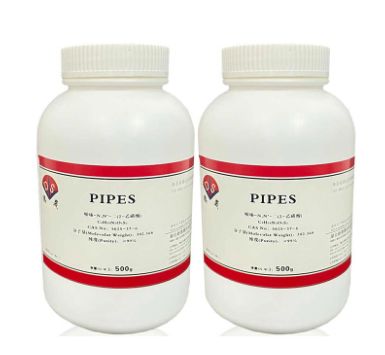
Product packaging
When preparing the biological buffer PIPES, attention should be paid to the selection of raw materials, control of reaction conditions, details of purification process, quality testing, and storage and usage precautions. These easily overlooked details may have a significant impact on the performance and quality of PIPES, and therefore should be given sufficient attention during the preparation process.
Contact details
Contact number
Address: C8, Guanggu United Science and Technology City, Ezhou City, Hubei Province
Fax:0711-3704 589
Follow us
