


Exploring the contribution of PEP in serum carbon dioxide detection kit
Release time:
2025-03-25
Phosphoenolpyruvate (PEP): a core participant in biochemical reactions
Phosphoenolpyruvate (PEP buffer), as an important metabolic intermediate, is widely present in all life activities. It not only participates in cellular respiration and plays a key role in the tricarboxylic acid cycle, but also plays an indispensable role in plant photosynthesis. In chloroplasts, PEP absorbs carbon dioxide under the catalysis of PEP carboxylase and converts it into oxaloacetate, which is an important step in photosynthesis. The ability to efficiently fix CO2 makes PEP a commonly used reagent in biological research and applications.
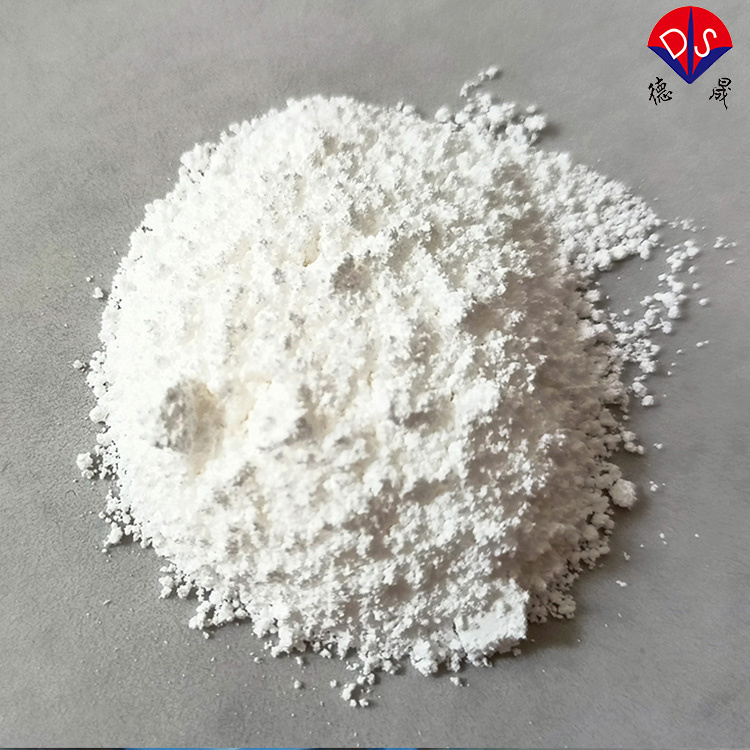
PEP powder
Measurement principle: application from theory to practice
The key to serum carbon dioxide measurement lies in understanding the enzymatic reaction between PEP and bicarbonate ions (HCO3-). During this process, PEP carboxylase acts as a catalyst, promoting the binding of PEP with HCO3- to form oxaloacetate. Subsequently, oxaloacetate consumes NADH and generates malic acid under the action of malate dehydrogenase (MDH). Due to the characteristic absorbance of NADH at a wavelength of 340nm, the initial concentration of CO2 can be calculated by monitoring the decrease in NADH using a spectrophotometer. This method is not only fast and sensitive, but also reliable in results, suitable for analysis of multiple sample types.
Enzyme activity assay: a new window for exploring biological processes
In addition to being used for quantitative analysis of carbon dioxide, the above reaction system can also be used to determine the activity of PEP carboxylase. The experimental design will focus on the rate of change of absorbance over time, as the higher the enzyme activity, the more oxaloacetate is produced per unit time, resulting in a faster consumption rate of NADH. By analyzing these data, researchers can obtain information about the functional status of enzymes and their performance under different conditions. This is crucial for understanding the complex metabolic regulatory network within living organisms and provides valuable tools for agricultural production and environmental science research.
The application prospects of serum carbon dioxide determination kit
The value in clinical diagnosis
In the medical field, serum carbon dioxide concentration is one of the important indicators reflecting the metabolic status of the human body. Using PEP based assay kits for rapid testing can help doctors detect potential health issues in a timely manner, such as respiratory diseases or metabolic acidosis. In addition, this technology can provide continuous and reliable monitoring means for some patients who need to monitor the changes of blood components for a long time, such as patients with diabetes or chronic kidney disease.
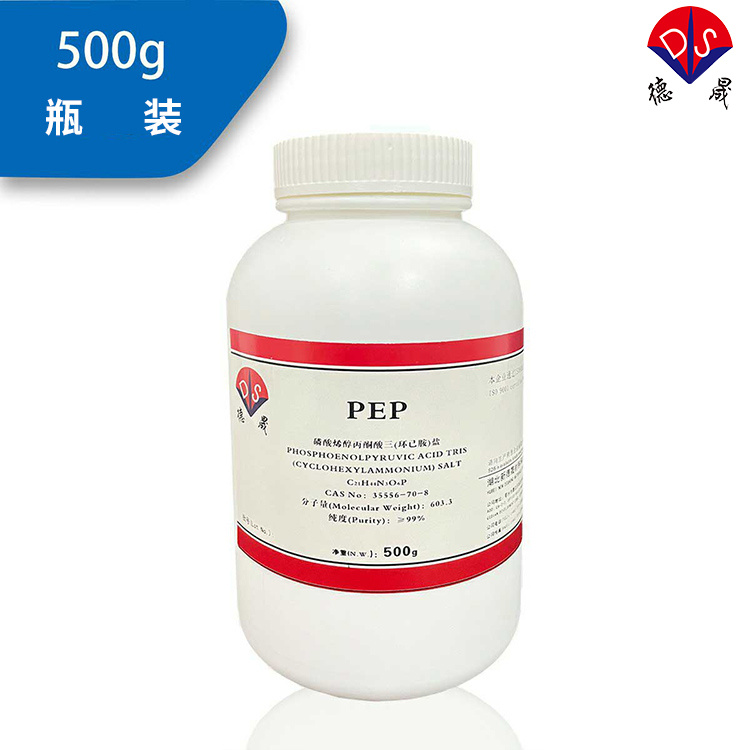
Product packaging
Potential in agricultural production
In terms of agricultural production, by measuring the activity of PEP carboxylase in plant samples, the photosynthetic efficiency of crops can be evaluated, thereby guiding farmers to optimize planting conditions and increase crop yields. Especially for C4 and CAM plants, such measurements help to gain a deeper understanding of how they adapt to different growth environments and develop more stress resistant varieties.
In summary, the application of PEP in serum carbon dioxide assay kits demonstrates the greater possibilities brought by the combination of life science and engineering technology. With the continuous deepening of research and the development of technology, Desheng New Materials believes that with the continuous deepening of research, PEP will have more breakthrough achievements, bringing benefits to human society.
Contact details
Contact number
Address: C8, Guanggu United Science and Technology City, Ezhou City, Hubei Province
Fax:0711-3704 589
Follow us
