


What do you need to know to gain a deeper understanding of the enzyme activity units in enzyme preparations
Release time:
2025-03-24
Enzyme activity unit is a standardized indicator for measuring the activity of enzyme preparations, which defines the rate at which a certain amount of enzyme can catalyze the conversion of substrates into products under specific conditions. Different enzymes and application scenarios may use different units to represent enzyme activity, but their core purpose is to quantify the catalytic efficiency of enzymes. Understanding enzyme activity units is crucial for the proper use of enzyme preparations, evaluating their performance, and conducting scientific research.
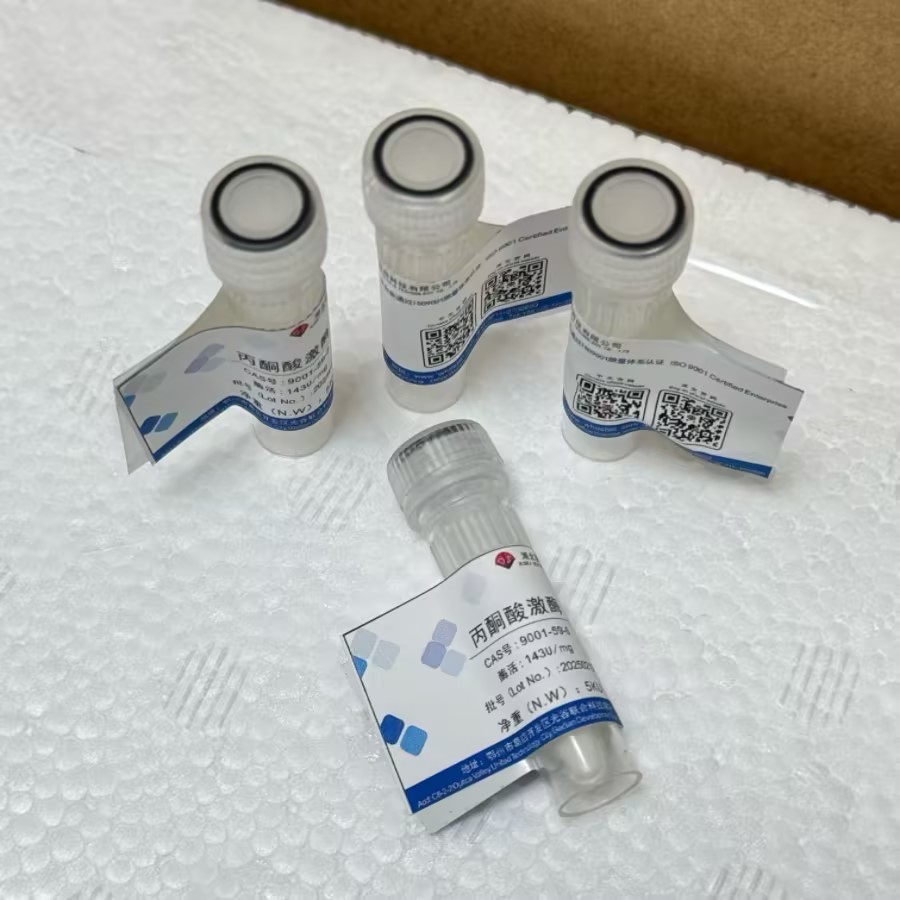
enzyme preparation
Basic concepts of enzyme activity units
Definition: An enzyme activity unit (usually abbreviated as U) refers to the amount of enzyme required to convert 1 micromolar (μ mol) of substrate per minute under standard conditions. This standard condition includes parameters such as pH value, temperature, substrate concentration, etc., and varies according to different types of enzymes.
Different expressions
International Unit (IU): This is a more widely accepted standard, especially in the field of medicine. 1 IU is defined as the number of enzymes required to catalyze the conversion of 1 micromole of substrate to product under specific conditions.
Specific Activity: This refers to the number of enzyme activity units per milligram of protein, which is an important indicator used to evaluate enzyme purity or quality.
Common enzyme activity determination methods
Spectrophotometry: indirectly calculating enzyme activity by monitoring the change in absorbance at a specific characteristic wavelength during the reaction process.
Fluorescence method: using the fluorescence intensity changes generated by the binding of substrates or products with fluorescent markers for measurement.
Chemiluminescence method: Quantitative analysis of enzyme activity based on the phenomenon that certain enzymatic reactions can produce light.
Biosensor technology: a new technology developed in recent years that can monitor enzyme activity in real-time online and has the characteristics of speed and sensitivity.
Why is it important to understand enzyme activity units
Ensure experimental repeatability and accuracy: Reliable comparisons between experimental results can only be guaranteed when using the same or comparable enzyme activity units.
Optimizing process conditions: Knowing the specific activity level of the enzyme used helps to design the experimental process reasonably, such as determining the amount of addition, reaction time, etc.
Cost benefit considerations: Enzymes with high specific activity often imply higher efficiency, which may reduce overall cost inputs.
In summary, enzyme activity units provide a standardized way to describe the catalytic ability of enzyme preparations, which is crucial information for researchers to understand and control the various biochemical processes involved by enzymes. If you are using a specific enzyme preparation, please be sure to consult relevant information to understand the specific enzyme activity definition and its measurement method.
Desheng is a professional manufacturer specializing in the research and development of enzyme preparations. Through continuous innovation and practice, Desheng is gradually growing into a renowned life science and technology enterprise. I believe that in the near future, with the establishment of the Enzyme Preparation Product Project Department, Desheng will be able to write a more brilliant new chapter in the field of enzyme preparations!
Contact details
Contact number
Address: C8, Guanggu United Science and Technology City, Ezhou City, Hubei Province
Fax:0711-3704 589
Follow us
