


Composition of creatinine assay kit: raw materials such as trimethylmethylaminopropane sulfonic acid and TOOS
Release time:
2025-03-04
In the hall of modern medicine, every subtle test carries endless exploration of life and health. Among them, creatinine assay kit is an important tool for evaluating renal function, and its accuracy and stability directly affect the judgment of clinical doctors and the treatment effect of patients. Next, we will take you to learn more about a creatinine assay kit, especially its components - trihydroxymethylaminopropane sulfonic acid, sarcosine oxidase, and N-ethyl-N - (2-hydroxy-3-sulfopropyl) -3-methylaniline sodium salt (TOOS), and reveal its storage conditions and expiration date, giving you a more comprehensive understanding of this kit.
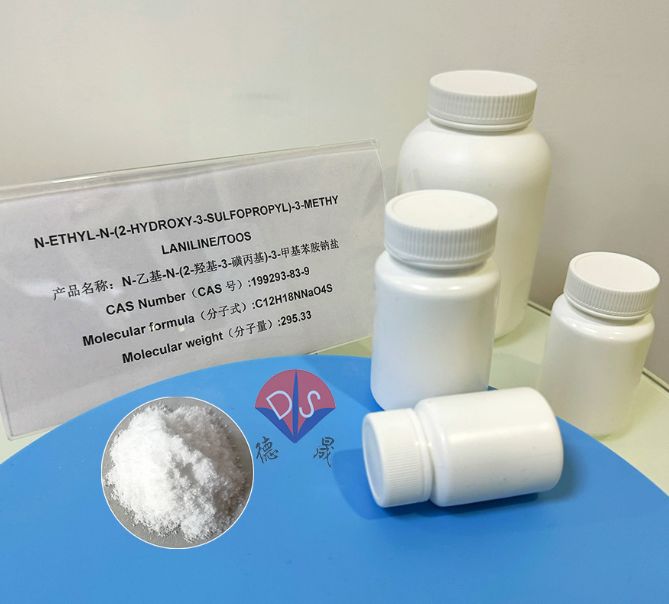
TOOS Powder
This creatinine assay kit is designed specifically for the quantitative measurement of creatinine levels in human serum in vitro. Its composition has been carefully proportioned to ensure the accuracy and reliability of the test results. In reagent 1, trihydroxymethylaminopropyl sulfonic acid serves as a biological buffer that can stabilize the pH value of the reaction system and provide an ideal reaction environment for enzymes. This feature not only enhances the activity of the enzyme, but also ensures the stability and consistency of the detection results.
Creatine oxidase is another key role in reagent 1. It is responsible for catalyzing the conversion of creatine to creatinine and producing intermediate products such as hydrogen peroxide during this process. This step is the core link in the creatinine measurement process, as the amount of hydrogen peroxide generated will be directly correlated with the level of creatinine in the serum. By measuring the amount of hydrogen peroxide produced, we can indirectly determine the concentration of creatinine in the serum, thereby evaluating the functional status of the kidneys.
The addition of N-ethyl-N - (2-hydroxy-3-sulfopropyl) -3-methylaniline sodium salt (TOOS) further enhances the sensitivity and accuracy of the detection. TOOS, as a chromogenic agent, can react with hydrogen peroxide under the catalysis of peroxidase to produce colored products. This colorimetric reaction not only makes the detection results more intuitive and understandable, but also improves the sensitivity and specificity of the detection.
In addition to its components, the storage conditions and expiration date of this creatinine testing kit are also crucial. Unopened reagents should be stored in the dark (2 ℃ -8 ℃) and not frozen to ensure their stability and activity. Under these conditions, the validity period of the reagent is 6 months, which can meet the needs of clinical testing. Once the reagent is turned on, its stability will be affected. Therefore, it is recommended to store it in the dark (2 ℃ -8 ℃) and use it as soon as possible within 28 days to ensure the accuracy and reliability of the test results.

Product packaging
Desheng is a manufacturer of diagnostic reagent raw materials, including creatine oxidase TOOS、 Trimethylmethylaminopropane sulfonic acid is available in stock, and its product quality and purity are usually high, which can meet customers' demand for high-quality raw materials. In the future, with the continuous advancement of technology and the increasing demand for medical care, we have reason to believe that this reagent kit will become more perfect and contribute more to the cause of human health.
Contact details
Contact number
Address: C8, Guanggu United Science and Technology City, Ezhou City, Hubei Province
Fax:0711-3704 589
Follow us
