


Advantages and limitations of lithium heparin in trace element detection
Release time:
2025-02-28
In the modern biomedical field, trace element detection is an important means of understanding human health, nutritional status, and disease diagnosis. In the process of trace element detection, the collection and processing of samples are crucial, among which heparin lithium, as a commonly used anticoagulant, plays a pivotal role in blood collection vessels.
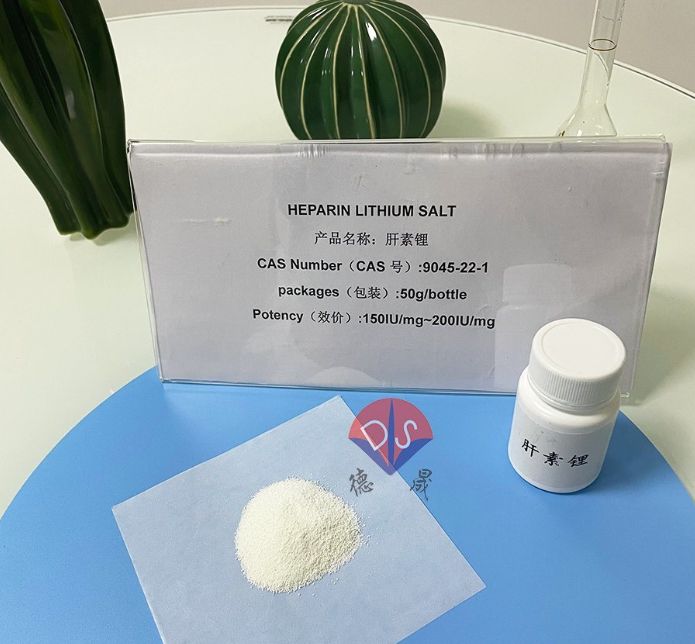
Heparin lithium powder
Heparin lithium is a blood anticoagulant commonly used for blood sample collection and anticoagulation. It can effectively inhibit blood clotting and maintain blood fluidity, which is crucial for trace element detection. Specifically, lithium heparin can prevent the loss of trace elements caused by blood clotting, avoid interference with blood components, and ensure the accuracy of test results.
The advantages of heparin lithium in trace element detection
Protecting trace elements from oxidation: In blood samples, trace elements may be affected by oxidation, leading to a decrease or loss of their biological activity. Heparin lithium can stabilize the redox state in blood samples, reduce the oxidative loss of trace elements, and thus maintain its biological activity.
Improving the solubility of trace elements: Some trace elements may exist in an insoluble form in blood samples, making it difficult for detection instruments to accurately measure. Heparin lithium can alter the physicochemical properties of blood samples, increase the solubility of trace elements, and make them easier to detect by detection instruments.
Easy to operate, safe and reliable: The heparin lithium tube adopts a disposable design, and the collection process is simple and fast, without the need for complex operating skills.
Limitations of Heparin Lithium in Trace Element Detection
Although heparin lithium tubes have shown significant advantages in trace element detection, they have also encountered some challenges in practical applications:
Interference of lithium element: Due to the presence of lithium element in heparin lithium tubes, this may interfere with the detection of specific trace elements, especially lithium element itself. Careful consideration should be given when selecting heparin lithium tubes for samples that require accurate determination of lithium content.
Sensitivity differences: Different trace elements have a wide range of concentrations in the blood, and the design of heparin lithium tubes was not specifically designed for trace element detection. Therefore, for certain low concentrations of trace elements, heparin lithium tubes may not provide sufficient detection sensitivity, affecting the detection results.

Product packaging
Adaptability to special requirements: Trace element detection often requires high processing conditions for samples, including temperature control, storage time, etc. The adaptability of heparin lithium tubes in these aspects may not be as good as specialized blood collection tubes designed specifically for trace element detection.
Despite the aforementioned limitations, heparin lithium anticoagulant remains an essential tool in trace element detection. Desheng Biochemical, as a direct manufacturer of heparin lithium, has rich experience and professional technology in this field. They not only focus on the research and development, production, and sales of blood collection tube additives and blood testing reagents, but also have formed independent intellectual property rights and professional production and research and development capabilities. Desheng's products and services are researched, designed, and produced in accordance with the requirements and standards for blood sample pre-treatment, ensuring the quality and performance of the products.
Contact details
Contact number
Address: C8, Guanggu United Science and Technology City, Ezhou City, Hubei Province
Fax:0711-3704 589
Follow us
