


Acid base guardian, pH balancer, HEPES is here
Release time:
2025-02-20
In the field of biomedical research, cell culture technology is an indispensable part. When it comes to cell culture, HEPES buffer (4-hydroxyethylpiperazine ethanesulfonic acid), a buffer widely used in various cell culture systems, cannot be ignored. HEPES plays an indispensable role in maintaining the cell growth environment due to its excellent pH stability and non toxicity to cells.
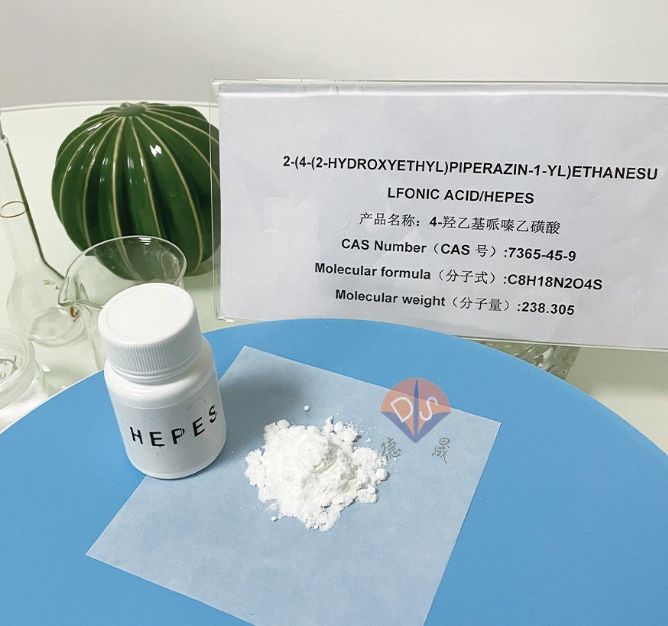
HEPES buffer
What is HEPES?
HEPES is a zwitterionic buffer solution with the chemical name 4-hydroxyethylpiperazine ethanesulfonic acid. It can effectively buffer pH values over a wide temperature range and is particularly suitable for cell culture environments that require pH stability. Its effective pH buffering range is exactly the ideal pH range for the survival of most mammalian cells. In addition, HEPES does not rely on bicarbonate systems for buffering, so it can maintain the pH stability of the solution under changes in CO2 concentration, making it an ideal choice for open or non closed culture systems.
Application of HEPES in Cell Culture
Cell culture is a complex process that involves many variables such as nutrient composition, oxygen levels, and pH value. A stable pH environment is crucial for cellular health, as enzyme activity and other physiological processes within cells are highly dependent on pH. The use of HEPES as a buffer can provide this stability, ensuring normal cell growth and function even in open systems.
When HEPES is added to cell culture medium, it can effectively resist the influence of external factors on the pH of the medium, such as the accumulation of metabolites or changes in external gas exchange. This stability helps to improve the reliability and reproducibility of experimental results, thereby accelerating the pace of scientific research.
The role of HEPES in Hank's solution
In addition to its application in conventional cell culture media, HEPES is often added to Hank's balanced salt solution (HBSS). HBSS is a salt mixture that does not contain calcium or magnesium ions, commonly used in cell cleaning, transportation, and certain specific cell processing procedures. The main purpose of HBSS is to provide an environment similar to extracellular fluid to prevent damage to cells due to exposure to adverse conditions.
In some special experimental settings, such as iron degradation detection experiments, researchers may choose to add HEPES to HBSS to stabilize the pH value. This is because the oxidation state and solubility of iron are affected by pH, and a stable pH environment can ensure that the iron degradation reaction proceeds as expected. Through this approach, HEPES not only helps maintain consistency in experimental conditions, but also promotes more accurate measurement of results.

Product packaging
HEPES, as a reliable biological buffer, has become one of the important tools in modern cell biology research. HEPES plays an irreplaceable role in supporting the healthy growth of cells and achieving more accurate experimental control. With the continuous advancement of science and technology, we can expect HEPES to continue to contribute to future research and assist scientists in exploring the mysteries of life.
Contact details
Contact number
Address: C8, Guanggu United Science and Technology City, Ezhou City, Hubei Province
Fax:0711-3704 589
Follow us
