


What are the incorrect ways to prepare Tris buffer powder solution?
Release time:
2025-01-23
Tris buffer is a commonly used reagent in chemical experiments and biological research. Correctly preparing Tris buffer solution is beneficial for the accuracy of experimental results. However, in practical operation, some incorrect preparation methods may occur, which may affect the performance of the solution and the experimental process. Let's take a look at the wrong ways?
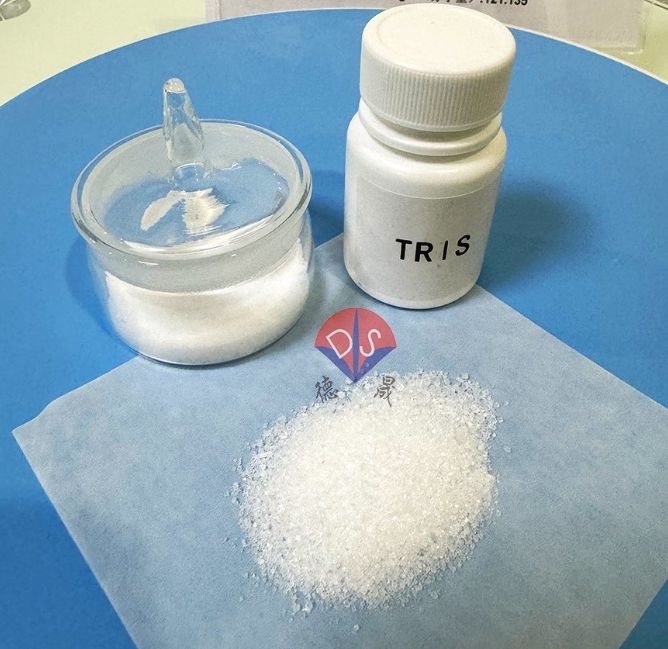
TRIS base powder
Inaccurate weighing
1. Random estimation of dosage: When preparing Tris buffer solution, some experimenters may estimate the dosage of Tris powder based on experience or at will. This inaccurate weighing method can lead to inaccurate solution concentration, thereby affecting buffering performance. Different experiments require different concentrations of Tris buffer, so accurate weighing tools such as analytical scales are needed to weigh according to the required concentration.
2. Using inappropriate weighing tools: Another mistake is using inappropriate weighing tools. For example, using kitchen scales or regular electronic scales to weigh Tris powder may not have high accuracy enough to meet the requirements of chemical experiments. In addition, some weighing tools may be affected by environmental factors such as temperature, humidity, etc., resulting in inaccurate weighing results.
Inappropriate dissolution method
1. Directly adding a large amount of solvent: Some experimenters may pour a large amount of solvent directly into a container containing Tris powder in order to quickly dissolve it. This approach may cause Tris powder to clump and be difficult to dissolve. The correct method is to first add Tris powder to a small amount of solvent, stir evenly to make it fully moist, and then gradually add the remaining solvent while stirring until it is fully dissolved.
2. Insufficient stirring: Insufficient stirring is also a common mistake during the dissolution of Tris powder. If stirred unevenly, it may cause some Tris powder to remain undissolved or result in uneven concentration in the solution. To ensure complete dissolution of Tris powder, appropriate stirring tools such as a magnetic stirrer should be used and stirred continuously for a period of time until the solution becomes clear and transparent.
3. Using unsuitable solvents: Choosing unsuitable solvents can also affect the preparation of Tris buffer solutions. Tris is usually dissolved in deionized water. If an inappropriate solvent is used, Tris may not dissolve or the properties of the solution may change. When choosing a solvent, it should be based on the specific requirements of the experiment and the properties of Tris.
Not paying attention to pH adjustment of the solution
1. Ignoring pH adjustment: The buffering performance of Tris buffer is closely related to its pH value. When preparing Tris buffer solution, it is necessary to adjust the pH value of the solution according to the experimental requirements. However, some experimenters may overlook this step and directly use an unadjusted pH solution for the experiment, which can lead to inaccurate experimental results or even experimental failure.
2. Inaccurate pH adjustment: Even if pH adjustment is performed, there may still be inaccuracies. For example, using an inaccurate pH meter or incorrect pH adjustment method can result in a deviation of the pH value of the solution from the desired value. Meanwhile, attention should be paid to the sequence and speed of pH adjustment to avoid excessive or insufficient adjustment.
Inappropriate storage methods
1. Exposure to air: The prepared Tris buffer solution should be stored properly to avoid exposure to air. Carbon dioxide in the air may react with Tris, causing a change in the pH value of the solution. In addition, impurities in the air may also contaminate the solution and affect its performance. The correct storage method is to seal the solution and avoid contact with air.
2. High temperature storage: High temperature can accelerate the deterioration of Tris buffer solution, so it should be avoided to store the solution in a high temperature environment. Generally speaking, Tris buffer solution should be stored in a cool, dry place, and the temperature should not be too high. If long-term storage is required, the solution can be refrigerated or frozen, but it should be restored to room temperature before use and the performance of the solution should be checked for any changes.
3. The expired Tris buffer solution also has a shelf life, and expired solutions may lose their buffering properties or produce harmful substances. Therefore, when using Tris buffer solution, attention should be paid to checking its shelf life and avoiding the use of expired solutions. If the solution has expired, it should be replaced with a new solution in a timely manner.

Product packaging
When preparing Tris buffer powder solution, the above incorrect methods should be avoided, and the correct operating steps should be strictly followed to ensure the quality and performance of the solution. Only in this way can the accuracy and reliability of the experimental results be guaranteed. As a supplier of Tris biological buffer raw material powder, Desheng's products have good water solubility, high purity, professional guidance for use, simple operation, and quickly improve experimental efficiency. If you have any relevant intentions, please feel free to click on the website to inquire about details and purchase at any time!
Contact details
Contact number
Address: C8, Guanggu United Science and Technology City, Ezhou City, Hubei Province
Fax:0711-3704 589
Follow us
