


Which is more accurate, HSV electrochemiluminescence or immunofluorescence analyzer
Release time:
2025-01-21
In the field of medical testing, electrochemiluminescence and immunofluorescence are currently two commonly used detection methods for herpes simplex virus (HSV). These two methods are controversial for many people, with some believing that electrochemiluminescence is more accurate, while others believe that immunofluorescence is more accurate. So, which method is more accurate? Let's take a look together below.
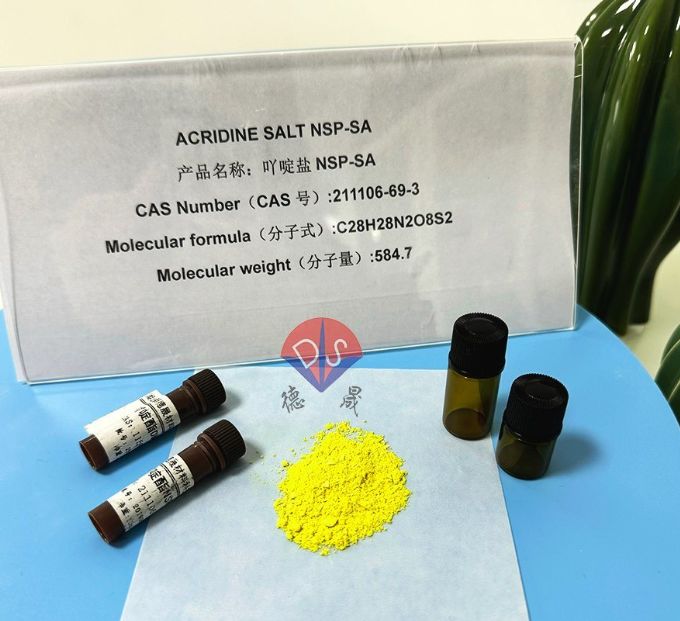
Acridine ester powder
Detection principle
1. HSV electrochemiluminescence
Electrochemiluminescence is a detection technique based on the principle of chemiluminescence. In HSV detection, specific antibodies bind to HSV antigens in the sample, and then undergo a chemical reaction on the electrode surface to generate a light signal. The intensity of the light signal is directly proportional to the concentration of HSV antigen and can be detected and quantitatively analyzed by instruments. For example, in electrochemiluminescence detection, the sample is first mixed with antibodies labeled with electrochemiluminescence substances to bind the antibodies to HSV antigens. Then, the mixture is added to an electrochemiluminescence detector, where a chemical reaction occurs on the electrode surface, producing a light signal. The instrument calculates the concentration of HSV antigen in the sample by detecting the intensity of the light signal.
2. Immunofluorescence analyzer
Immunofluorescence meter is a detection method based on fluorescence labeling technology. In HSV detection, a specific antibody binds to the HSV antigen in the sample, and then a fluorescently labeled secondary antibody is added to form a fluorescently labeled complex. Under specific excitation light, the fluorescently labeled complex emits fluorescence, and the presence or absence of HSV antigen can be determined by detecting the fluorescence intensity. For example, in immunofluorescence detection, the sample is first mixed with a primary antibody to bind to HSV antigen; Then, add a fluorescently labeled secondary antibody to form a fluorescently labeled complex. Place the complex under a fluorescence microscope and observe the fluorescence intensity under specific excitation light. If the fluorescence intensity is high, it indicates the presence of HSV antigen in the sample; If the fluorescence intensity is low or there is no fluorescence, it indicates that HSV antigen is not present in the sample.
Accuracy comparison
1. Sensitivity: Electrochemiluminescence usually has high sensitivity. Due to the strong light signal generated by electrochemiluminescence and its ability to be accurately detected by instruments, very low concentrations of HSV antigen can be detected. The sensitivity of immunofluorescence analyzer is relatively low. Although fluorescently labeled complexes emit fluorescence under excitation light, the fluorescence intensity is relatively weak and may be difficult to detect at low concentrations of HSV antigen.
2. Specificity: Both electrochemiluminescence and immunofluorescence meters have high specificity. This is because both methods are based on the specific binding of antibodies and antigens, which can accurately recognize HSV antigens without cross reactivity with other substances. However, in practical applications, it may be affected by factors such as impurities in the sample, the quality of antibodies, etc., leading to a decrease in specificity.
3. Repeatability: Due to the fact that electrochemiluminescence detection is based on the light signal generated by chemical reactions, and the instrument has high detection accuracy, the results of multiple detections are relatively stable under the same experimental conditions. The repeatability of immunofluorescence meters is relatively poor because the fluorescence intensity emitted by fluorescently labeled complexes under excitation light may be affected by various factors, such as the intensity of excitation light, the stability of fluorescent labeling, etc., resulting in different results for each detection.

Luminol powder
Factors affecting accuracy
1. Sample quality: Whether it is electrochemiluminescence or immunofluorescence, sample quality has a significant impact on the accuracy of detection results. If there are impurities, interfering substances, or improper storage in the sample, it may lead to inaccurate test results. Before conducting testing, it is necessary to strictly process and preserve the sample to ensure that its quality meets the testing requirements.
2. Antibody quality: Antibodies are key reagents in HSV detection. If the specificity, affinity, or stability of antibodies are weak, it may lead to false positives or false negatives in the test results. When selecting antibodies, it is necessary to choose antibodies with reliable quality, strong specificity, and high affinity, and strictly follow the instructions for storage and use.
HSV electrochemiluminescence and immunofluorescence are commonly used detection methods, each with its own advantages and disadvantages. In practical applications, appropriate detection methods should be selected according to specific detection needs and experimental conditions. As a manufacturer of chemiluminescence reagents, Hubei Xindesheng can provide high sensitivity and fast luminescence of acridine esters and luminol in different series. If you have purchasing intentions, please feel free to click on the website for consultation at any time!
Contact details
Contact number
Address: C8, Guanggu United Science and Technology City, Ezhou City, Hubei Province
Fax:0711-3704 589
Follow us
