


CAPS buffer diluted with deionized water
Release time:
2025-01-02
CAPS (3- (cyclohexylamino) -1-propanesulfonic acid) buffer has a wide range of applications in various fields such as biochemistry and analytical chemistry. When diluting CAPS buffer with deionized water, it is necessary to fully consider factors such as the quality of deionized water, dilution ratio, and operating standards, understand their impact on buffering performance, and use diluted CAPS buffer reasonably according to the needs of different application scenarios. Only in this way can its important role in biochemistry, analytical chemistry, and other fields be fully utilized, providing a stable and reliable acid-base environment and good experimental conditions for relevant experiments and detection.
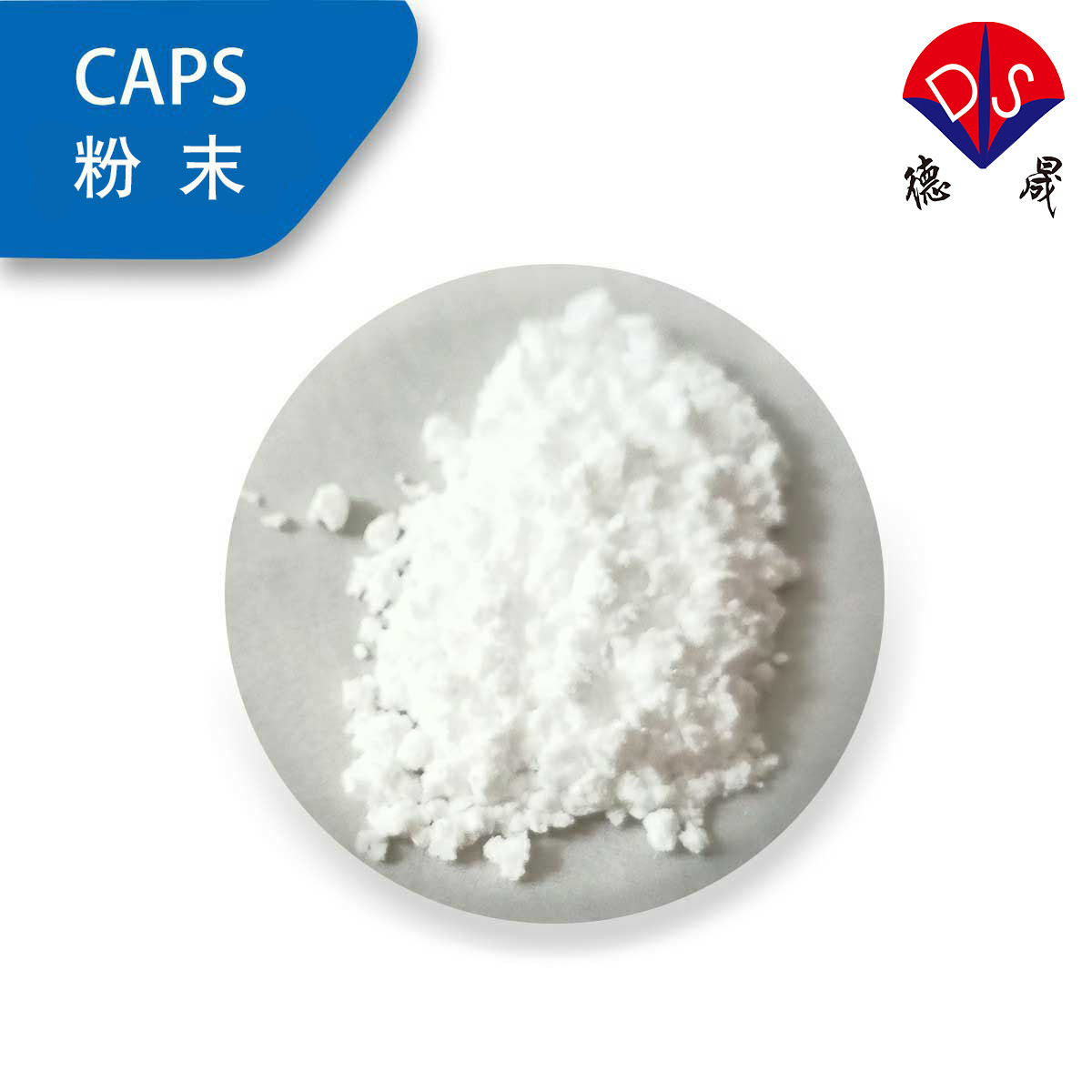
CAPS buffer
Key points of dilution process
1. Quality requirements for deionized water: Deionized water used to dilute CAPS buffer needs to have high purity, low ion impurity content, and contain metal ions (such as calcium, magnesium, iron, etc.) or other charged impurities that may interact with CAPS buffer molecules, alter the chemical structure and properties of the buffer, and affect its buffering capacity. In addition, organic impurities in water may also interfere with subsequent experiments or analytical processes using buffer solutions. Deionized water usually needs to be prepared through multi-stage ion exchange resin treatment, reverse osmosis filtration, and ultrafiltration processes to ensure a high level of electrical resistivity, thereby providing a pure solvent environment for the dilution of CAPS buffer.
2. Determination of dilution ratio: Accurately determining the dilution ratio of CAPS buffer to deionized water depends on the concentration and purpose of the required buffer solution. When conducting protein electrophoresis experiments, it is usually necessary to calculate the appropriate CAPS buffer concentration based on the target pH value and the isoelectric point of the protein, in order to determine the dilution ratio. For example, if a 100 mM CAPS buffer solution needs to be prepared and the purchased CAPS buffer solution is a solid powder, the amount of deionized water added needs to be accurately calculated based on its molar mass and required volume. Incorrect dilution ratios may cause the pH value of the buffer to deviate from expectations, making it difficult to provide a stable acid-base environment for the experiment.
3. Standardization of dilution operation: During the dilution process, the standardized operating procedures should be followed. First, use clean and calibrated measuring tools such as volumetric flasks, pipettes, etc. Accurately weigh the CAPS buffer, add an appropriate amount of deionized water and stir to ensure that the buffer is fully dissolved and evenly dispersed.
Characteristics in different application scenarios
1. Application in biochemical experiments: In biochemical experiments, using CAPS buffer diluted with deionized water has advantages. In the membrane transfer step of protein imprinting, CAPS buffer solution can provide a suitable environment for protein transfer from gel to membrane, and promote protein transfer. Its stable pH environment helps maintain the structure and activity of proteins, reducing denaturation and loss of proteins during membrane transfer. Due to the low ion impurities in the CAPS buffer diluted with deionized water, the risk of interference with experimental results is reduced, enabling these biochemical experiments to obtain more reliable data.
2. Application in analytical chemistry detection: In the field of analytical chemistry detection, such as certain ion chromatography analysis or capillary electrophoresis analysis, CAPS buffer solution also has important applications. When diluted with deionized water to an appropriate concentration, it can be used as part of the electrophoresis buffer to adjust the pH and ionic strength of the solution, affecting the separation and detection efficiency of the analyte. For example, in capillary electrophoresis, the pH value and ionic strength of CAPS buffer can affect the migration speed and separation efficiency of charged analytes. The appropriate concentration and pH value of CAPS buffer can enable the separation of different types of ions or biomolecules based on their differences in charge and size.

Product packaging
As a supplier of CAPS biological buffering agents, Hubei Xindesheng ensures that each batch of CAPS buffering agents has stable performance and a purity of over 99% through its processes and strict quality control system. The company has a professional R&D team that constantly explores and optimizes production processes, improves product quality, and meets increasingly diverse market demands. At the same time, Xindesheng also provides attentive customer service, offering professional technical consultation and solutions to customers. If you are interested, please feel free to click on the website for consultation at any time!
Contact details
Contact number
Address: C8, Guanggu United Science and Technology City, Ezhou City, Hubei Province
Fax:0711-3704 589
Follow us
