


Innovative Material Technology: TRIS Composite Phase Change Materials - A New Breakthrough in the Energy Storage Revolution
Release time:
2024-10-26
With the continuous growth of energy demand and the increasing demand for sustainable development solutions, the research and development of new energy storage materials has become one of the hotspots in today's scientific research field. The recent development of a composite phase change material based on TRIS base (Tris (hydroxymethyl) aminomethane) has attracted widespread attention. This material not only has excellent energy storage performance, but also effectively utilizes nanoscale spatial confinement effects to optimize its thermal and physical properties. This research not only brings new possibilities to the field of energy storage, but also provides innovative ideas for future energy management.
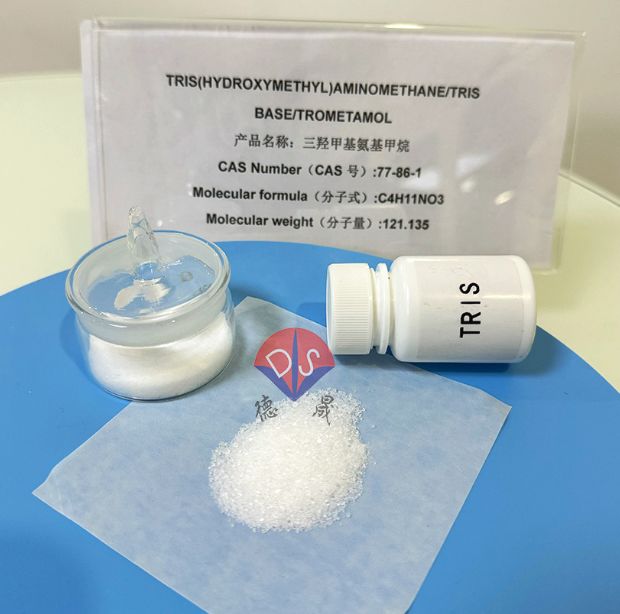
TRIS Buffer powder
Preparation of TRIS Composite Phase Change Materials
Traditional energy storage methods are often plagued by issues such as low efficiency, high cost, and poor environmental adaptability. To overcome these challenges, researchers employed a solution impregnation method and successfully filled TRIS into porous silica with pore sizes ranging from 15 to 100 nm and porous glass with pore sizes ranging from 12 to 100 nm, preparing a novel composite phase change material. This preparation method is simple and efficient, and can accurately control the distribution of TRIS at the nanoscale, thereby achieving effective control of material properties.
Characterization and Performance Analysis
Through the comprehensive application of advanced testing methods such as scanning electron microscopy (SEM), X-ray powder diffraction (XRD), and differential scanning calorimetry (DSC) on the obtained composite materials, researchers analyzed the microstructure and thermal physical properties of the materials in detail. The results showed that the spatial limitation of nanoscale significantly improved the phase transition temperature, latent heat, undercooling degree, and thermal cycling performance of composite phase change materials. This means that compared to traditional PCMs, this TRIS composite phase change material exhibits superior energy storage efficiency and reliability in practical applications.
Application prospect
This research achievement not only opens up new avenues for the advancement of energy storage technology, but also provides strong support for the development of multiple fields. For example, in terms of building energy efficiency, this new type of TRIS composite phase change material can reduce the energy consumption of air conditioning systems by regulating indoor temperature; In terms of solar energy utilization, it can effectively store excess solar energy during the day for use at night, thereby improving energy efficiency.
Epilogue
With the deepening of research on new energy storage materials, we look forward to seeing more innovative achievements like TRIS composite phase change materials. These new materials will not only help solve the challenges faced by current energy management and environmental protection, but also inject new vitality into the sustainable development of human society. In the future, with the continuous maturity and improvement of related technologies, I believe there will be more exciting application cases emerging.

Product packaging
Through the above introduction, we can see that the development of TRIS composite phase change materials marks an important progress in energy storage technology. It not only demonstrates the power of scientific and technological innovation, but also provides a hopeful direction for solving energy problems. As a research and development manufacturer of biological buffering agents, Desheng will continue to conduct in-depth research on the application of TRIS composite phase change materials, in order to play a greater role in the future.
Contact details
Contact number
Address: C8, Guanggu United Science and Technology City, Ezhou City, Hubei Province
Fax:0711-3704 589
Follow us
