


Desheng Science Popularization: What is the difference between PRP separation gel and conventional serum separation gel
Release time:
2024-10-21
PRP (platelet rich plasma) separation gel has significant differences from conventional serum separation gel in terms of usage direction, separation conditions, and specific gravity. It is mainly used for different clinical and experimental purposes. The main differences between these two separation gels are explained in detail below.
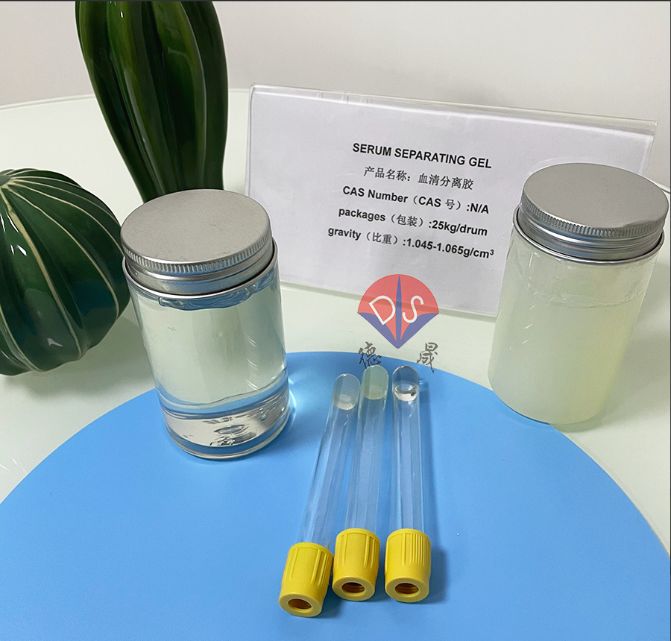
Serum separation gel
1. Characteristics
PRP separation gel: By effectively separating platelets from whole blood during centrifugation, high concentrations of PRP are prepared.
Conventional serum separation gel: forms a physical barrier during centrifugation, separating the solid phase (mainly red blood cells) in the blood from the upper layer of serum (plasma without fibrinogen).
2. Purpose:
PRP separation gel: specifically used for preparing PRP, a plasma rich in growth factors, commonly used in fields such as medicine, plastic surgery, and sports medicine to promote wound healing and tissue repair.
Conventional serum separation gel: used for routine serum biochemical tests such as liver function, kidney function, electrolyte levels, as well as immunological and endocrine testing.
3. Centrifugal conditions
PRP separation gel: usually requires higher rotational speed and longer centrifugation time to ensure that platelets can be effectively concentrated and separated.
Conventional serum separation gel: The centrifugation conditions are relatively mild to prevent platelet rupture and avoid excessive fibrinogen and cell debris in the serum.
4. Separation effect
PRP separation gel: aims to obtain high concentrations of platelets while minimizing the mixing of red blood cells and white blood cells to prepare high-quality PRP.
Conventional serum separation gel: The focus is on separating serum for subsequent biochemical testing.
5. Storage and use
PRP separation gel: Specific storage conditions may be required to maintain its separation effect, and pre-treatment may be necessary according to the manufacturer's instructions before use.
Conventional serum separation gel: usually stored at room temperature, easy to use, and can be used immediately after opening the lid.
6. Specific gravity
PRP separation gel: The specific gravity is usually high, around 1.078 g/cm ³. This is because the goal of PRP preparation is to obtain plasma rich in platelets, which have a slightly higher specific gravity than serum. A higher specific gravity helps to form a more effective interface during centrifugation, preventing red blood cells and most white blood cells from entering the plasma layer where platelets are located, thereby obtaining a higher concentration of platelets.

Product packaging
Conventional serum separation gel: The specific gravity is generally between 1.045 and 1.065 g/cm ³. Ensure that plasma can be separated from red blood cells and white blood cells during the centrifugation process.
The choice of which separation gel to use mainly depends on the subsequent detection purpose and sample processing requirements. PRP separation gel is suitable for clinical applications that require platelet enrichment, while conventional serum separation gel is suitable for most standard serum biochemical tests.
As a supplier of blood collection tube additive raw materials, Desheng has demonstrated its professional capabilities and market competitiveness in the field of separation gel technology. Whether it is PRP separation gel or conventional serum separation gel, Desheng can provide customized services according to customers' specific needs, which not only enhances the market adaptability of the product, but also establishes long-term cooperative relationships with customers.
Contact details
Contact number
Address: C8, Guanggu United Science and Technology City, Ezhou City, Hubei Province
Fax:0711-3704 589
Follow us
