


The Effect of Summer High Temperature on the Storage of Biological Buffer TRIS
Release time:
2024-10-16
In the vast field of biological science research and biotechnology applications, biological buffering agents play an indispensable role. Among them, TRIS (trihydroxymethylaminomethane) is widely used as a biological buffering agent and is highly favored due to its excellent buffering capacity and stability. However, with the arrival of summer, high temperatures have become the norm, posing new challenges to the storage of TRIS. This article will delve into the impact of high summer temperatures on TRIS storage and propose corresponding response strategies.
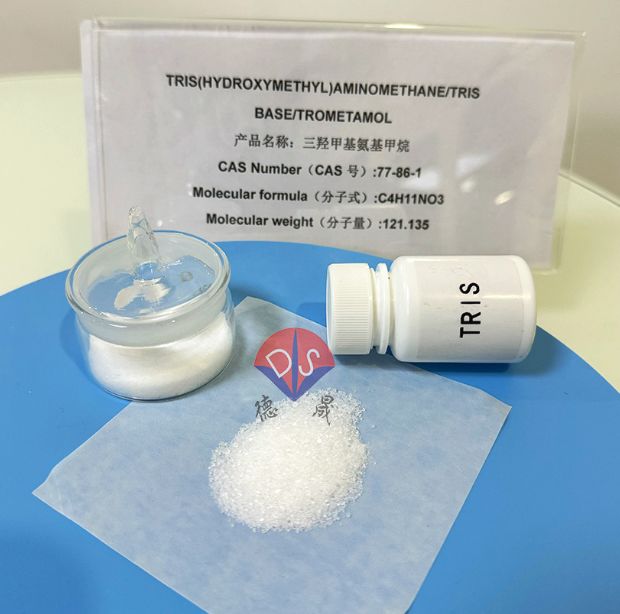
TRIS base powder
The impact of high summer temperatures on TRIS storage
1. Decreased stability
TRIS may undergo a series of changes that are detrimental to its stability in high-temperature environments. High temperature can accelerate the internal movement of molecules, leading to bond breakage or rearrangement, thereby triggering degradation reactions. This degradation may manifest as color changes, odor generation, or reduced buffering capacity. For experiments that require high-precision buffer control, the decrease in TRIS stability will directly affect the accuracy and reliability of the experimental results.
2. Changes in solubility
Although TRIS has a relatively high solubility in water, high temperatures may have subtle effects on its solubility state. High temperatures may accelerate the interaction between solutes and solvents, leading to changes in solubility. Although this change may not be as significant as some substances, it still requires sufficient attention for experiments that require accurate control of solution concentration.
3. Increased risk of impurity contamination
High temperature environments can accelerate the movement of impurities in the air, increasing the risk of TRIS contamination. When TRIS is stored in powder form, impurities such as moisture and dust in the air are more likely to adhere to the surface of the particles, leading to phenomena such as clumping and discoloration. For TRIS solutions, high temperatures may accelerate the growth and reproduction of microorganisms, leading to solution contamination and deterioration.
Response strategy
1. Low temperature storage
Low temperature storage is a direct strategy to address the impact of high temperatures on the stability of TRIS. For TRIS solution, it should be stored under refrigeration conditions (2-8 degrees Celsius) to slow down the degradation rate and extend the shelf life. For TRIS powder, although it can generally be stored at room temperature, it should be stored in a cool, dry, and ventilated place during high temperature seasons, avoiding direct sunlight and high temperature environments.
2. Avoid light storage
Sunlight and ultraviolet radiation are important factors that accelerate the degradation of chemical substances. Therefore, when storing TRIS, it is advisable to choose containers that are dark, such as brown glass bottles. This can reduce the radiation effect of ultraviolet rays on TRIS and protect its stability.
3. Sealed storage
Sealed storage is a key measure to prevent TRIS from getting damp and contaminated. Storing TRIS in a container with good sealing performance can isolate moisture and impurities in the air, keeping it dry and pure. For TRIS powder, sealed storage can also prevent clumping and discoloration.
4. Avoid repeated freeze-thaw cycles
For TRIS solutions, frequent freeze-thaw cycles can have a negative impact on their quality and performance. Therefore, when using TRIS solution, the number of freeze-thaw cycles should be minimized as much as possible and the dosage should be planned reasonably. If multiple uses are required, it may be considered to divide the solution into multiple small portions for storage.
5. Regular inspections
Regularly checking the storage status of TRIS is an important means to ensure its quality stability. During storage, it is necessary to regularly observe whether the physical properties of TRIS, such as color, odor, solubility, etc., have changed. If any abnormal situation is found, it should be dealt with promptly and a new TRIS should be replaced to ensure the accuracy of the experimental results.
6. Strengthen management
In addition to the specific measures mentioned above, strengthening the storage management of TRIS is also crucial. A comprehensive storage system and operating procedures should be established to clarify storage conditions, retrieval methods, and recording requirements. At the same time, personnel training should be strengthened to enhance employees' awareness and management level of the importance of TRIS storage.

Product packaging
Epilogue
The high temperature in summer poses a severe challenge to the storage of biological buffer TRIS base. However, by adopting a series of coping strategies such as low-temperature storage, dark storage, sealed storage, avoiding repeated freeze-thaw cycles, regular inspections, and strengthened management, we can reduce the impact of high temperatures on the stability of TRIS and ensure its quality and performance stability. This is of great significance for ensuring the smooth progress of biological science research and biotechnology applications. In future work, we should continue to pay attention to the storage of biological buffering agents such as TRIS and explore more scientific storage methods and technological means to contribute to the development and progress of biological science.
Hubei Xindesheng Material Technology Co., Ltd. strictly controls the quality of Tris and other biological buffering agents, and provides professional usage methods after customers purchase products to avoid waste. Desheng always puts customers first! Feel free to contact me if you have any related needs!
Contact details
Contact number
Address: C8, Guanggu United Science and Technology City, Ezhou City, Hubei Province
Fax:0711-3704 589
Follow us
