


Desheng Answer - Can drinking water be used to prepare MOPS buffer solution
Release time:
2024-10-02
In chemical and biochemical experiments, the use of buffer solutions is crucial as they can maintain the acid-base balance of the experimental system, ensuring the accuracy and reproducibility of experimental results. MOPS (3-methylpropanesulfonic acid) buffer, as a commonly used biochemical experimental tool, has been widely used in cell culture, enzyme catalyzed reactions, and other fields due to its superior pH stability and low impact on cell growth and metabolism. However, when preparing the pH value of MOPS buffer, the choice of water source used is also extremely important.

The properties of drinking water
1. Ingredients of drinking water: Drinking water usually contains various minerals and ions, such as calcium, magnesium, sodium, potassium, chloride, and carbonate. Although these ingredients are beneficial to human health, they may interfere with experimental results in laboratory environments. For example, calcium and magnesium ions can react with buffering agents to change the pH value of the buffer solution.
2. The pH value of drinking water: The pH value of drinking water is generally between 6.5-8.5, depending on the water source and treatment method. Although pH values within this range are not a problem for drinking, any slight pH deviation can have a significant impact on experimental results when accurately preparing buffer solutions.
Requirements for laboratory water for preparing MOPS buffer solution
The deionized water or ultrapure water commonly used in the MOPS buffer laboratory is specially treated to remove minerals and ions from the water, ensuring high water purity. Using these water sources can avoid interference from external ions on the buffer solution, thereby ensuring the accuracy of experimental results. In contrast, minerals and ions in drinking water may react with buffering agents, resulting in a deviation between the measured pH value and the actual value.
The influence of drinking water on pH measurement of MOPS buffer solution
1. Differences in drinking water quality: The quality of drinking water varies significantly depending on the region, water source, and treatment process. These differences may result in drinking water containing different types of soluble substances, such as minerals, microorganisms, organic matter, etc. The presence of these substances may have an impact on the measurement results.
2. Possible ion interference: Calcium, magnesium, and other ions in drinking water can interact with MOPS buffer, altering the chemical equilibrium of the buffer. For example, calcium ions may bind to sulfonic acid groups in MOPS, causing a change in the pH value of the buffer, which can lead to inaccurate pH measurements.
3. PH measurement change: Due to fluctuations in the pH value of drinking water itself, using drinking water for pH measurement may result in inconsistent results. Especially in experiments that require high-precision pH measurement, this error may have a significant impact on the experimental results.
The correct method for preparing MOPS buffer solution
1. Use deionized water or ultrapure water
When preparing MOPS buffer, deionized water or ultrapure water should be used as much as possible. These water sources have high purity and do not contain interfering ions, ensuring accurate pH values of the buffer solution. Using these water sources to prepare buffer solutions can greatly improve the accuracy and reliability of experiments.
2. Calibrate pH meter
Before measuring the pH value, the pH meter should be calibrated using standard buffer solution. Ensuring the accuracy and precision of a pH meter is a crucial step in obtaining reliable pH values. Standard buffer solutions generally have fixed pH values, such as 4.0, 7.0, and 10.0, and using these standard solutions for calibration can ensure accurate readings of the pH meter.
3. Avoid external interference
When preparing and measuring buffer solutions, external interference such as carbon dioxide in the air and finger touch should be avoided. These interfering factors may affect the reading of the pH meter, leading to inaccurate measurement results. During the measurement process, the measurement environment should be kept clean and stable.
4. Follow standard operating procedures
When conducting pH measurement, standard operating procedures (SOP) should be strictly followed, including sample preparation, measurement steps, data processing, and other aspects, which can help reduce the impact of human error and random error on the measurement results.
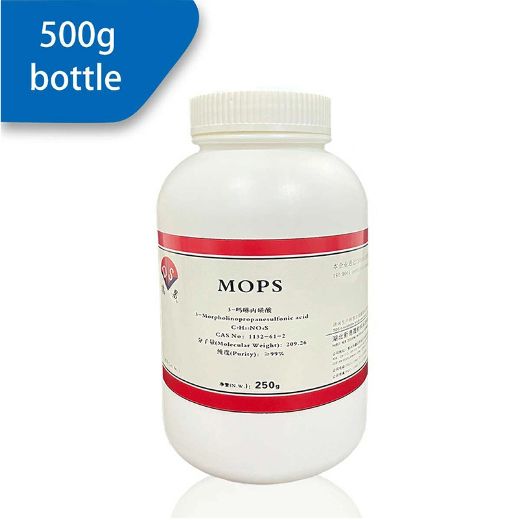
Product packaging
It is not recommended to use drinking water as the measurement medium for preparing MOPS buffer solution. Due to differences in water quality and potential ion interference in drinking water, using drinking water for measurement may result in measurement bias. As a MOPS raw material manufacturer, Desheng recommends customers to use purified water or deionized water for preparation. This not only ensures stable supply and affordable prices, but also provides method guidance and answers to customer questions. If you have any relevant intentions, please feel free to click on the website to inquire about details and purchase at any time!
Next page
Next page
Contact details
Contact number
Address: C8, Guanggu United Science and Technology City, Ezhou City, Hubei Province
Fax:0711-3704 589
Follow us
