


What is the appearance of flocculent substances in pH adjustment buffer Tris
Release time:
2024-07-26
Tris buffer (i.e. trihydroxymethylaminomethane) is widely used in biochemical and molecular biology experiments in the laboratory. Tris buffer is known for its excellent buffering capacity, low ionic strength, and suitable pH range (usually 7.0-9.0). However, during the preparation and use of Tris buffer, sometimes flocculent substances may appear, leading to inaccurate experimental results or interfering with the experimental process. What's going on here? Let's take a look together below.
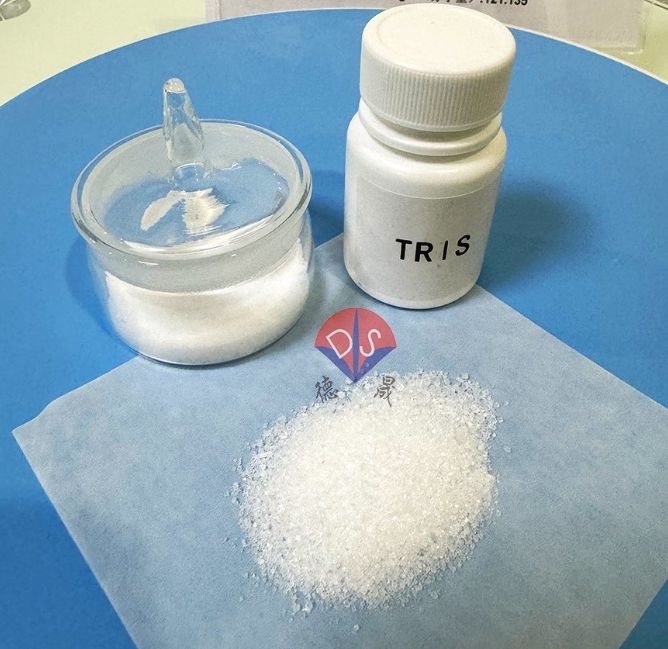
Tris buffer
Tris buffer (i.e. trihydroxymethylaminomethane) is widely used in biochemical and molecular biology experiments in the laboratory. Tris buffer is known for its excellent buffering capacity, low ionic strength, and suitable pH range (usually 7.0-9.0). However, during the preparation and use of Tris buffer, sometimes flocculent substances may appear, leading to inaccurate experimental results or interfering with the experimental process. What's going on here? Let's take a look together below.
Formation of flocs in Tris buffer solution
1. Impurities and contamination: When preparing Tris buffer, impurities and contaminants may be introduced if impure reagents or water sources are used. These impurities may form flocs in the solution. For example, impurities such as calcium and magnesium ions in water may react with the components in the buffer solution to form insoluble substances.
2. Improper storage conditions: Tris buffer may degrade or react with carbon dioxide in the air during storage, forming carbonate precipitates if not sealed or exposed to high temperatures, light, and other conditions. These precipitates will appear in the form of flocs, affecting the use of buffer solution.
3. Improper pH adjustment: When adjusting the pH value of Tris buffer, excessive or rapid addition of acid or base may cause local supersaturation, leading to precipitation of certain components. For example, adding too much hydrochloric acid or sodium hydroxide when adjusting pH may cause precipitation of certain components in the buffer solution.
4. Excessive solution concentration: High concentration Tris buffer may precipitate flocculent substances under low temperature conditions. This is due to the decrease in solubility with decreasing temperature, resulting in supersaturation and precipitation of certain components in the buffer solution.
5. Microbial contamination: During the preparation or storage process, if the buffer is exposed to air or if the equipment is unclean, it may be contaminated by microorganisms. Microorganisms such as fungi multiply in buffer solution and form visible flocs or precipitates.
The influence of flocculent substances on experiments
1. Interference experiment results: The presence of flocculent substances interferes with the optical detection of experiments, such as spectrophotometry, and the flocculent substances scatter light, resulting in inaccurate measurement results.
2. Impact on reaction efficiency: In enzyme reactions or nucleic acid electrophoresis experiments, flocculent substances may interfere with the contact between substrates and enzymes, reduce reaction efficiency, and even lead to experimental failure.
3. Impact on sample separation: In electrophoresis experiments, flocculent substances may block the pores of the electrophoresis gel, affecting the separation efficiency of the sample, resulting in unclear electrophoresis patterns or inaccurate results.
Prevention and handling methods
1. Use high-purity reagents and water: When preparing Tris buffer, high-purity reagents and deionized water should be selected to avoid the introduction of impurities. In addition, all utensils should be thoroughly cleaned before use to prevent contamination from impurities.
2. Filtration and centrifugation: If flocculent substances have already appeared in Tris buffer, they can be treated by filtration or centrifugation. Using a 0.22 μ m filter membrane can remove most of the flocculent substances and ensure the cleanliness of the buffer solution. If it is caused by deterioration, a new buffer solution should be replaced immediately.
3. Preventing microbial contamination: During the preparation and storage process, aseptic operations should be strictly controlled. Storage containers and utensils should be cleaned and processed, and the prepared tris solution should be used up in a timely manner. Do not store for a long time.
Tris buffer, as an important biochemical reagent, is widely used in various experiments. However, during its preparation and use, sometimes flocculent substances may appear, affecting the experimental results.

Product packaging
Desheng has always been committed to providing high-quality Tris raw materials, strictly controlling the purity and quality of products to meet the needs of customers in experiments. By continuously optimizing production processes and quality control, ensuring that reagents meet various standards, customers can use them with peace of mind. Currently in stock, low price promotion. If you need it, please click on the website to inquire and purchase!
Previous page
Previous page
Contact details
Contact number
Address: C8, Guanggu United Science and Technology City, Ezhou City, Hubei Province
Fax:0711-3704 589
Follow us
