


Desheng's answer | Why is the serum separated from the serum separation tube not clear
Release time:
2024-06-08
Serum separation tubes are widely used in clinical laboratories and medical diagnosis for the processing of blood samples. These tubes allow for rapid separation of serum and blood cells after centrifugation by adding serum separation gel. However, sometimes the separated serum is not as clear as expected, which poses challenges for subsequent analysis. Below, Desheng will analyze in depth with everyone the various reasons that lead to unclear serum separation.
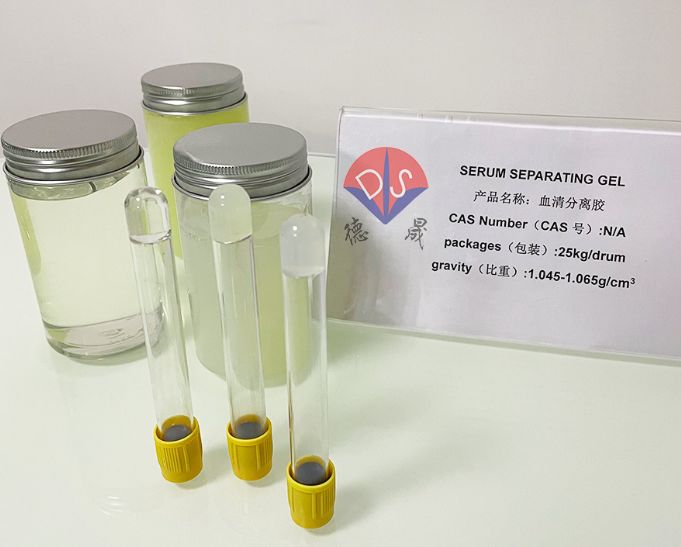
serum separation gel
Working principle of serum separation hose
We need to first understand the working principle of serum separation tubes. The serum separation gel tube mainly consists of three parts: the upper serum collection area, the middle separation gel layer, and the lower blood cell collection area. After collecting blood samples, due to the gravity of the blood itself, and based on the properties of the separation gel such as specific gravity and flippability, blood cells will settle to the bottom of the tube, while serum will float to the upper layer. At this point, the separation gel layer plays a crucial role in preventing the mixing of blood cells and serum, thereby ensuring the purity of the serum.
Common causes of unclear serum
1. Excessive lipid content in serum: Excessive lipid content in serum is one of the common reasons for unclear serum, which may be due to patients suffering from hyperlipidemia or consuming too much high-fat food before blood collection. Lipids form chylomicrons in the serum, causing the serum to appear cloudy.
2. Blood cell rupture and hemolysis: Blood cell rupture leading to the release of hemoglobin into the serum is one of the main reasons for serum opacity. Hemolysis may be caused by the following conditions:
(1) Severe oscillation during blood collection or transportation: If the test tube is subjected to severe oscillation during blood collection or transportation, it can cause the rupture of red blood cells.
(2) Temperature changes: Exposure of blood samples to unfavorable temperatures, such as high or low temperatures, can increase the risk of hemolysis.
(3) Centrifuge speed and time: Incorrect centrifugation conditions, such as excessively high centrifugation speed or prolonged centrifugation time, can cause blood cell rupture.
3. Quality issues with separation hoses: If there are defects in the manufacturing process of separation hoses, such as uneven separation layers, bubbles or impurities, these will affect the separation effect. In addition, exceeding the shelf life or improper storage conditions of the separation gel can also lead to a decrease in the performance of the separation gel, thereby affecting the clarity of the serum. To avoid this situation, it is recommended to choose high-quality separation hoses and check their shelf life and appearance quality before use.
4. The impact of patient illness: The patient's illness status may also affect the clarity of serum. For example, diseases such as macroglobulinemia can lead to a high concentration of immunoglobulin in the blood, which increases blood viscosity and makes it easy to produce gelatinous substances after centrifugation. Other liver diseases can also affect lipid metabolism, leading to high lipid levels in the serum.
Solutions for serum opacity
1. Inspectors control lipid intake: For serum opacity caused by high lipid content, it can be solved by controlling the patient's lipid intake. Before blood collection, patients are required to maintain a light diet and avoid excessive intake of high-fat foods to reduce the lipid content in the serum.
2. Choosing high-quality separation tubes: Choosing reliable separation tubes is the key to ensuring serum clarity. When purchasing separation hoses, it is advisable to choose legitimate channels and check their shelf life and appearance quality. If any problems are found with the separation hose during use, it should be replaced in a timely manner.
3. Standardized operating procedures: Strictly follow the operating procedures for blood collection and centrifugation. According to standard operating procedures for centrifugation, it is usually recommended to use low-speed centrifugation (1800-2200g) for 8-10 minutes. The specific time and speed can be adjusted according to the different test tubes and separation gels. The selection of centrifugation time and speed should ensure sufficient sedimentation of red and white blood cells, while avoiding red blood cell rupture.

Product packaging
Serum separation tubes play an important role in blood sample processing, but to ensure the clarity of the separated serum, standardized operation and correct sample handling are necessary. From blood collection operation, centrifugation conditions, separation gel quality to sample preservation, all aspects need to be strictly controlled.
Desheng Company, as a professional supplier of blood vessel additives such as serum separation gel, is committed to providing customers with high-quality reagent products. We continuously optimize product quality and provide detailed usage guidelines to ensure that users can achieve ideal results during the operation process. Welcome interested parties to click on the website to inquire about details and purchase!
Previous page
Previous page
Contact details
Contact number
Address: C8, Guanggu United Science and Technology City, Ezhou City, Hubei Province
Fax:0711-3704 589
Follow us
