


Why does temperature have a significant impact on the pH value of TRIS base
Release time:
2024-04-16
In biochemical and molecular biology experiments, TRIS (Trihydroxymethylaminomethane) is a commonly used buffer, and the stability of its pH value is crucial for the accuracy and reliability of experimental results. However, in practical operation, we found that temperature has a significant impact on the pH value of TRIS. So, why does temperature have such a significant impact on the pH value of TRIS? This article will delve into this from multiple perspectives.
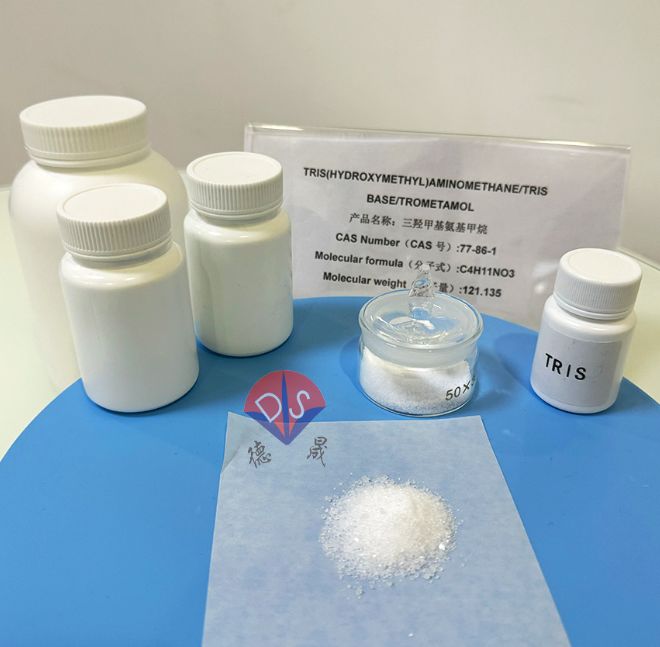
TRIS base powder
1、 The Relationship between Ionization Equilibrium and Temperature of TRIS base
TRIS, as an organic compound, has a complex ionization equilibrium within its molecules. This ionization equilibrium refers to the interaction between certain functional groups (such as amino groups) in TRIS molecules and water molecules in aqueous solution, resulting in the release or reception of some protons (H+). This process is significantly affected by temperature.
As the temperature increases, the thermal motion of molecules intensifies, and the intermolecular forces weaken. For TRIS molecules, this means that their ionization equilibrium will shift towards dissociation, meaning that more TRIS molecules will release or accept protons, leading to changes in the concentration of hydrogen ions (H+) or hydroxide ions (OH -) in the solution. This change directly affects the acid-base properties of the solution, thereby causing a change in the pH value of TRIS.
2、 The influence of temperature on TRIS buffering capacity
TRIS, as a buffering agent, has a buffering ability that refers to its ability to resist the influence of external factors (such as acidic or alkaline substances) on the pH value of the solution, maintaining a relatively stable pH value. However, this buffering ability is not constant and is constrained by various factors, among which temperature is an important factor.
As the temperature increases, the ionization equilibrium of TRIS molecules changes, resulting in changes in the ion concentration and type in the buffer solution. These changes may reduce the buffering capacity of TRIS, i.e. its ability to resist pH changes is weakened. Therefore, under high temperature conditions, the pH value of TRIS is more susceptible to fluctuations caused by external factors.
3、 The relationship between the pH value of TRIS and biochemical reactions
Biochemical experiments typically involve enzymatic reactions, protein folding, and other processes that are highly sensitive to the pH value of the solution. TRIS, as a commonly used buffer in these experiments, the stability of its pH value is crucial for the accuracy of the experimental results.
However, due to the significant impact of temperature on the pH value of TRIS, this may lead to fluctuations in the pH value during the experimental process. This fluctuation may interfere with the normal progress of biochemical reactions, thereby affecting the reliability of experimental results. For example, certain enzymes have good catalytic activity within a specific pH range. If the pH value of TRIS deviates from this range due to temperature changes, the catalytic activity of the enzyme may be affected, leading to inaccurate experimental results.
4、 How to reduce the impact of temperature on the pH value of TRIS
Given that temperature has a significant impact on the pH value of TRIS, we need to take some measures to reduce this impact when conducting biochemical and molecular biology experiments. At the beginning, efforts should be made to maintain the stability of experimental conditions and avoid excessive temperature fluctuations. This can be achieved through the use of constant temperature equipment, control of laboratory temperature, and other methods. Secondly, when preparing TRIS buffer solution, an appropriate amount of stabilizer or regulator can be added to improve its buffering capacity and stability. In addition, other types of buffering agents or adjusting the concentration of TRIS can be selected according to specific experimental requirements to better adapt to changes in experimental conditions.

Product packaging
In summary, the significant impact of temperature on the pH value of TRIS is mainly due to its influence on the ionization equilibrium and buffering capacity of TRIS. In order to obtain accurate experimental results, we need to closely monitor the impact of temperature on the pH value of TRIS and take corresponding measures to reduce this impact. By continuously optimizing experimental conditions and selecting appropriate buffering agents, we can improve the accuracy and reliability of biochemical and molecular biology experiments.
Desheng is a professional manufacturer of good's buffering agents. In addition to tris, there are also a series of biological buffering agents such as tris hydrochloride, bicine, caps, mops, taps, etc., which can meet various experimental needs. Desheng's production process is stable, ensuring that the appearance of the product is white crystalline powder, with a purity of over 99%, and there is little difference between batches. For biochemical experiments that require accurate results, the purchased buffer can still be used. If you also need to purchase biological buffering agents, please click on the official website to learn more details or contact me!
Next page
Next page
Contact details
Contact number
Address: C8, Guanggu United Science and Technology City, Ezhou City, Hubei Province
Fax:0711-3704 589
Follow us
