


MOPS buffer: creating a stable microenvironment for human astrocytes culture
Release time:
2026-03-18
With the continuous deepening of neuroscience and brain disease research, human astrocytes, as a relatively abundant type of glial cells in the central nervous system, have functions far beyond the traditional category of "supporting cells". They participate in synaptic regulation, neurometabolic coupling, and other reactions, playing a central role in the study of various diseases. However, these types of cells are difficult to culture in vitro, sensitive to the microenvironment, and prone to morphological abnormalities due to pH fluctuations and nutritional imbalances. To this end, researchers have developed an optimized culture system, in which MOPS buffer (3-methylmorpholinopropane sulfonic acid) serves as a key buffering component, providing an indispensable stability guarantee for the long-term healthy growth of cells.
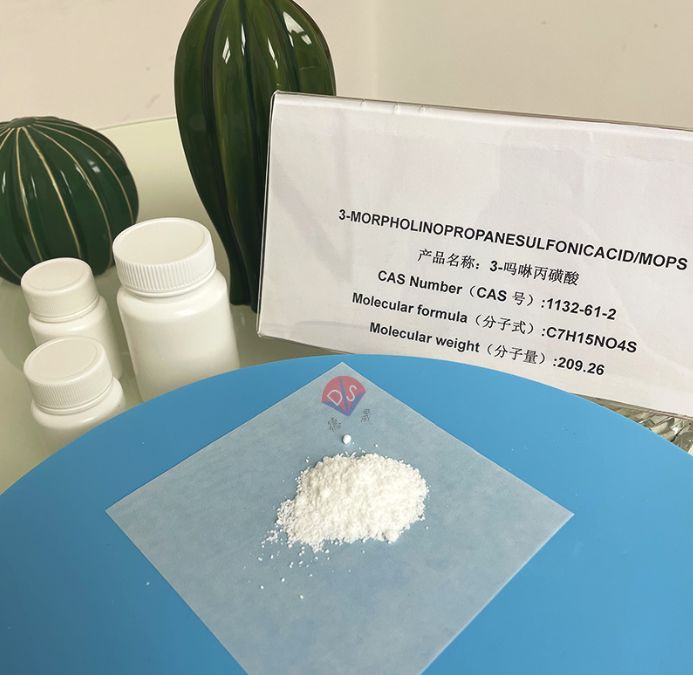
MOPS powder
Why are astrocytes so sensitive to buffer systems?
During the in vitro culture process, human astrocytes exhibit active metabolism and continuously release CO ₂ and organic acids, which can easily lead to a rapid decrease in the pH of the culture medium. Although the traditional bicarbonate/CO ₂ buffer system is widely used in basic culture media such as DMEM, the release of CO ₂ during open operation (such as liquid exchange, microscopic observation) or long-term static culture can cause a sudden increase in pH and disrupt cell homeostasis. In addition, astrocytes are highly sensitive to metal ion concentration, osmotic pressure, and redox status. If common buffering agents have metal chelation or chemical instability, they may interfere with signaling pathways or induce stress responses.
In this context, MOPS stands out with its excellent physicochemical properties. As a Good's buffer, MOPS has an effective buffering range of pH 6.5-7.9, which precisely covers the optimal growth zone of astrocytes. More importantly, MOPS does not rely on CO ₂ environment and can maintain high pH stability under normoxic or low CO ₂ conditions, significantly reducing environmental disturbances caused by operational or equipment fluctuations.
How does MOPS empower high-performance astrocyte culture systems?
In this optimized cultivation method, DMEM and MCDB are mixed in a specific ratio as the basic culture medium, balancing energy supply and trace element balance; Simultaneously add Glutamax (stable glutamine), N2/G-5/B-27 (neurospecific supplement), hEGF (epidermal growth factor), and an appropriate amount of fetal bovine serum. MOPS is added at precise concentrations (usually 10-25 mM) to exert multiple effects:
PH homeostasis maintenance: In high-density cell culture or long-term experiments, MOPS effectively neutralizes metabolic acids, prevents pH from falling below 7.0, and avoids cell shrinkage or apoptosis;
Structural compatibility: MOPS molecular structure is stable and almost does not chelate with divalent ions such as Ca ² ⁺ and Mg ² ⁺, ensuring that cell adhesion, migration, and calcium signaling are not disturbed;
Optical transparency: MOPS has no significant absorption in the UV visible region, does not affect live cell imaging or fluorescence detection, and is suitable for high content screening platforms.
Hubei Xindesheng, you are trustworthy
As a supplier specializing in the research and production of biological buffering agents, Hubei Xindesheng Material Technology Co., Ltd. always puts product purity, batch stability, and application adaptability first. The MOPS raw materials we provide have high purity (≥ 99.5%) and strict impurity control. They have been widely used in fields such as neural cell culture, molecular diagnostics, and biologics, and are highly trusted by research institutions and biotechnology enterprises.
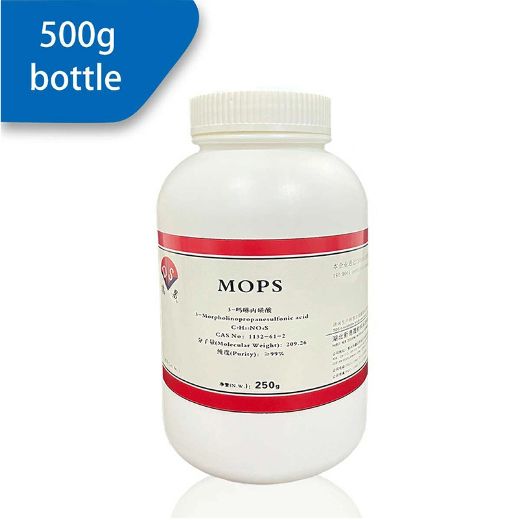
Product packaging
It is worth mentioning that the company's new production base located in Huanggang, Hubei is about to officially start production. The new factory is equipped with fully automated synthesis and refining production lines, upgraded quality control systems, and after production, the production capacity of core biological buffering agents such as MOPS will be greatly increased, which can more efficiently and stably meet the full cycle needs of customers from small-scale research and development to industrial scaling up.
Contact details
Contact number
Address: C8, Guanggu United Science and Technology City, Ezhou City, Hubei Province
Fax:0711-3704 589
Follow us
