


Lactate dehydrogenase (LDH): a key support for the diagnosis of myocardial infarction
Release time:
2026-03-23
In the rapid development of in vitro diagnostics (IVD), biochemical diagnostic reagents have become the core tools for clinical disease screening and diagnosis. Lactate dehydrogenase (LDH), as an important myocardial enzyme marker, plays an irreplaceable role in the diagnosis and treatment of cardiovascular diseases such as myocardial infarction with its stable and reliable detection performance, providing accurate and efficient laboratory evidence for clinical practice.
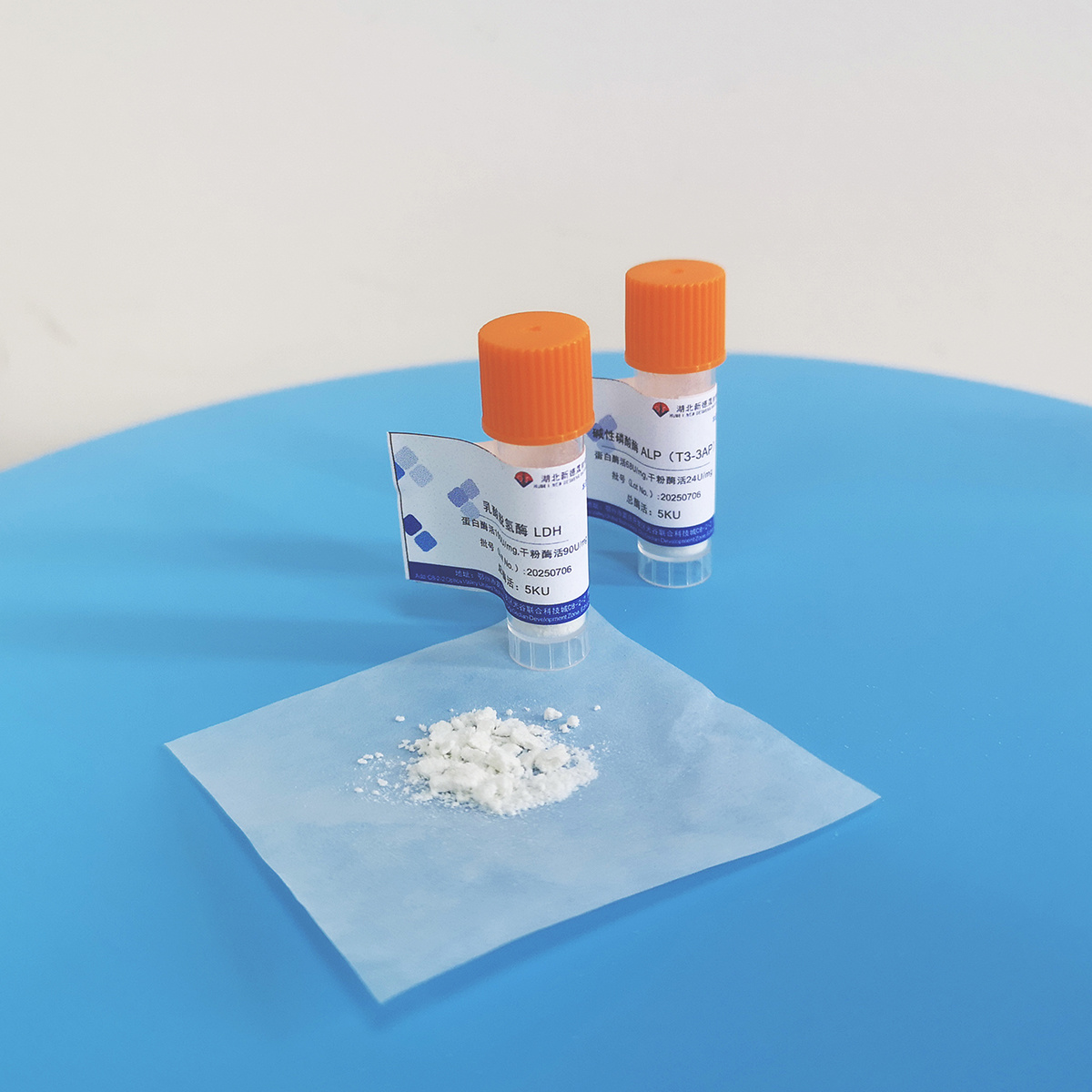
Lactate dehydrogenase
1、 Technical principle and core performance of LDH reagent
Lactate dehydrogenase (EC: 1.1.1.27, CAS: 9028-36-8) is an oxidoreductase widely present in human tissues, capable of catalyzing reversible conversion between lactate and pyruvate. LDH diagnostic reagents rely on this characteristic to accurately quantify LDH activity in samples by detecting the absorbance change rate of NADH at specific wavelengths with the participation of coenzymes.
High quality LDH diagnostic reagents must meet strict clinical standards: the detection range covers the normal range of serum and the pathological elevated range, with good anti-interference ability, and can effectively resist the influence of factors such as hemolysis and hyperlipidemia; At the same time, it maintains excellent inter batch stability and repeatability, is compatible with fully automatic biochemical analyzers, and meets the clinical needs of large-scale and rapid detection.
2、 Unique application value in the diagnosis of myocardial infarction
After myocardial infarction, myocardial cells undergo necrosis and rupture, and a large amount of intracellular LDH is released into the bloodstream, leading to a significant increase in serum LDH levels. This change becomes an important diagnostic basis. Compared with early markers such as troponin, LDH elevation lasts longer and can effectively fill the diagnostic gap of patients with onset exceeding 24 hours, providing key reference for late diagnosis patients.
By using LDH isoenzyme detection, the diagnostic specificity can be further improved. When the LDH1/LDH2 ratio is greater than 1, it can highly indicate myocardial injury and significantly reduce the risk of misdiagnosis caused by other tissue lesions. At the same time, LDH reagents have fast detection speed and high flux, which can meet the requirements of emergency rapid results and save valuable time for rescuing patients.
3、 Clinical Usage Standards and Key Points for Interpretation of Results
To ensure the accuracy of the test results, it is necessary to strictly follow the operating procedures in clinical use. Firstly, it is necessary to avoid sample hemolysis. Red blood cells are rich in LDH, which can cause false high results. After blood collection, serum should be centrifuged and separated in a timely manner. Secondly, the reagents should be refrigerated and stored according to the requirements, and should be packaged as much as possible to reduce repeated freezing and thawing. The reaction temperature and time should be strictly controlled according to the instructions.
It should be noted that LDH is not an exclusive biomarker for myocardial infarction, and it can also be elevated by liver disease, hemolysis, and other conditions. Clinically, it is necessary to make a comprehensive judgment based on the patient's symptoms, electrocardiogram, and other myocardial marker results to avoid misjudgment caused by a single indicator and ensure accurate and reliable diagnosis.
4、 High quality diagnostic enzyme raw materials assist in testing
Reliable diagnostic reagents rely on high-quality core materials. Hubei Xindesheng Material Technology Co., Ltd. has been deeply involved in the field of in vitro diagnostic raw materials for nearly 20 years, always adhering to quality first and leading technology. The independently developed and produced diagnostic enzyme products such as lactate dehydrogenase have stable activity, high purity, and good inter batch consistency, which can meet the research and production needs of IVD reagent enterprises.
With mature technology and strict quality control system, Hubei Xindesheng's products are exported to various parts of the world, winning the long-term trust and support of many customers. In the future, the company will continue to innovate and upgrade, providing higher quality raw materials and solutions for the in vitro diagnostic industry, and helping the medical industry continue to move forward.
Contact details
Contact number
Address: C8, Guanggu United Science and Technology City, Ezhou City, Hubei Province
Fax:0711-3704 589
Follow us
