


A new strategy for detecting trace amounts of acetaldehyde in the environment based on acridine ester chemiluminescence method
Release time:
2025-12-11
Acetaldehyde, as a common air and water pollutant, has potential carcinogenicity despite its low concentration in natural environments. Long term exposure can cause damage to the respiratory and nervous systems. Therefore, establishing a highly sensitive and selective acetaldehyde detection method is of great significance. Traditional detection methods such as spectrophotometry, gas chromatography, or liquid chromatography, although widely used, have limitations in trace analysis such as insufficient sensitivity, complex pretreatment, or high equipment costs. In recent years, the combination of enzyme catalysis and chemiluminescence technology has provided a new approach to solving this problem.
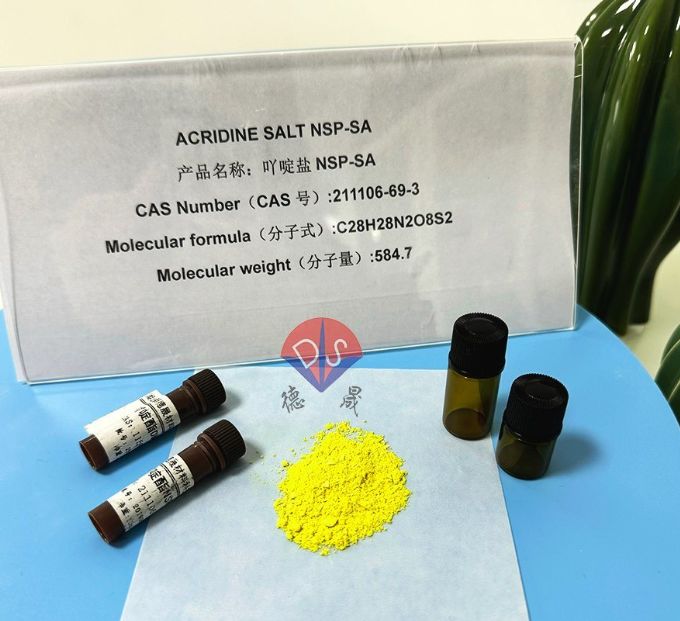
1、 The advantages of chemiluminescence technology and the application prospects of acridine esters
Chemiluminescence analysis is widely used in the fields of biological analysis, clinical diagnosis, and environmental detection due to its lack of external light sources, low background interference, and high sensitivity. Among them, acridine ester compounds, as a highly efficient class of chemiluminescent markers, have become one of the mainstream luminescent probes due to their mild reaction conditions, high luminescence intensity, good repeatability, and high quantum yield. Its luminescence mechanism relies on the oxidation reaction with hydrogen peroxide in an alkaline environment, generating excited 9-acridone and releasing photons. The entire process is rapidly completed, belonging to the typical "flash type" luminescence.
2、 Enzyme catalyzed chemiluminescence combined for highly sensitive determination of acetaldehyde
Researchers have developed an analytical method that couples the catalytic reaction of xanthine oxidase (XOD) with acridine ester chemiluminescence to meet the detection needs of trace amounts of acetaldehyde in the environment. The core principle of this method is that acetaldehyde can be oxidized by oxygen in the air under the catalysis of xanthine oxidase to produce acetic acid and hydrogen peroxide (H ₂ O ₂). Subsequently, the generated hydrogen peroxide triggers the chemiluminescence reaction of acridine ester under alkaline conditions, and the intensity of the generated light signal shows a good linear relationship with the concentration of acetaldehyde in the system within a certain range.
Specifically, adding an appropriate amount of xanthine oxidase to a pH 7.5 buffer system ensures stable enzyme activity; The acetaldehyde in the test sample is purified by distillation and introduced into the reaction system, where it is catalyzed by enzymes to produce a quantitative amount of H ₂ O ₂; Adding sodium hydroxide to adjust to an alkaline environment and adding acridine ester reagent can trigger a strong chemiluminescence phenomenon. Quantitative analysis of acetaldehyde content can be achieved by recording peak light intensity using a chemiluminescence analyzer and combining it with a standard curve.
3、 Experimental condition control is the key to ensuring accurate detection
To ensure the reliability of the test results, the entire analysis process requires strict control of various parameters. Firstly, the reaction system should use high-purity reagents, including analytical grade acridine esters, sodium hydroxide, and hydrogen peroxide; Acetaldehyde standard requires fine distillation and concentration calibration; It is recommended to use secondary quartz distilled water for experimental purposes to avoid interference from impurity ions in the luminescence reaction. Secondly, the enzymatic reaction stage relies on a biological buffer system to maintain a pH of around 7.5, ensuring the catalytic activity of xanthine oxidase. In addition, the stability of acridine esters directly affects the consistency of luminescence intensity, so storage conditions (avoiding light, low temperature, dry) and dissolution methods before use need to be standardized.
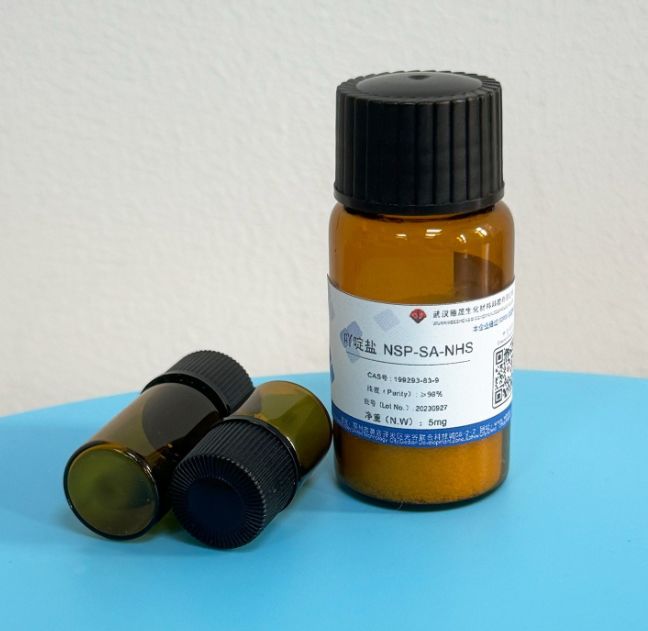
Product packaging
As a company dedicated to the research and development of core raw materials for in vitro diagnostic and analytical reagents, Hubei Xindesheng Materials Technology Co., Ltd. can provide high-quality acridine ester luminescent substrates, xanthine oxidase, biological buffering agents, and other supporting reagents. The products have the characteristics of batch stability, high purity, and reliable performance, and are widely used in fields such as chemiluminescence, enzymatic analysis, and environmental testing. We support customized services and free sample trials. Industry colleagues are welcome to contact us for consultation and work together to promote innovation and development of testing technology.
Contact details
Contact number
Address: C8, Guanggu United Science and Technology City, Ezhou City, Hubei Province
Fax:0711-3704 589
Follow us
