


Unlocking the Microscopic World: The Key Role of PIPES Buffer in Electron Microscopy Research
Release time:
2025-10-05
In modern scientific research, electron microscopy (EM) technology has become an important tool for exploring the microscopic world due to its excellent resolution and imaging capabilities. However, to obtain high-quality electron microscopy images, the preparation process of the sample is crucial. From fixation to staining, each step requires precise control to ensure the integrity of the cell structure or material surface is not compromised.
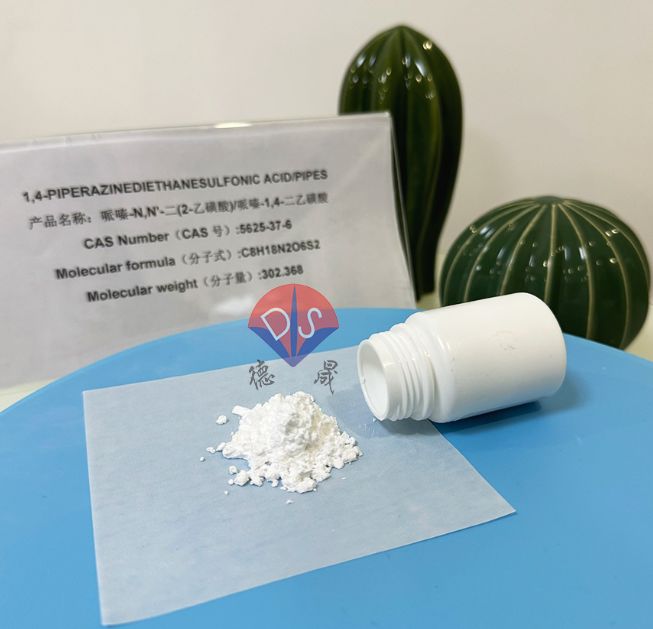
PIPES buffer
Maintain the original state of biological samples
A crucial step in electron microscopy research is sample preparation. Especially for biological samples, maintaining their original form and structure is crucial. During the fixation process, the use of appropriate buffer solutions (such as PIPES buffer) can effectively prevent tissue degradation within cells, while also stabilizing the cytoskeleton and other internal structures.
The Importance of Infiltration
In order to better observe the internal details of cells, it is necessary to reduce the obstruction of cell membranes to subsequent staining agents through permeation treatment. PIPES buffer can promote the entry of solution into the cell interior and maintain a suitable pH environment, ensuring that the entire permeation process is both rapid and effective.
Application in the study of ultrastructure
When it comes to the study of finer structures within cells, such as mitochondria, endoplasmic reticulum, and other subcellular organelles, the performance of electron microscopy is particularly prominent. However, to accurately capture these subtle details, it not only requires high-resolution equipment, but also relies on high-quality sample preparation. PIPES buffer plays a role in protecting cells from pH fluctuations during this process, ensuring that the observed structure is true and reliable, without deformation or damage due to changes in external conditions.
Advantages in dyeing steps
Under an electron microscope, a good staining effect can improve the contrast of the image and make the target structure more distinct. PIPES buffer also performs well in this step, not only providing a stable pH value, but also being well compatible with other chemical reagents, ensuring uniform and efficient staining. This means that even areas that are difficult to color can be fully displayed, providing researchers with more valuable information.

Product packaging
Desheng New Materials: Professional PIPES Buffer Solution Supplier
With the advancement of science and technology, the requirements for experimental supplies are also increasing. As a company dedicated to producing high-quality biological buffering agents, Desheng New Materials has always been committed to providing customers with specialized products and services. We adopt advanced production processes and strict quality management systems to ensure that the PIPES buffer solutions we provide can meet your research needs. We will continue to work hard to assist you with every breakthrough discovery. Whether in basic research or other applications, Desheng is your trusted partner.
Contact details
Contact number
Address: C8, Guanggu United Science and Technology City, Ezhou City, Hubei Province
Fax:0711-3704 589
Follow us
