


IVD Enterprise Transformation: Strategic Breakthrough from "Seeking Development" to "Seeking Survival"
Release time:
2025-09-11
In the rapidly evolving healthcare industry, the field of in vitro diagnostics (IVD) is undergoing profound changes. With policy tightening, intensified market competition, and accelerated technological iteration, the operational model of traditional IVD enterprises is facing severe challenges. The era of relying on channel dividends to easily make money in the past has ended. How to find a new balance between "pursuing high-quality development" and "ensuring stable survival" has become a strategic issue that enterprises need to face directly.

1、 Business Model Restructuring: Moving from Single Trade to Value Chain Integration
At present, many IVD companies still focus on product agency and sales, lacking core competitiveness. But as market concentration continues to increase, the space for relying solely on channel relationships to maintain profits is becoming increasingly narrow. Enterprises urgently need to consider whether they have the ability to expand deeper into the industrial chain.
Extending upstream means intervening in the research and development and production processes, building an independent intellectual property system, and achieving product standardization and branding through self built production lines, thereby enhancing bargaining power; Expanding downstream, we can explore the establishment of medical testing centers, provide customized services, or create digital health management platforms to directly reach end users and enhance customer stickiness and service capabilities.
2、 Management mechanism reform: organizational upgrading to match the new business structure
As the focus of business shifts from sales to research and development, manufacturing, or services, the existing management system often struggles to support the efficient operation of the new business architecture. The traditional distribution oriented organizational structure emphasizes short-term performance, while the diversified business after transformation requires systematic resource allocation and long-term strategic coordination.
Enterprises should choose appropriate control models based on their own development goals. If seizing market share is the core goal, strategic orientation should be strengthened and long-term layout should be emphasized; If we focus on improving profitability, we need to strengthen financial drive and optimize cost control; For resource integrated enterprises, operational control can better ensure efficient collaboration between various business modules.
3、 The way to break through the changing situation: challenges and opportunities coexist
Currently, the IVD industry is in an accelerated period of reshuffling, and the competitive landscape is being reshaped. Enterprises not only need to cope with external environmental pressures, but also need to complete deep adjustments in internal organization, processes, and culture. Only enterprises with differentiated advantages and accumulated core technologies are likely to stand out in the new round of competition.
During this process, technological innovation, product iteration, and service upgrades have become key engines for the sustained growth of enterprises. Whether it is reagent research and development, domestic replacement of equipment, or emerging directions such as AI assisted diagnosis and remote medical services, they all provide new paths for enterprises to transform and upgrade.
4、 Take a development path that aligns with one's own positioning
Faced with the wave of transformation, enterprises should not blindly follow the trend, but should develop practical and feasible strategic paths based on their own resource endowments, team capabilities, and market positioning. Whether it is deepening upstream material research and development, laying out downstream service ecology, or promoting internal digital transformation, systematic planning and phased implementation patience are required. Only by actively embracing change, continuously optimizing operational efficiency and management mechanisms, can we firmly establish a foothold in fierce competition and achieve sustainable growth.
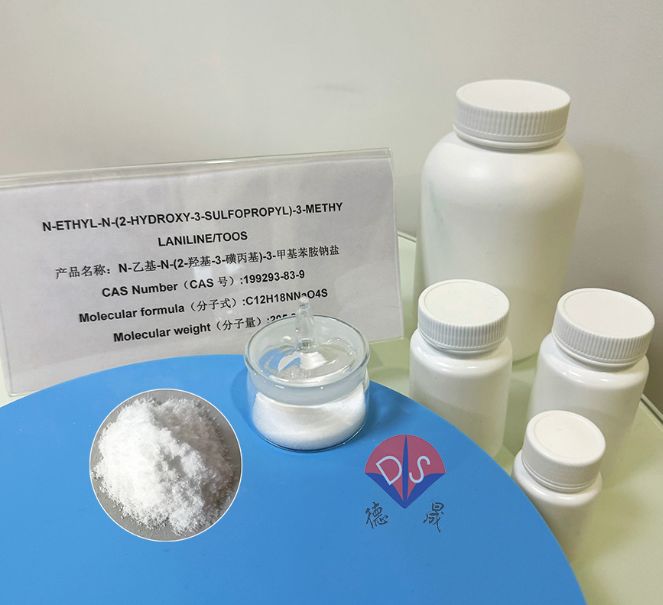
Diagnostic reagent TOOS
Conclusion:
The transformation path of IVD enterprises is full of challenges, but also contains infinite possibilities. At this critical juncture, enterprises need to be driven by innovation, guided by the market, and constantly explore development models that are suitable for themselves. As a technology enterprise dedicated to the research and production of biomaterials, Desheng New Materials has always been committed to providing high-quality and high-performance diagnostic reagent products for the IVD industry. During the critical period of transformation in the IVD industry, Desheng New Materials is helping more enterprises achieve technological breakthroughs and industrial upgrades with its strong research and development capabilities and comprehensive industrial chain layout. Choose Desheng New Materials, walk with the future, and achieve win-win development!
Contact details
Contact number
Address: C8, Guanggu United Science and Technology City, Ezhou City, Hubei Province
Fax:0711-3704 589
Follow us
