


Exploration and Practice of Enhancing the Stability of Chromogenic Substrate TOOS
Release time:
2025-08-19
In the fields of modern clinical chemistry and biological analysis, the chromogenic substrate TOOS reagent is widely used in the detection of various enzymatic reactions. However, the stability issue of TOOS has always been one of the challenges that plague researchers and technology developers. To address this issue, numerous scientists and technical experts are constantly exploring new methods and strategies to improve the stability and reactivity of TOOS in different environments.
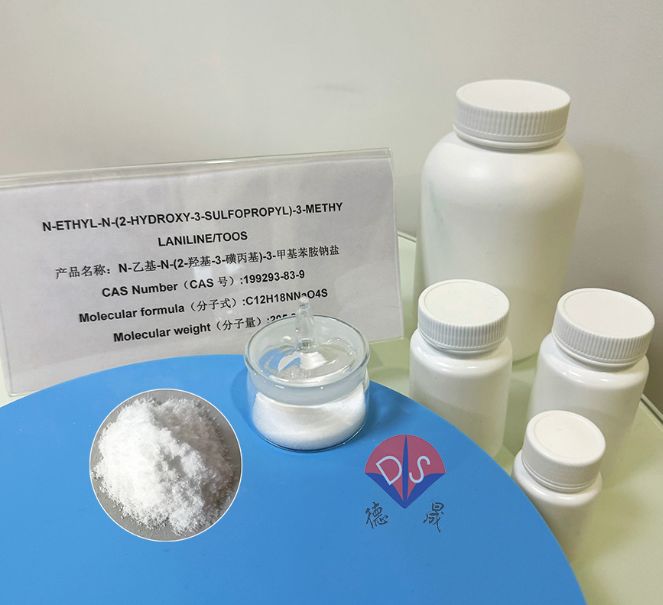
TOOS powder
Adding protective agents: complex formulas and potential interference
A common method to maintain the stability of TOOS is to add specific protective agents. These protective agents include alkyl surfactants with 8-16 carbon atoms and flavonoid pigments. Although this method can extend the shelf life of TOOS to a certain extent and prevent it from becoming ineffective due to oxidation, this formula is often complex, increasing production costs and operational difficulties. Secondly, certain protective agents may cause non-specific interference to the test results, affecting the accuracy of the detection.
Enzyme stability: Enhancing TOOS stability through multiple enzymes
In addition to directly improving TOOS itself, researchers have also attempted to indirectly enhance the stability of TOOS by improving enzymes related to it. For example, adding various enzymes such as ALT, AST, LDH, ALP, CK, etc. to aqueous solutions or serum matrices can significantly improve the stability of the enzymes themselves. This not only helps maintain the activity of TOOS, but also ensures the reliable operation of the entire detection system. However, for dry chemical test strips, the effect of this method is not significant.
Reductive protective agent: the effect of sodium citrate
Another strategy to increase the stability of TOOS is to introduce protective agents with stronger reducibility than TOOS itself. This type of substance can effectively counteract the damage caused by oxygen and other oxidants to TOOS. However, it should be noted that some protective agents containing primary amino groups may trigger non-specific reactions, thereby affecting the experimental results. In contrast, sodium citrate, as a mild reducing agent, has a certain effect on the antioxidant properties of TOOS.
Instant configuration: practical suggestions from Desheng
Based on years of experience accumulation, Hubei Xindesheng has found that a more effective method may be to avoid preparing solutions containing TOOS in advance and storing them, and instead choose to temporarily prepare them before use. This can not only reduce the impact of external factors on TOOS, but also simplify the production process and reduce the risks caused by long-term storage. Of course, this also means that the laboratory needs to manage the preparation and use of reagents more finely, but this is undoubtedly a worthwhile effort.
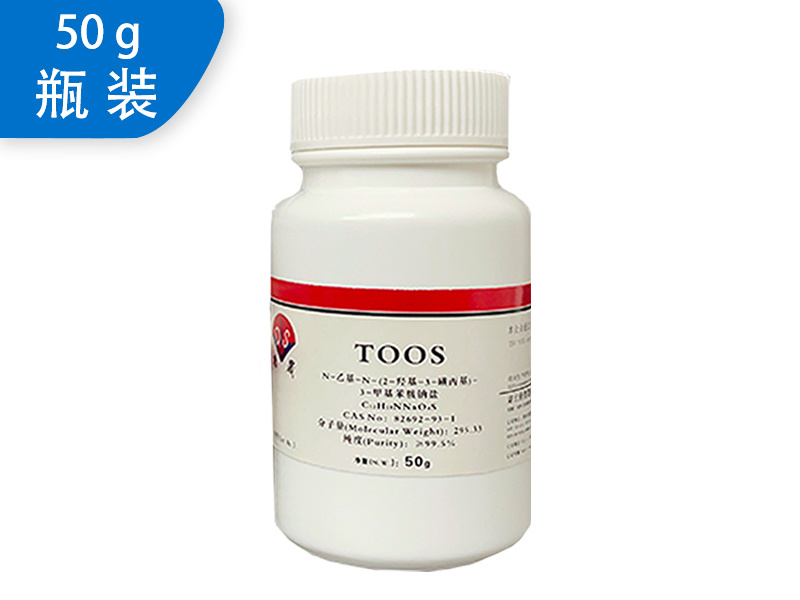
Product packaging
From the above discussion, it can be seen that although there are currently multiple approaches available to improve the stability of TOOS reagent, each method has its own scope of application and limitations. Therefore, it is crucial to flexibly select appropriate technical solutions based on specific application scenarios. At the same time, we also look forward to more exchanges and cooperation within the industry to jointly promote the development of chromogenic substrate technology and make greater contributions to human health.
Contact details
Contact number
Address: C8, Guanggu United Science and Technology City, Ezhou City, Hubei Province
Fax:0711-3704 589
Follow us
