


Chemiluminescence Luminol Illuminates a New Future for Freshness Detection of Rice Grains
Release time:
2025-03-06
With the improvement of living standards, consumers' demands for food quality are increasing day by day, especially for rice, which is indispensable in daily diet. Its freshness directly affects the taste and even nutritional value. In recent years, researchers have been continuously exploring more accurate and convenient methods to evaluate the freshness of rice. One innovative technology, the luminol chemiluminescence method based on peroxidase activity determination, is gradually becoming a research hotspot in the industry.
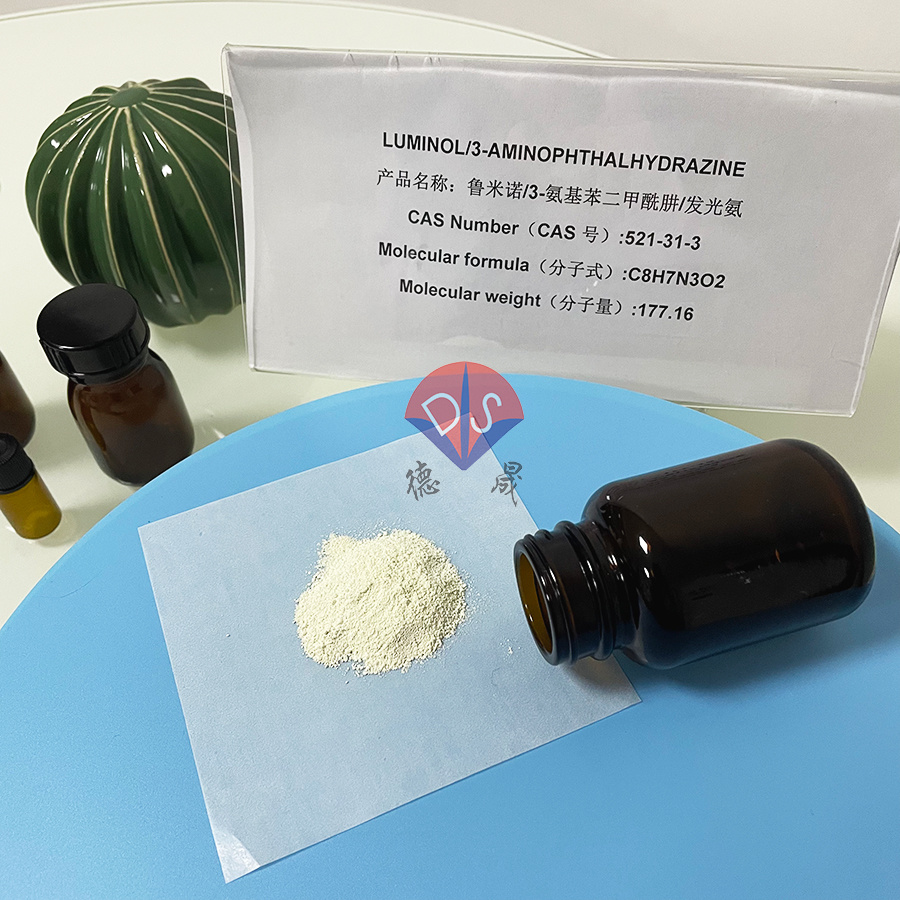
Luminol powder
Peroxidase: The Guardian of Nature
Peroxidases are a class of enzymes widely present in plants, which can catalyze redox reactions between various organic compounds and hydrogen peroxide. It is worth noting that the amount and activity level of peroxidase in rice will change with the increase of storage time. Therefore, by measuring the activity status of this specific enzyme, the freshness of rice can be indirectly reflected.
Peroxidase catalyzes the reaction between Luminol (C8H7N3O2) and hydrogen peroxide (H2O2) to produce chemiluminescence, a process known as Luminol chemiluminescence reaction. Specifically, this reaction can be divided into several steps:
Activation of peroxidase: Firstly, peroxidase needs to be activated, usually under appropriate pH and temperature conditions. Once activated, it can catalyze subsequent reactions.
Decomposition of hydrogen peroxide: Peroxidase can catalyze the decomposition of hydrogen peroxide to form water and an reactive oxygen species, typically hydroxyl radicals (· OH).
Oxidation of Luminol: The hydroxyl radicals formed will further act on the Luminol molecule, oxidizing Luminol into an unstable intermediate - aminophthalazide 3-oxide, while releasing electrons.
The generation of excited state products: This unstable intermediate will then undergo internal rearrangement and reach a high energy state, the excited state, through an electron transfer process.
Photon emission: When the excited state product returns to the ground state, excess energy is released in the form of light, which produces visible light, also known as chemiluminescence. Excited state → ground state+photon excited state → ground state+photon.
Throughout the process, luminol transformed from its initial form to a stable compound -3-aminophthalate, and the resulting light intensity reflected the activity of peroxidase and the concentration of hydrogen peroxide. Due to the varying activity of peroxidase in rice of different freshness levels, the freshness of rice can be indirectly evaluated by detecting the light intensity emitted by the chemiluminescence system.
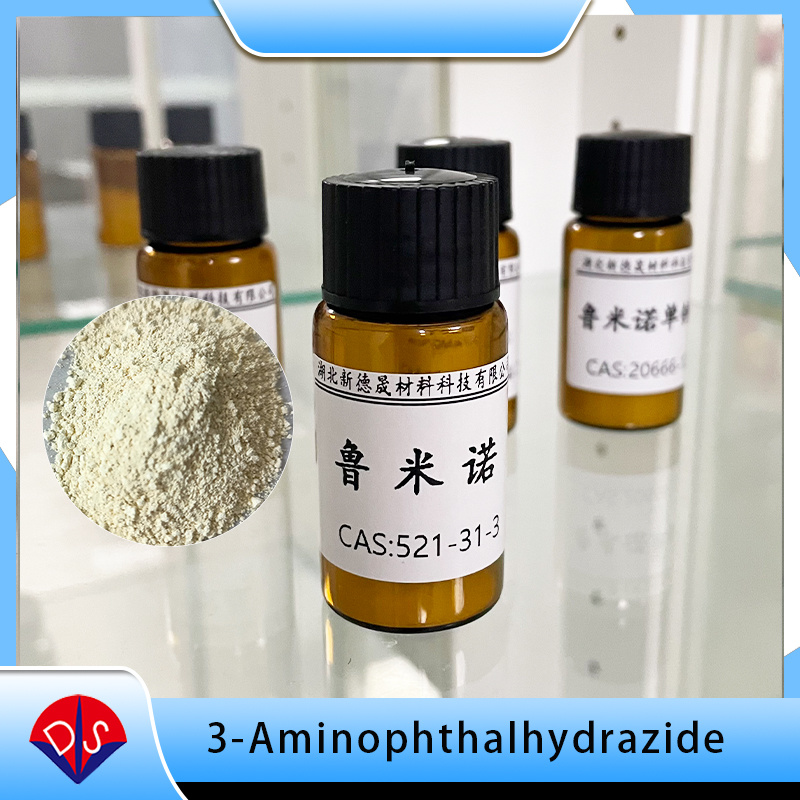
Product packaging
Chemiluminescence method: ushering in a new era of rapid detection
Traditionally, people use sensory evaluation or some physical and chemical indicators such as moisture content to determine whether rice is fresh, but these methods often have problems such as strong subjectivity and complex operation. In contrast, using peroxidase catalyzed luminol hydrogen peroxide system to generate a light signal for detection provides a more objective, accurate, and easy to implement technical pathway.
In short, with the help of the novel rice freshness detection technology of luminol chemiluminescence reagent, not only can China's food security level be improved, but it will also bring revolutionary changes to agricultural production. We have reason to believe that in the near future, this technological achievement will be applied and promoted in a wider range of fields, creating more benefits for humanity.
Contact details
Contact number
Address: C8, Guanggu United Science and Technology City, Ezhou City, Hubei Province
Fax:0711-3704 589
Follow us
