


Precautions for dissolution and labeling of acridine ester in Desheng chemiluminescence reagent
Release time:
2025-01-25
Acridine ester, as a commonly used chemiluminescence reagent, has a wide range of applications in the field of biomedical research. To ensure its stability in the experiment, Desheng will provide a detailed introduction to the key precautions for the dissolution and labeling of acridine esters.
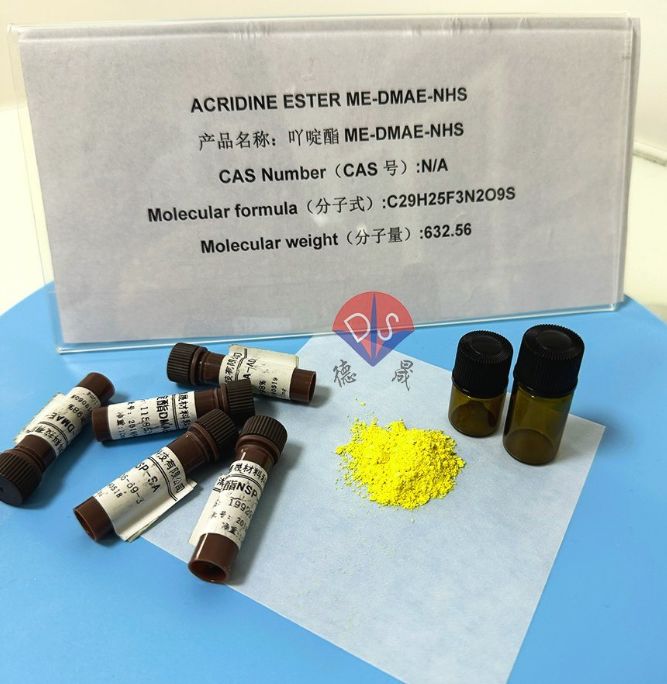
acridine esters powder
1. Precautions for dissolution
Solvent selection: It is generally recommended to use non proton solvents to dissolve acridine esters, such as dimethylformamide (DMF) or anhydrous dimethyl sulfoxide (DMSO). This is because such solvents can provide a suitable environment to maintain the stability of acridine ester molecules and ensure their full dissolution.
Concentration control: The dissolution concentration of acridine ester needs to be adjusted according to the specific requirements of the experiment. For example, in DMF, the dissolved concentration of acridine ester is approximately 4 mM (equivalent to 2.7 mg/mL), while in DMSO, higher concentrations can be achieved, such as 10 mg/mL.
Storage conditions: In order to prevent moisture absorption or degradation of acridine esters due to light exposure, dissolved acridine esters should be stored at low temperatures (such as -20 ° C), away from light, and sealed.
2. Precautions for Marking
Preparation of markers: The target molecules to be labeled also need to undergo appropriate pretreatment, such as dissolving proteins in suitable buffer solutions and possibly removing small molecules or ions that may interfere with the labeling reaction through dialysis or other methods
Acridine ester activation: If using NHS activated acridine esters, they need to be activated before labeling so that they can form stable covalent bonds with amino groups on proteins or other biomolecules.
Reaction environment: The labeling reaction of acridine ester usually needs to be carried out within a specific pH range. Generally speaking, its chemiluminescence reaction is often carried out under alkaline conditions, depending on the type of acridine ester derivative used and the conditions under which it reacts with the target molecule,
Post treatment steps: After marking, unreacted acridine salt and other by-products should be removed by gel filtration or desalting column and other methods. The labeled products should also be stored properly according to the principles of low temperature, light avoidance, and sealing.
3. Safety measures for experimental operations
Throughout the entire experimental process, including the dissolution, labeling, and detection stages of acridine esters, it is necessary to strictly follow the laboratory's safety regulations, wear appropriate personal protective equipment such as goggles, lab coats, and gloves, and also pay attention to the cleanliness of the experimental table to prevent cross contamination from affecting the experimental results.
Following the above guidelines for the dissolution and labeling of acridine esters not only helps maintain the stability of their chemical properties, but also ensures the reliability and accuracy of experimental data.

Product packaging
Desheng New Materials is one of the few professional manufacturers of acridine esters in China. Currently, there are 6 types of acridine ester products sold, 4 of which are marked with NHS ester, such as NSP-DMAE-NHS, ME-DMAE-NHS, etc. If you want to learn more about product prices or usage methods, please feel free to contact customers for professional answers!
Contact details
Contact number
Address: C8, Guanggu United Science and Technology City, Ezhou City, Hubei Province
Fax:0711-3704 589
Follow us
