


Desheng's answer - How to deal with accidental powder spillage of luminol after opening the lid
Release time:
2024-11-16
Luminol, as a commonly used chemiluminescence reagent, is widely used in fields such as criminal investigation, environmental monitoring, and biological analysis in the daily operations of chemical laboratories. Its luminescent properties enable significant luminescence even in the presence of trace substances, making it an important tool in scientific research and detection. However, improper handling of any experimental materials may lead to hidden dangers or experimental contamination. In response to the emergency situation of "accidental spillage of powder after opening the lid of luminol", Desheng will elaborate on several aspects including immediate emergency response, environmental cleaning, protection, follow-up inspection and preventive measures.
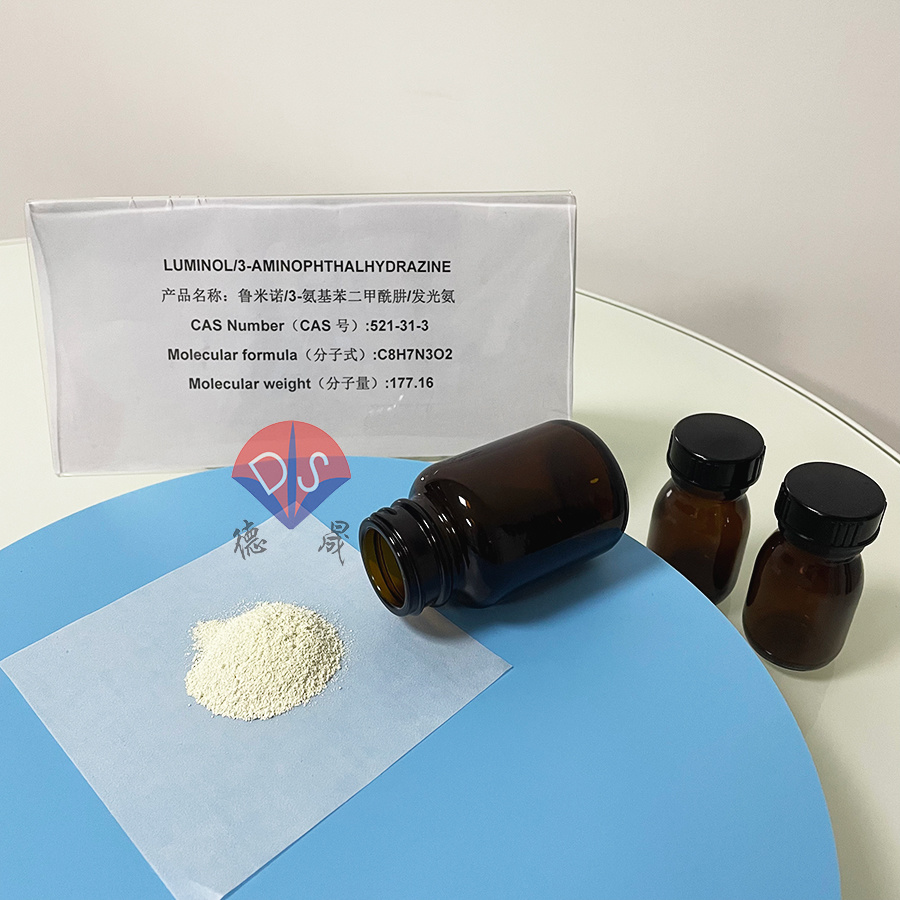
luminol powder
Immediate emergency response
1. Quickly stop operation: Once luminol powder is found to have spilled, the current operation should be stopped immediately, and the spilled area should be quickly isolated to prevent the powder from spreading to a larger area. Temporary barriers in the laboratory can be used for isolation, and other personnel in the laboratory should be notified to avoid them.
2. Personal protection: Before carrying out any cleaning work, it is necessary to wear personal protective equipment, including but not limited to chemical protective clothing, chemical protective goggles, dust masks, and rubber gloves, to ensure that the skin and eyes are protected and to reduce direct contact with luminol powder.
3. Preliminary cleaning: Use dry, non static paper or absorbent material (such as a chemical adsorption pad) to gently cover and collect spilled luminol powder. Be careful to move gently and slowly to avoid powder flying. During the collection process, avoid using tools such as vacuum cleaners or brooms that may generate dust.
Environmental cleanliness
1. Wet cleaning
After completing the initial collection, a suitable amount of water or a cleaning agent containing a suitable amount of surfactant (ensuring no chemical reaction with luminol) can be used for wet cleaning. Dip a damp cloth or sponge into the cleaning agent, gently wipe the spilled area and surrounding surfaces that may be contaminated, and remove any residual powder. Please note that during the cleaning process, avoid direct water flow into the sewer to prevent contamination of the water source.
2. Ventilation and air exchange
During and after the cleaning process, the laboratory ventilation system should be turned on to maintain indoor air circulation, accelerate the diffusion and dilution of substances, and reduce the concentration of luminol in indoor air.
Health protection
1. Skin contact treatment: If luminol powder accidentally comes into contact with the skin, rinse the contact area with plenty of water and soap.
2. Eye contact treatment: If luminol powder splashes into the eyes, immediately rinse the eyes with plenty of water for at least 15 minutes. When rinsing, keep the eyelids open, rotate the eyes, and ensure that all corners are rinsed clean.
3. Inhalation treatment: If inhaling luminol dust, it should be quickly transferred to fresh air and keep the respiratory tract unobstructed. If symptoms such as difficulty breathing occur, seek medical attention immediately.
Subsequent inspections and preventive measures
1. Comprehensive inspection: After the cleaning work is completed, the entire laboratory should be thoroughly inspected to confirm that there are no missing luminol powder or contaminated areas. Pay special attention to easily overlooked areas such as ventilation systems, ground gaps, and workbench edges.
2. Recording and reporting: Detailed recording of the time, location, cause, handling process, and results of the accident, and submission of the accident report to the laboratory manager or management department, helps to analyze the cause of the accident and summarize lessons learned.
3. Strengthen training: In response to this accident, organize specialized training for laboratory members, focusing on explaining the properties, operating procedures, emergency response measures, and personal protective knowledge of chemicals such as luminol, to improve the standardized operation awareness and emergency response capabilities of all staff.
4. Optimize storage and operational standards: Re evaluate the storage conditions and operational standards of chemicals such as luminol to ensure compliance with standards. Consider measures such as adding leak proof trays and optimizing lid opening procedures to reduce the risk of similar accidents happening again.
Handling the spillage of luminol powder requires high attention and proper handling steps to ensure the health of laboratory personnel. Properly cleaning up spilled powder, cleaning contaminated areas, and recording and reporting incidents can quickly respond to this situation. In addition, preventive measures such as careful operation and the use of closed containers are also important means to ensure laboratory operating standards.
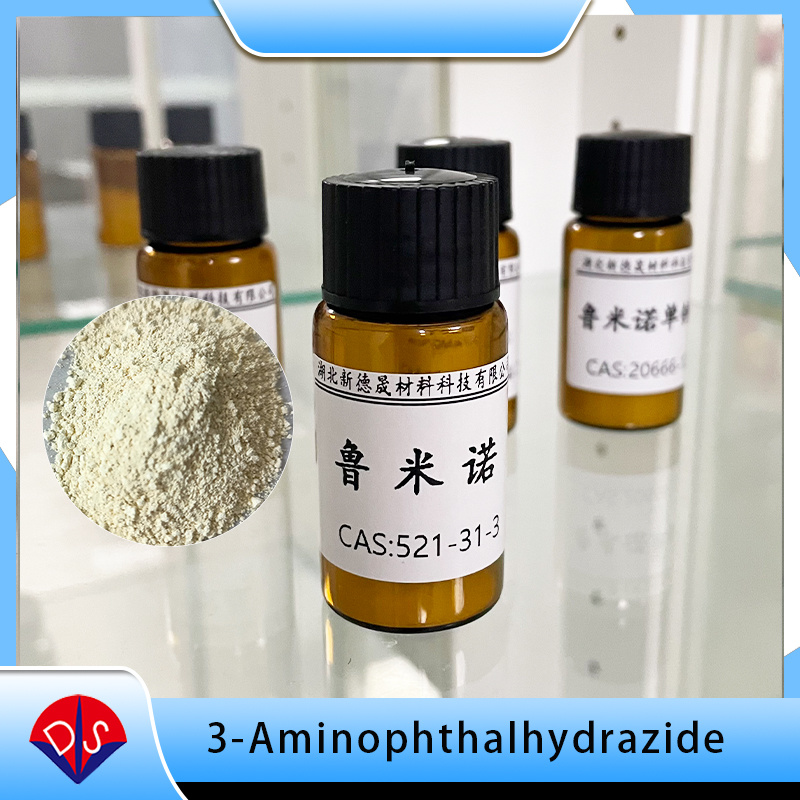
Product packaging
As a manufacturer of chemiluminescence reagents, Desheng can supply analytical pure luminol powder raw materials, packaged in dark brown bottles, which are sturdy and reliable. When using, it is necessary to operate carefully according to the specifications to avoid various adverse situations. We are currently offering a low price promotion. If you are interested, please feel free to click on the website to inquire about details and make a purchase at any time!
Contact details
Contact number
Address: C8, Guanggu United Science and Technology City, Ezhou City, Hubei Province
Fax:0711-3704 589
Follow us
