


What are the production specifications requirements for TAPS buffer suppliers
Release time:
2024-09-24
In the field of chemical reagents, TAPS buffer(N-tris (hydroxymethyl) methyl-3-aminopropanesulfonic acid) buffer is an important laboratory reagent, and its quality and performance are directly related to numerous experiments and production processes. For TAPS buffer suppliers, following strict production specifications is key to ensuring product quality, meeting customer needs, and establishing a foothold in the market.
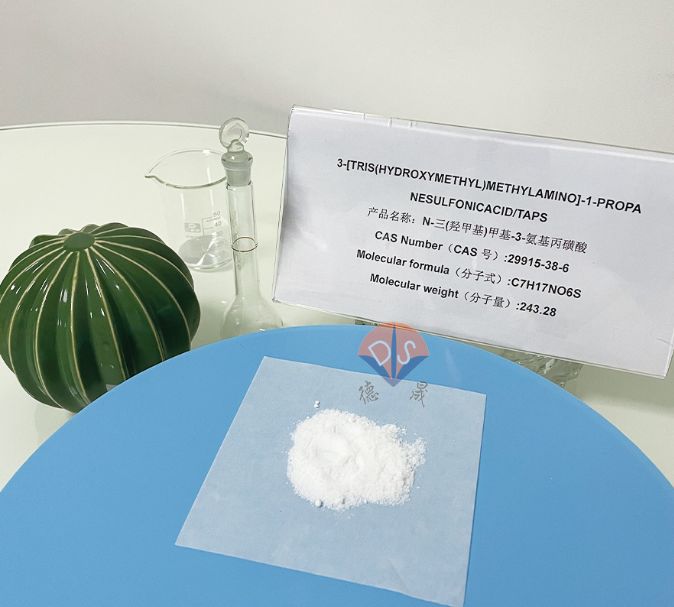
TAPS buffer
Selection and Management of TAPS Raw Materials
Source of raw materials
The quality of TAPS buffer largely depends on the quality of the raw materials. Suppliers should choose reliable raw material suppliers to ensure that the purchased raw materials meet high purity and low impurity standards. This includes main raw materials such as trimethylamine and propane sulfonic acid, as well as other auxiliary materials. The following operations can be performed:
TAPS Raw Material Supplier Evaluation: Conduct a rigorous evaluation of potential raw material suppliers, including their production qualifications, quality management systems, product quality inspection reports, etc. Choose suppliers with good reputation and stable supply capabilities to establish long-term cooperative relationships.
Raw material quality testing: Conduct strict quality testing on each batch of raw materials, including purity, impurity content, moisture content, and other indicators. Adopting advanced testing technology and equipment to ensure that raw materials meet production requirements.
Raw material storage and management
Storage conditions: Determine appropriate storage conditions based on the characteristics of TAPS raw materials, such as temperature, humidity, lighting, etc. For raw materials that are prone to moisture absorption, oxidation, or temperature sensitivity, corresponding moisture-proof, anti-oxidation, or refrigeration measures should be taken.
Inventory management: Establish a scientific inventory management system to classify, label, and regularly count TAPS raw materials. Following the principle of first in, first out, ensure that the raw materials used are within their shelf life, and avoid expired or deteriorated raw materials from entering the production process.
Control and Optimization of TAPS Production Process
1. Control of production process
The synthesis process of TAPS buffer directly affects the purity and performance of the product. Suppliers should adopt mature and stable synthesis processes, and continuously optimize and improve them.
TAPS synthesis route selection: Choose the appropriate synthesis route based on the quality requirements and cost-effectiveness of the product. Ensure accurate control of reaction conditions, high reaction conversion rate, and minimal by-products during the TAPS synthesis process.
Process parameter control: Strictly control the process parameters such as temperature, pressure, reaction time, and stirring speed during the TAPS synthesis process. Determine the optimal range of process parameters through experiments and data analysis to ensure the stability of product quality.
2. TAPS's strict purification process
(1) Purification method selection: Select the appropriate purification method based on the type and content of impurities in the product, such as crystallization, recrystallization, ion exchange, chromatographic separation, etc. Ensure that impurities can be removed during the purification process to improve the purity of TAPS products.
(2) Purification process monitoring: Real time monitoring of the purification process, detecting impurity content, purity, and other indicators before and after purification. Adjust the purification process parameters in a timely manner based on monitoring results to ensure that the purification effect of TAPS meets the requirements.
3. Quality Inspection and Control
(1) Intermediate product testing: Testing intermediate products during synthesis and purification processes, including purity, impurity content, pH value, and other indicators. Timely identify and resolve quality issues in the production process to prevent unqualified products from entering the next stage.
(2) Finished product testing: Conduct various quality tests on finished TAPS buffer products, including appearance, purity, moisture content, heavy metal content, microbial limits, and other indicators. Ensure that TAPS complies with industry standards and specific customer requirements.
TAPS production environment and equipment requirements
1. Clean production environment
(1) Factory design: Production factories should be designed and constructed according to the standards of clean workshops, with good ventilation, lighting, and dust prevention facilities. Divide different production areas, such as synthesis area, purification area, packaging area, etc., to avoid cross contamination.
(2) Environmental monitoring: Regularly monitor the production environment, including indicators such as air quality and microbial content. Take corresponding cleaning measures to ensure that the TAPS production environment meets the requirements.
2. Advanced production equipment
(1) Equipment selection: Select suitable production equipment according to the requirements of the production process, such as reaction vessels, centrifuges, drying equipment, packaging equipment, etc. Ensure stable performance, high precision, and easy operation of the equipment.
(2) Equipment maintenance and upkeep: Establish a comprehensive system for equipment maintenance and upkeep, and regularly inspect, clean, lubricate, and repair the equipment. Ensure that the equipment is always in good operating condition and extend its service life.

Product packaging
TAPS Quality Assurance System and Certification
(1) Quality management documents: Develop detailed TAPS quality management documents, including quality manuals, procedural documents, work instructions, etc. Clarify the quality control requirements and operating standards for each link to ensure that quality management work is systematic and traceable.
(2) Quality control process: Establish a strict quality control process, including raw material inspection, production process monitoring, and finished product testing. Strict quality control is carried out at every stage to ensure that TAPS quality meets the standards.
As a supplier of TAPS biological buffer raw materials, Desheng has the advantages mentioned above. Due to the manufacturer's production and sales, the price is highly favorable, and negotiation and communication are convenient. If you have relevant intentions, please feel free to click on the website to inquire about details and purchase at any time!
Contact details
Contact number
Address: C8, Guanggu United Science and Technology City, Ezhou City, Hubei Province
Fax:0711-3704 589
Follow us
