


The three reducing agents in Tris buffer - the heroes behind protein research
Release time:
2024-09-16
In protein research, the main purpose of adding reducing agents to Tris buffer is to protect proteins from oxidative damage, especially those containing cysteine residues. The thiol group (- SH) on the cysteine side chain is highly sensitive and easily oxidized to form disulfide bonds (- S-S -). Once disulfide bonds are formed, the conformation of the protein may change, leading to loss of function, even aggregation and precipitation, which has adverse effects on the stability, activity, and subsequent experimental analysis of the protein. There are several types of reducing agents added to Tris buffer, each with specific functions.
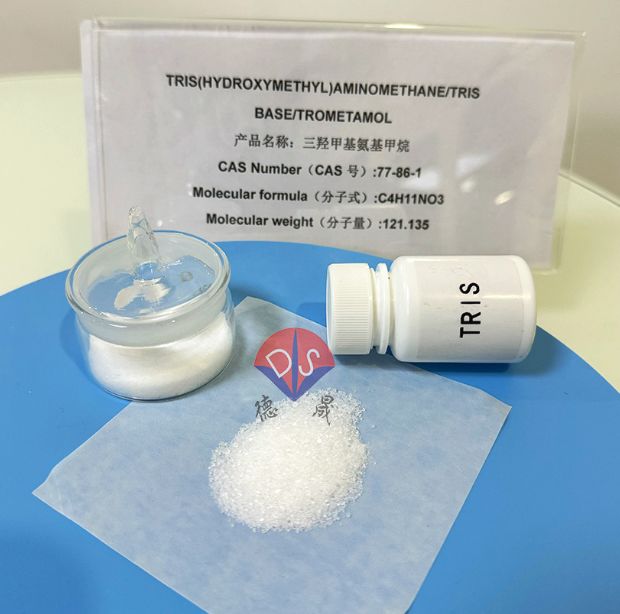
TRIS buffer
1、 Dithiothreitol (DTT)
Function: DTT is a commonly used small molecule organic reducing agent, whose main function is to prevent protein oxidation. DTT is a linear molecule in its reduced state, and after oxidation, it transforms into a six membered cyclic structure containing disulfide bonds. Adding DTT to Tris buffer can ensure that the reducing agent concentration is much higher than the protein concentration in the buffer, effectively protecting proteins from oxidative damage.
Addition concentration: The usual addition concentration in experiments is 5-10mM.
Attention: Due to the easy degradation of DTT at room temperature, if DTT is added to the buffer, it is recommended to store it at low temperature or add it to Tris buffer before use.
2、 Tri (2-carboxyethyl) phosphine (TCEP)
Function: TCEP is a highly effective thiol reducing agent widely used as a quantitative reducing agent for disulfide bonds in protein chemistry and proteomics research. Compared with DTT, TCEP not only has higher reduction efficiency, but also does not require removal in certain thiol crosslinking reactions, making the experimental process more convenient. In addition, TCEP has better stability and relatively higher prices.
3、 Thiomercaptoethanol (β - mercaptoethanol, BME)
Function: Thioglycolic acid can protect the free thiol groups on proteins from oxidation, thereby avoiding protein aggregation or denaturation. Although its reducing ability is relatively weak, due to its volatility, it can be added to the pool solution and diffused into the droplets through volatilization to provide sustained reduction.
Attention: Due to the weak reducing ability of mercaptoethanol, regular supplementation is required to ensure the effectiveness of the experiment. In addition, mercaptoethanol is also prone to degradation at room temperature, so attention should also be paid to storage conditions.

Product packaging
Adding reducing agents to Tris buffer is an important step in ensuring the stability and functionality of proteins under experimental conditions, which is crucial for the success of protein research. The reducing agents added to Tris buffer mainly include DTT, TCEP, and mercaptoethanol. They each protect protein stability and prevent damage due to oxidation through different mechanisms and functional characteristics. When selecting and using these reducing agents, it is necessary to comprehensively consider factors such as reduction efficiency, stability, price, and storage conditions based on the specific needs and conditions of the experiment.
Contact details
Contact number
Address: C8, Guanggu United Science and Technology City, Ezhou City, Hubei Province
Fax:0711-3704 589
Follow us
